Total Pageviews

Showing posts with label Kerith Centre. Show all posts

Saturday, 31 December 2022

Travel Biography - Week 29.

As I write, it's New Year's Eve, and the start of 2023 is just a few hours away. After a year of seeing three different Prime Ministers sitting in Parlament, one after the other, the Russians starting a war in Ukraine, the cost of living rising, the threat of higher taxation, and still waiting for any tangible Brexit benefits, I say - there, by the grace of God, go I.

Penniless in Florence.

And I could have said exactly that to myself back in 1981, just over 41 years ago, as I made my way to Fort Belvedere on a Sunday morning in August of that year. Who would anyone have known that I was a victim of a professional thief who slyly lifted my Traveller's Chequebook out of my trouser pocket whilst standing in a crowded train on a branch line from Pisa Central to Florence Santa Maria terminus? With a small amount of cash, just enough to buy a sandwich, borrowed from the hotelier whose pensione I was staying whilst in Florence, I crossed the River Arno on the Ponte Vecchio, the only known road bridge lined with shops on both sides, and made my way to the summit of a hill from where I enjoyed a magnificent view of the city, with the Duomo dominating the skyline. Whilst I was there, I felt somewhat sad. I was meant to meet a friend I made on Friday after arriving at the station. Instead, I had to go to the police station. I imagined him standing here, waiting and waiting before concluding that I stood him up.

The Ponte Vecchio, Florence.


The next day was a Monday morning. Whilst the other guests were checking out, with the all-important police document, I made my way to the bank I was told by them to visit. I was rather surprised how the counter staff prepared a fresh book of cheques without a single question asked and without a fuss - as if they were expecting me. I felt jubilant as I walked out after cashing the first cheque. By then, I was ready to settle up with the hotelier, check out, and move on.

I had a map of Italy on me which I had recently bought. By checking the northwestern coastline, I noticed a parasol symbol with the name Viareggio. That means a holiday resort in a parallel setting as Loano. This time, I decided to take the bus to Viareggio rather than risk standing on a crowded train.

Upon arrival, I took a liking to the resort straight away. In one of the blocks making up the symmetrical grid layout lining the beach, I came across what looked to be a suitable hotel. Not a pension this time, but a family-owned hotel proper, where I was assigned a room of my own. The weather was good, the sunshine giving the English expression Sunny Italy, hence, enhancing the beauty of the resort. I then wished that I had arrived earlier in the holiday. 

The beach was a long, sandy strip which ended at the harbour molo on the southern end. The grid layout was backed by the Apennine, the range of mountains running much of the whole length of Italy. These mountains also provided the background for both Florence and Pisa alike.

While I was swimming in the Mediterranean, I had to keep an eye out for the occasional jellyfish whose territory I had invaded. This particular species seemed to be solitary, hence still making the sea reasonably safe for bathing. However, I was taken aback by the size of its bell, probably up to 10 inches, 25 cm across. By respecting their territory, I stayed out of harm's way.

Discovering the Cinque Terre.

It was one of these days at the beach when I found myself talking to an elderly gentleman, definitely a local. He asked me if I ever visited the Cinque Terre (Five Lands) which is a train ride further up the coastline. When I made known to him that I wasn't familiar with the location, he explained the dramatic coast, backed by mountains and accessible by a local train stopping at Monterosso al Mare Station. By boarding the mainline train to La Spezia and alighting there, a local train would drop me off at Monterosso al Mare, from where I would be able to see two of the five small villages with their harbours dotted along the rocky coastline.

Excited by this, in the morning of the next day, I boarded the fast train to the next stop, La Spezia, a busy port north of Viareggio. At the station cafe, I sat over a coffee whilst waiting for the local service to convey me to my destination.

Monterosso station is on the mainline from Turin to Rome, with Genoa, Rapallo, Pisa, La Spezia, Viareggio, Livorno, and Civitavecchia being the principal stations called by all express trains during that time before any modern high-speed lines were laid. In turn, mainline trains fly through Monterosso whilst racing either south to La Spezia or north to Pisa.

Viareggio.


After arriving at Monterosso, I alighted to check out the town. I was struck by its originality. That is, away from the tourist spots and, in the early 1980s, still free from any tourist tat. This was real Italy! A remnant of the country before tourism was ever heard about. The town looked rather grubby, but its population seemed to be happy with that, as convenience looked to be more practical to daily living rather than aesthetics. However, according to Google images, the arrival of tourism during the nineties gave some motive to spruce up the town.

No wonder the gentleman in Viareggio recommended a visit. Cinque Terre had its own beauty in its dramatic scenery. Yet, I was surprised that this part of Italy hadn't (so far) made it into the tourist brochures. And I was glad about that too. This was the real, original Italy, and I would have preferred it to remain that way. 

Monterosso al Mare.


Throughout the day, I walked along the coast and picked up a coastal trail heading southeast. As I left Monterosso, I climbed up to a certain height as the trail gave a splendid view of the sea with the rugged coastline on one side and the mountains on the other. As I walked along the trail, eventually the village of  Vernazza came into view. To reach the settlement, I would need to descend. The trail made its way to the coastal village with its quaint harbour and buildings huddling tightly together, glinting in the afternoon sunshine, after more than 4 km of scenic walking.

As I was unacquainted with the area, the thought of hiking all the way to La Spezia from Monterosso had never crossed my mind. (For the record, according to Google Maps, the coastal path would have been 29.7 km or 18.3 miles long, and it would have taken me over seven hours to complete the hike. In 1981, such a hike would have been plausible for a 28-year-old.) Instead, after spending some time at Vernazza, I hiked back to Monterossa in readiness to board a local train to La Spezia (where the service terminated) and change for the mainline train back to Viareggio. Hence, the round trip from Monterossa to Vernazza and back totalled 8 km or 5 miles - a doddle when compared to the Grand Canyon hike in 1978. Yet, Italy has its own dramatic beauty.

On to Milan.

Of the 1981 trip to Italy, for me, Viareggio with the nearby Cinque Terre were the highlights, although I enjoyed the sights of both Pisa and Florence. However, there was a close friend from what was then Bracknell Baptist Church, living in Milan due to a work contract. His name was Derek. And arrangements had already been made to spend a few days with him before boarding a train for London from Milan. Hence, the return ticket to the UK was valid from Milan rather than from Turin.

There was a direct train from Viareggio to Milan Central terminus via Genoa, and having phoned Derek when I was expected to arrive in Milan, he was already there and waiting for me as the train pulled in. It must have been a Sunday when I arrived in Milan, for after arriving, he took me on the Metro to his home. After settling in, we made our way to a small, independent church meeting held, I believe, in the cellar of a secular building. This was quite something in an Italian city where catholicism held all the cards. It had given me an impression of an underground, persecuted church. Indeed, the group was a charismatic, Gospel-based meeting very similar to Bracknell or Ascot Baptist churches, where worship and the order of service were free from any liturgical channel. 

After the service was over, a group of us climbed into our cars (in my case, Derek's) and came across a pizzeria restaurant where we all sat around a large table and ordered our meals. The group was apparently all singles, a common phenomenon after the evening service when unmarried adults either go out on a social or meet in a private home, often at the pastor's house or that of one of the elders.

That was the only time I ever visited that particular fellowship. I had never been since. Whether it folded up due to its participants returning to their home countries, or whether Derek simply didn't go anymore, I will never know. All I recall was that three or four days after arrival, I was put on a train bound for Lille, then onward to the cross Channel ferry.

And then the Police called...

Although I put my all into the 1981 trip to Italy, compared to America, especially in 1978, the whole trip to Northern Italy was spoiled by falling victim to a professional thief. And the idea that this was a sophisticated gang out to rob unsuspecting tourists was endorsed a few weeks later when two police constables knocked on my apartment door. After confirming my identity and verifying to them my recent trip to Italy, they then asked me if I knew, or heard of a particular Italian accountant. I confessed that I had never heard of the fellow. Then they showed me a signature in my name and asked whether this was my particular signature.

I looked at it and kept on looking as I studied it. Indeed, it could be from my own hand. Unsure, I took a piece of paper and a pen, and signed it. When held side by side, the other version of my signature did not properly match, despite using my initial.

This is my signature. I said, showing them my natural but distorted version and holding the two together. No, the one you have is too neat, too tidy. As the two constables rose to leave, they reassured me that I was a victim of theft and apologised for the trouble. After they left, I suddenly realised that they were ready to accept my innocence if proven. However, the purpose of the call was to watch my reaction when shown the fake signature. Had I suddenly said, No, that's not mine! - their suspicions that I was involved in some fraud might have been aroused, pending further investigation. Instead, my readiness to admit that the fake could have been mine until put to the test proved my innocence.

Another issue that spoiled my 1981 trip was the photography, basically a repeat of the 1978 Grand Canyon hike. But this time, whilst I was hiking the Cinque Terre, a speck of dirt lodged between the delicate mechanism of the shutter, causing a part of several pictures to fog. The camera I had was a far better one than the Instamatic 110, but the shutter was vulnerable to any foreign body that might get lodged between the blades. Like at the Canyon, these too were slides rather than photo prints (hence, all the pics shown here are stock photos.) However, this failure hadn't aroused my desire to return to that particular location - unlike the Grand Canyon.

Approaching Vernazza on the hiking trail.


Back home, I returned to my self-employment and normal day-to-day. One lesson learned whilst running my own business is not to be a "travel snob" - insisting that only long-haul is what I should go for. Instead, I'm learning to be thankful for any form of travel, whether it's long-haul or just around the corner. Returning to Italy after going far enough to see the Pacific Ocean may seem like a setback. But that's far from the case. If anything, Europe is richer in history than America and has just as much natural beauty.

Therefore, with the budget I have, I was grateful for another trip to Italy, this time, done differently. And my dream was beginning to be realised when I met Derek by chance one lunchtime right here in Bracknell, as he was on leave for a couple of weeks.

-----------------------------------------------------------------------------------------------------------
I wish all my readers a happy and prosperous New Year.

Next Week: The Start of the 1982 backpacking trip to Southern Italy - the best of the 80s.

Saturday, 15 October 2022

Travel Biography - Week 18.

Travel and Phobias Don't Mix.

Sometimes, travelling on a tight budget means finding yourself in an uncomfortable situation. Such was the case of finding myself in an upstairs room of a seedy hotel in the heart of Manhattan on the first night after landing. Squalid is the best way to describe this hotel room. Although the bed was properly made up and the sheets appeared clean, on the tiled floor beneath the bed, some cockroaches scurried across from one side of the room to the other, as if my presence disturbed them.

Generally speaking, I don't have much of an issue with insects, although a floor populated with Goliath beetles may be enough for me to make a quick exit. But facing a colony of bugs, none of them more than a centimetre in length, I had a choice. Either tolerate their presence or flee from the room. If I had fled, then what? A night spent in the street of an unfamiliar city? Or find a hotel that would dry up all my financial resources even before I step out of the city? Nope. It was neither. Instead, I just have to grin and bear it. And refrain from complaining at reception. At least I had a place to stay.

Night view from my New York hotel window, 1995.


Indeed, if a brochure advertising the hotel was available with the description of - a venue you always dreamed about and remember - hmm. Remember? Yes. But dreaming about it? Perhaps only in a nightmare, after eating cheese immediately before bed. I had to face it. This hotel was one of the worst I have ever stayed in.

Therefore, I pulled myself together and crawled into bed, shutting out the creepers from my mind. This was TRAVEL. Like when some of my friends warned me about rattlesnakes and other dangerous wildlife I might have encountered whilst hiking the Grand Canyon. Or that there was a huge, 4cm cockroach nestling in the washbasin after arriving at Amarillo in Texas, or watching a mouse scurry across the kitchen floor of a backstreet hostel in St Louis, Missouri.

It was like any fear I had to conquer the first time I ever had to climb a ladder on my own to inspect the outside of an upstairs window. No one was below to stand on the lowest rung. Rather, this ladder was an old wooden one I borrowed from the church I regularly attended. And it creaked and groaned as I climbed up.

That was my new job as a self-employed handyman-turned-window cleaner back in August 1980. Along with getting to feel at home up on a ladder, I also had to contend with a community of garden spiders - the type with short legs and a wide abdomen - as part and parcel of my job, along with a variety of bugs. Either that or remain on the dole and go hungry whilst struggling to pay the rent and bills. And believe me, living entirely on meagre benefits paid by the taxpayer was no honour!

Therefore, I remained in the Manhattan hotel room for the whole night whilst outside there seem to be some commotion. If only I felt alert enough to go outside and check for myself. Had I, I would have seen a building on fire with the street blocked with fire engines and red cars, along with a crowd of spectators. And that was what I saw the flowing morning after checking out of the hotel, except that by then the street was deserted.

That was 1978. This wasn't the last I see of the hotel. Rather, in 1995, I was at the same hotel and I believe, in the same room after landing at J. F. Kennedy Airport, and some failed attempts to find a vacant bed in one of the city's backpacking hostels. This time, I only saw a couple of bugs scurrying across the floor, an improvement from 1978. 

A Day in Manhattan.

I left the hotel and walked through a street where fire engines were parked outside a scarred, smoke-blackened building, I arrived at Port Authority Bus Station, the New York terminus of the Greyhound Americruiser reaching to all parts of the States as far as Los Angeles and San Diego. Here, I deposited my suitcase in a left luggage locker and booked an overnight seat on a bus bound westwards using the Ameripass, and after having breakfast at the station cafeteria, I was free for a whole day to check out the city. This was in 1978 but very much the same schedule was repeated seventeen years later in 1995.

This first visit included asking how to get to the Statue of Liberty, New York's most famous landmark and that of the whole of the USA, and known around the world, too. The statue was a gift to the nation made by A. Gustave Eiffel, who was also responsible for the famous Paris monument. I was directed by a subway ticket seller to a fast underground train and alighted at Battery Park, from where ferries sailed for both Statue Island and Staten Island.

Inside the head of the Statue of Liberty, 1978.


In 1978, entry to the inside of the Statue of Liberty was open to visitors all year round. A tight spiral staircase led to the inside of her copper head, which, by this time I was soaked in my own sweat. There was hardly any reward for a view, as the only opening was a grated slot at her headband crossing her forehead. With such restricted ventilation, the interior was a heat trap, and by 1998, when I visited the statue again, the interior was closed to visitors during the summer months, as the trapped heat brought illness, including fainting, to the more vulnerable victims.

Returning to Midtown, another famed landmark was Times Square, brightly lit up at night by a variety of neon adverts. Not truly a square in a traditional sense but more of a six-pronged star as West 45th Street intersects at right angles with 7th Avenue, and Broadway also intersects at a narrow-angle from 7th Avenue. In 1978, several cinemas were lining Broadway, all advertising XXX movies, and I wondered who would be entertained by such erotic films. However, by 1995, there seem to be far fewer of these theatres, either that or they have modestly been less showy.

Times Square, taken 1995.


Since 1978, I stopped in New York in 1995 and again in 1998. The 1995 visit was basically a replica of my 1978 visit, arriving from London in the evening, and after failing to find a bed at the city's several backpacker hostels, I remembered the hotel I stayed at my first arrival, and I found it without difficulty. As for the hostels, I was surprised at how full they were. It was early September when I arrived, purposely timed just after all the schools in the UK had re-opened after the summer break. But I failed to take into consideration that universities open later in the year, and September is the month when many students have ended their summer work contracts and were free to explore before returning home. So I was told by a hostel staff member.

And so, the first night of the 1995 trip was spent in the same hotel as in 1978. As I looked out of the window over 8th Avenue, across the road and to my right was Goldilocks Deli, a grocery store. I was amused by the name, typical American. Between times of quietness, groups of Afro-Caribbeans sauntered along the street, their Saturday night stint over as they made their way home. However, sometime later, a crowd of them began to amass just outside the hotel and a brawl broke out. I thought this was the right moment to make myself invisible and crawl into bed.

With such drama, who needs to be in a luxury hotel near a Mediterranean beach at the height of summer? This was much more exciting!

Back in 1978, it must have been a late afternoon or early evening when I boarded the night bus bound for Los Angeles, where my next city of call would be St Louis in Missouri. With the help of the departure board, like at any main railway station, I was able to work out my arrival into St Louis was to be by lunchtime on the next day.

On to St Louis, Missouri.

Both the 1978 and 1995 trips to the USA began with a bus journey of nearly a thousand miles or 1,620 kilometres, taking between 20-22 hours to complete. That's approximately a third of the USA from New York. It goes to show how huge the continent really is, especially when compared to the size of Europe. 

The Americruiser's final destination was Los Angeles but I chose to alight at St Louis, not only the first city across the Mississippi River but one with a remarkable monument, a 192-metre-high steel arch whose two stems are also 192 metres apart at its base, hence, the distance between its two "feet" is the same as the height of its apex.

St Louis Courthouse and Gateway Arch, 1995.


But a word on the journey itself from New York. It was the second longest bus journey in North America after the Winnipeg-Toronto route I completed the previous year in 1977. New York to St Louis is almost the same distance as London to Rome, and I recall the early to mid-1970s when travelling by train, along with a ferry crossing the Channel, was an adventure in itself, and indeed, I would use the same train route tomorrow if given the chance - ferry and all, instead of the Eurostar!

The train journey from London to Rome took about 24 hours to complete, give or take. This compares with the journey time on the Americruiser bus. This goes to show that despite the train being faster than the bus, the waiting times involved with the trans-Europe journey, especially when boarding the ferry, the wait before the continental train departing from Boulogne-sur-Mer, along with the two long stops at Paris, and then at Modane, before another at Torino, Genova, and other major cities on the way. 

The terrain east of the Mississippi was not unlike a typical English countryside, as the road passes through cities such as Philadelphia, Pittsburgh, Columbus, and either Dayton and Indianapolis in 1978 or via Cincinnati and Louisville in 1995. Therefore, on both trips, I didn't consider exploring cities east of the great river. To me, America - the America that had inspired me - begins after crossing the Mississippi.

View of the Courthouse from the arch viewing gallery, 1995.


During the 1978 trip, I spent just a few hours in St Louis before boarding the evening bus to my next destination, rather similar to Chicago a year earlier in 1977. In 1995, however, I spent three days and two nights in St Louis before heading off. However, on both trips, my attention was centred on the Gateway Arch, the underground museum beneath the arch and the nearby St Louis Courthouse, where an 18th Century negro slave has bidden for his freedom. However, ascending the arch to reach the apex observation gallery was the most unusual means I had ever seen and experienced.

-------------------------------------------------------------------------------------------------------------
Next Week: My Experience at St Louis and my approach to the Grand Canyon.

Saturday, 6 August 2022

Travel Biography - Week 9. Pictorial.

1976 Holiday in Israel - final conclusions.

Having returned to Jerusalem from Tiberias, once again, I arrived at the Spihu household in Silwan, East Jerusalem. During those couple of days, I did little but amble along the souks of the Old City and soak in the Middle East atmosphere once more. This was followed by a day and two nights in Tel Aviv. This was to spend the whole day at the Mediterranean beach, the only part of my trip I could call a "beach holiday".

Having thanked my hosts and said goodbye to them, I then made my way into the New City to board an Egged Bus to Tel Aviv. After arriving, it wasn't long before I found a modestly priced hotel, and having stepped through its doors, asked the receptionist if there was a room available for two nights. I was offered one, and having accepted, I was handed the key. I write this to show the ease it was for an "off the street" hotel enquiry before the advance of the smartphone. As with the hotels in Italy, along with the Ron Hotel in West Jerusalem and the Aviv Hotel in Tiberias, this one too was so straightforward to merely ask if a room was available. And the two American trips to come, "off-the-street" hotel check-ins were just as without hassle.

My last full day in Israel was spent at the beach, reminiscent of the Spanish holiday in 1972, but without alcoholic intoxication. I felt that this was an excellent way to end my Middle East travel experience. 

Early next morning, I made my way to the airport for the flight home. I was rather shocked at the security before check-in. After a thorough search through my belongings, the officer found the two ancient pieces of pottery I bought from Abed, and he explained that the oil lamp in particular was Government property. It was then taken to a department away from the security check. After a few minutes, it was returned with the explanation that since I had purchased the item legally, I was allowed to keep it. Was I relieved! The flight back to London Heathrow was smooth and uneventful.

-------------------------------------------------------------------------------------------------------------
Here are some photos, all either taken by me or by someone of me. They include the four taken before 1976. I apologise if these pics look a little amateurish. Due to the withdrawal of Boots photo scanners in my hometown of Bracknell, I did this by "taking a picture of a picture" from a photo album. Also to be considered is that they are around 46-52 years old!


Yes, as a teenager, dressing up was not unusual.

A Street in Pompei, Italy 1973.

Amphitheatre, Pompei 1973.

Italy, 1973, then aged 21.


Arab children playing outside the Spihu's home.

At the Rockefeller Museum, East Jerusalem

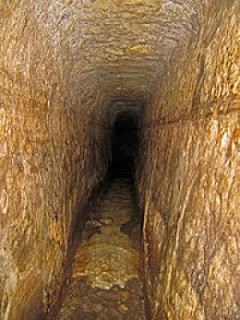
Deep inside Hezekiah's Tunnel


Further on, also known as the Siloam Tunnel.


At the Tell of Jericho


At the Tomb of the Patriarchs, Hebron.


Alone at the Synagogue, Capernaum.


St Peter's House, Capernaum, as it was in 1976.


Fishing boats moored at the Sea of Galilee.

************************************************************************

Preparations for North America 1977.

The 1976 three-week solo trip to Israel changed my travel habits forever. I have come to realise that there is far, far more to this fascinating world of travel than throwing up after consuming alcohol at a Spanish Costa. And there are escorted tours where a group of people pay to be led to different, usually historical locations, by an escort or ranger. The vast majority of British churchgoers, for example, visiting the Holy Land, seem to prefer to be in a large escorted group. I have two good friends who, at different times, visited Israel in an escorted tour group. I also have another friend, a PhD degree holder, who visited the Neapolitan area of Italy, including an ascent up Mt Vesuvio, a visit to Pompei and Ercolano excavations, catacombs, and the lovely clifftop resort of Sorrento. All with a Christian group Oak Hall, in 2020.

But, wonderful experiences these trips were for my friends, such holidays would never suit me. However, one advantage of them is to be well taken care of, to be looked after, and immunity from any potential danger. But the main disadvantage would be the pressing schedule, the feeling of being rushed to move on when you want to spend more time at a particular location. For example, I would never recommend a visit to the Grand Canyon with a tour group where you may not be allowed more than an hour on a scheduled stop. Such a location would require at least a full day, if not more. Yet, fifty minutes spent gazing into the Canyon and taking many photos from the South Rim may be enough for some.

And so, it was during the mid-seventies that while I was visiting some young singles of our Baptist Church (the forerunner of the Kerith Centre in Bracknell) in the home of our late deacon, David Prior, that we found ourselves watching Starsky and Hutch on his television, an American detective series based in Los Angeles. The series starred Paul Glaser as Dave Starsky, and David Soul as Kenneth Hutchinson, or Hutch for short. It was my admiration for these two which sparked an interest in cross-Atlantic travel. As 1976 gave way to 1977, my interest in the USA, especially Los Angeles, began to grow. Not only were Starsky and Hutch filmed there, but the city was also the home of Hollywood Studios and Disneyland.

Starsky (right) and Hutch inspired American Travel.


And I was fortunate. Very. It was in 1977 when British airline entrepreneur Alfred Laker launched his budget flight from London to New York for a payment which was within reach of us commoners - eleven years after setting up his airline business in 1966. Unfortunately, Laker Airlines went the way of Court Line with its two holiday companies, Clarksons and Horizon. Like them, Laker went bankrupt on February 5th, 1982.

That means I could have flown to New York as early as 1977, being one of the first generations of economy travellers crossing the Atlantic. But during the 1970s, a visa was required to enter the States, even for an hour or two as a passing tourist. Even with escorted Canadian tours, if the itinerary crossed briefly into the USA, then an American Visa was required before booking the entire Canadian holiday. And the Embassy staff will ask for proof of permanent employment in our home country before issuing is even considered. 

And that was when I hit a problem whilst applying for a US visa. The company I was working for was about to close its Bracknell factory and move to a new site near Plymouth in Devon. Therefore, when I asked for proof of employment from the firm's office, a letter was handed to me that yes, I did work for this company but it's due to close soon. No wonder the US embassy returned my application form, along with my unstamped passport, through the post. I was then shocked to see my application form struck right across the page with a biro as if done with anger!

Refusing to be defeated by a bunch of American men dressed in a suit, I approached a travel agency and picked up a brochure from Laker's rival, Jetsave. This company offers flights to both Canada and the USA at prices that were compatible with Freddy Laker's offers. Jetsave also offers ranger-led escorted tours across the American continent for those who prefer them.

Feeling disappointed that I won't be able to set foot in Los Angeles, I sought some consolation with Toronto in Canada instead. With no entry visa required, I would have a chance to visit Niagara Falls. And so, I bought a return flight ticket for Toronto from London Gatwick. This holiday would be four weeks long, and I would have to find a way to travel around Canada if it's interesting enough. 

--------------------------------------------------------------------------------------------------------
Next Week. How the US Embassy in London had done me a great favour when it refused to issue me an entry visa.

Saturday, 12 March 2022

All Is Well With My Soul. Are you?

A typical weekend. Whilst Alex has her early afternoon rest, her face screws up, and immediately I ask her if she was okay. She then tells me that pain has erupted above the area of her appendix. Immediately, my nursing instincts kicked in and I give her two Ibuprofen pills along with a glass of water and something to eat, such as a sandwich. The latter is to prevent any side effects, such as stomachache arising from the medicine. The pain then slowly eases. However, if it doesn't ease, then I give her some oral morphine to help tackle the pain.

Painkillers of all shapes and sizes


So frequently this happens that nowadays, my sense of panic has somewhat eased. Thanks mainly to home treatment that eliminates calling for an ambulance. Or at least significantly reduces the use of the phone. Nevertheless, the pain that erupts on someone I love so dearly brings on the distress. Had I been the one to suffer pain - and I have many times throughout life - I wouldn't find the pain so distressing.

However, my wife would. All I need to do is to place my open hand over my heart, and she would be the one asking me if I was okay, even bordering on panic. That's from the vulnerability I now feel after a major open-heart operation I had in 2015 to replace a leaking aorta valve, followed by life on pills, enough each day to stock a pharmacy.

But it's watching my beloved cringing on the floor in pain that I find so distressing. As my own adrenal glands pump their hormones into the bloodstream, my emotions go haywire, I start trembling, I suffer a loss of appetite, tension, and on edge throughout.

It's this kind of situation when I ask God, Why? What is it we've done that's so horrendous in your eyes? Are you really that angry with us? And so it's easy for me to confront God, and then ask,

Why is it that so many other Christians whom I know well are so BLESSED? 

Here, I'm thinking of young middle-class couples with a university degree, good job prospects, and their recent announcement that a baby is on the way. They seemed so well blessed. Then I look at pictures that appear in the media - of young aristocratic and bronze-skinned couples frolicking in a large yacht at sea in the Mediterranean, under warm sunshine and sparkling blue sea. Not a care in the world and far from any thoughts of hospitalisations as the east is far from the west.

Even in my church, I once knew a respectable, middle-class professional couple who has four grown-up children and even several grandchildren. He also owns a yacht which he keeps moored at the coast. However, one of his sons is mentally handicapped, thus bringing extra pressure to the household. And it's this detail that brings me to the subject of this week's blog.

This week, like last week, I attended Encounter at the Kerith Centre in Bracknell. After refreshments, we sang an old hymn, All is Well with my Soul, written by Horatio Gates Spafford. No, before last week, I hadn't heard of him either, neither had I ever sang his original hymn. But behind this fine 19th Century Christian lies a life of tragedy.

Horatio Spafford was born on October 20th, 1828 in Troy, New York State, the son of Horatio Spafford senior and Elizabeth nee Hewitt. Horatio senior was an author of a gazetteer. Horatio junior grew up to be a lawyer. Like most church members around at present, Spafford was well-educated, wealthy, and a devoted Christian. He was friends with the famous American evangelist Dwight L. Moody.*

During the Spring of 1871, Spafford invested in real estate in Chicago. However, during the Autumn of that year, the Great Fire of Chicago destroyed most of what he had as the fire burned the city to ashes.

Spafford had four daughters from his marriage to Norwegian wife Anne nee Larson. They were Annie, aged 12, Maggie 7, Bessie 4, and an 18-month old baby. In 1873, Horatio planned a family trip to Europe, including England to see their friend Dwight Moody, who was ministering in Britain at that time. However, Horatio had to remain behind to conclude his business deals, so he sent his wife Anne with their four daughters on board the French steamship Ville du Havre to sail across the Atlantic Ocean. On November 22nd, the Ville du Havre was struck by an iron sailing vessel, sinking the ship and thus killing 226 people, including all of his four daughters. However, his wife Anne was one of the survivors.

After arriving safely in England, Anne sent a telegram to her husband across the Atlantic with the words, Saved Alone. After setting off to England on another ship sometime later, at Spafford's request, the captain ordered his crew to halt the ship precisely where the Ville du Havre sank. As he looked down over the rail at the water below, he knew that all four of his daughters were at rest on the seabed with 222 other passengers. He went back into his cabin and wrote his hymn, All is Well with my Soul. 

Later, Spafford had more children, including a son, Horatio Goertner Spafford, who was born in 1877. However, in 1880, Horatio Goertner died of Scarlet Fever at age three. Of all seven children they had together, only two daughters survived into adulthood: Bertha and Grace.

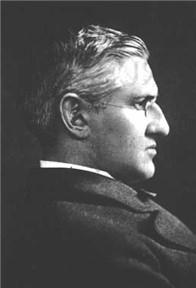
Horatio Gates Spafford.


Back in America, Horatio mourned for his loss, both of his real estate in Chicago and the loss of five of his seven children. But worse than that was the lack of support from his local Presbyterian church. If there was a man who needed loving support from his own spiritual brothers and sisters in Christ, then he was Horatio Spafford. Yet, there he was, onboard a ship peopled by strangers, leaning over the parapet to gaze at the sea beneath, knowing that way down at the seabed, his four daughters lay, with one of them not yet out of her infancy. Then he returned to his cabin to write his hymn.

In 1881, Horatio and his family set sail with a party of 13 to Jerusalem in what was then Judaea. There, he founded a Messianic Church known as The Overcomers together with some Swedish Christians by starting home prayer meetings. While he was there, he waded through Hezekiah's Tunnel, a water channel dug through solid rock in 701 BC under the leadership of Judean King Hezekiah, to divert the Gihon Spring waters into the city and out of reach from the Assyrians, who were threatening to sack the city. In the middle of the tunnel, Spafford discovered the Siloam Inscription, a Hebrew text carved into the wall commemorating when the two parties digging from each end of the tunnel met in the middle.

Horatio Spafford junior died of malaria on the 16th October 1888, just shy of his 60th birthday. He was buried at Mount Zion Cemetery in Jerusalem.

In the presence of the risen Jesus Christ, I can imagine a heavenly reunion with his five children, here all appearing as young healthy adults, never ever to be parted again.

If I can refer to another example of when human ingenuity was demonstrated. There was an American story of a married couple whose home was totally destroyed by a hurricane. When the pastor of their church arrived to give them some comfort, to his surprise, he saw the couple singing praises to God, right in front of the rubble which was once their home. Indeed, just like Horatio Spafford before them, these two had their minds fixed on heavenly and eternal glory, rather than on earthly and temporal things.

By taking into account the experiences both Spafford and the married couple went through, I can see the leaves of the Bible shaking in the wind. I'm referring to the Old Testament book of Job, a Middle Eastern nomad who, according to Bible scholars, lived about the same time as Abraham.

Like Spafford, Job too was a wealthy man, even if he lived in a tent. His wealth consisted of livestock and he had ten grown-up children - seven sons and three daughters. However, one day a hostile tribe arrived, killed all but one of his servants, and took away all his livestock, leaving Job penniless. After that, a storm overtook the house where all his sons and daughters were enjoying a feast. The roof of the house fell on them, killing all but one. When Job heard the bad news, he didn't blame God. Instead, he managed to thank God for everything he provided and praised him for who he is. Finally, Job fell seriously ill, even close to death, and yet he refused to curse God, even after his own wife attempted to persuade her husband to do so.

Indeed, the saying, The Lord giveth and the Lord taketh away, originated from this set of incidences recorded in Job.

The tragedies of Horatio Spafford and how they parallel those of Job has given me a proper perspective of our own difficulties in life. Such experiences seemed to have fulfilled what Jesus said to his disciples shortly before he was crucified: 

In the world ye shall have tribulation: but be of good cheer; I have overcome the world.
John 16:33 AV.

Spafford, the unnamed American couple, and Job all knew that looking at heavenly glory eclipses anything the earth can offer. And the truth about Imputed Righteousness as being one and the same as eternal security of the believer, or simply put, Once Saved Always Saved. Sometimes, as with me, such wonderful truths thrive in my head, and I wonder whether these truths have really percolated from my head into my heart.

The American couple sang praises to God in front of a pile of rubble that was once their home.
Horatio Spafford sat down and wrote, All is Well with my Soul, after looking over the parapet over the site where his four young daughters drowned.
The nomad Job was able to praise and acknowledge the goodness of God after the loss of his wealth, his children, and his health. They all looked up to the stars.

It was a pity that the patriarch Jacob looked down on the mud. The grandson of Abraham through his son Isaac, Jacob was the chosen one to carry the Messianic Promise. Yet, at the loss of his favourite son Joseph, he kept on mourning for him many years after his disappearance, using his words, in deep sorrow I will go down to my grave - or - I shall go down to my grave in deep sorrow to my son Joseph. This is akin to saying, Woe is me! For everything is against me!

And so, Jacob spent the latter days of his life - more than twenty years I believe, living in a mournful, sorrowful state, his eyes focused on mud. How is it with you? How is it with me? Are you looking up to the stars? Or are you looking down at mud?**

Hezekiah's Tunnel, visited by Spafford.


Unfortunately, like Jacob, I tend to look at mud when the chips are down. Yet, I know that it would be utterly foolish if I was to renounce my faith in God! If anything, now is the time when I need to believe that God is sovereign and has the whole world in his hands.

Wondering whether a third world war will break out due to just one man's wickedness is one kettle of fish. Watching your nearest and dearest writhe in pain is quite another.  Watching someone - in my case, the only one who thinks the world of me and sees me as a tower of strength - crumpling in pain is very upsetting. But no, God is not angry with us. Rather, through our faith in him, he can show that we are his children.
-----------------------------------------------------------------------------------------------------------
*Source: Wikipedia.
**S.I. McMillen MD, None of These Diseases, Lakeland paperbacks.
 

Saturday, 2 October 2021

England Going Down the Plughole?

We both felt sad when we watched Ambulance on the BBC in the past week. This particular episode featured some cases on mental health. There was one patient, a female teenager, who was hysterical in her bedroom and claiming to see "a brood of snakes" in her room. Later in the programme, this same lady was caught on the parapet of a bridge as if ready to jump off. She was saved by both the Police and the Paramedics.


She explained the main reason behind her hysteria. She was due to take her exams, and she was overwhelmed by her fear of failing, leaving her hopes for her future like that of a boat adrift on the wide ocean, with no land in sight and no clear directions to take. Such is the importance attached to higher education and fulfilling careers.

Her present situation was a far cry from her predecessors. In bygone days, such a young woman was preparing to settle down to married life, to be supported by her breadwinning husband, and herself getting ready to raise children. A typical 1950s home scenario. Indeed, I'm aware that these words I had written could quite likely raise concern among modern, career-minded women, but actually, I'm old enough to remember that during my school days, girls had needlework and housecraft (that is, learning to cook and prepare meals) whilst us boys concentrated on woodwork and metalwork. As far as I remember, back in the mid-sixties, there were no "feminist protests" when such lessons came around, nor any "gender issues" among the boys.

Does anyone remember the Fairy Liquid dishwashing advert on ITV? A child is at home with her mother, who is at the kitchen sink, washing the dishes. The daughter asks a silly question and the mother turns to answer with a big smile across her face. Of course, Daddy is not around. He's at work. The mother then embraces her daughter while the background choir sings the virtues of the product.

And how could I forget the weekday, fifteen-minute Watch with Mother slot? As a young boy, school holidays always featured Andy Pandy and his mate Teddy, Bill & Ben the Flowerpot Men, and the Woodentops - the latter as the ideal English farming family, consisting of the working husband and father, his homely wife and mother of her two cheerful and active children - a brother and sister duet who were never naughty and never in need of discipline. And not to forget their pet dog, a Dalmation who never barked, but made vocal sounds almost akin to talking.

Innocence, pure innocence. In referring to Andy Pandy and Teddy. If this was shown to today's audience, there would be immediate controversy when the two jumped into the same basket hideaway. Both pro- and anti-gay groups would be at loggerheads over the airing of such a scene. Meanwhile, the BBC naturalist David Attenborough would be alarmed at the welfare of the lad if sharing a confined space with a bear cub, notwithstanding the anger shown by the cub's mother-bear for the loss of her offspring.

But it's the title of the whole series that makes up the whole point. Watch with Mother. An ideal, homely lifestyle which, had the mentally ill patient originally anticipated, would most likely not had any emotional distress or strange visions.

A word of caution here. I'm not discouraging women from attending college and making a career for themselves. Rather, all I'm pointing out was one young female suffering mental illness over the possibility of failing her exams. If any male and female student can get ahead in life, good for them. But having an obsession over failure is certainly not healthy! 

As I look out of the window whilst writing this, it's pouring with rain outside. Normally, this doesn't bother me. Especially now that I'm retired from paid outdoor work. But, since August, we have had a leaking roof. However, I only became aware of it after my wife had discovered that rainwater was dripping from the ceiling of our daughter's bedroom. It took another wet day, nearly two months later, to trace the source of the dripping. I eventually found it above our loft and placed a bucket under the appropriate spot. The bucket now catches the dripping, thus reduces further leaks into the bedroom below, and thus also hoping to avoid the development of black mould that could a health hazard.

You may ask: Why not call a private roofer? If the house was our own, then indeed, by now, the roof would have been fixed for a hefty fee. But we're not homeowners but tenants. Therefore, the property belongs to a Housing Association, an offshoot of the local Borough Council, which rents out properties to those who can't afford to take out a mortgage. The scheme is known as Social or Public Housing, which was both essential and very popular across the UK during the 1950s through to the 70s.

Therefore, it's the responsibility of the Association to see to the repair of our roof. Had I hired a private contractor, then I would be paying for the repair of a Council-owned property. Instead, we now have to wait until November before we receive a call. That is three months after making our initial report. 

Why the long wait? That's not too difficult to answer - a shortage of roofers. Whether it was due to Brexit, Covid, or a combination of both, many of these workmen were from Eastern Europe. I recall a few years ago when our landlords insisted we have a total refit of both our kitchen and bathroom. Several contractors were involved - all of them were foreigners, each one of them from the European Union. And they had all done a wonderful job. Our home is much better now than before.

And there was the redevelopment of our town centre. The entire shopping precinct was demolished and a new one was built over the site. It took a couple of years. But whilst I was in town, not only had I spoken to one or two of the workers, but I overheard their talk with one another. They were all mainland Europeans.

And in recent years, many of them had returned to their own countries. Perhaps, this was due to the hostility that was shown towards them after the 2016 referendum Brexit victory. That was enough to discourage them from working any further in the UK, so they packed up and left. After this, the pandemic might have driven more Europeans out of our country.

There's a shortage of roofers in the UK.


The shortage of truckers, roofers, and other key manual workers has demonstrated how necessary to have people carrying out such jobs. They are of great value to all of us. It's through experiences like these that we come to realise that such employees are the very lifeblood of the country - any country, not just ours.

And this morning, as I had my usual cappuccino at Starbucks (annexed to a Sainsbury's superstore.) Once again, there was a long queue of cars, all lining up to use the store's own petrol station. Being such a wet day, I doubted their intention for a day's outing. Rather, they were filling up in readiness for the Monday morning's commute. In the meantime, the Army is being called by the Government to deliver fuel to the pumps. As Remainers blame Brexiteers for the shortage of truckers, Brexiteers blame Covid or the Government's inefficiency, nobody wants to accept blame for both the fuel and food supplies affected.

And so, a universal fear grips the nation. As the media constantly spout out the daily rising Covid infection rates, hospitalisations and Covid-related deaths, people are pondering on the possibility of another lockdown, prolonged social distancing and perpetual mask-wearing - together with rising energy prices, reduced incomes, businesses going bust, empty food shelves, long queues at filling stations - wow! Is England going down the plughole? The whole of Britain, in fact?

I was on one of the Zoom prayer meetings when the host hinted at our reliance on God for the future well-being of ourselves and our nation. Then, while he was discussing this, I thought about the 7,000 Israelite men who had not bowed down to Baal and were therefore kept safe by God, a story that could hold a key to our nation's future health.

Later that day, my PhD friend Andrew invited me to a midweek meeting at the Kerith Centre, the main Baptist church of our hometown of Bracknell. It was during that meeting when I brought up the issue of our nation's critical condition and the story of the 7,000 men.

For those unacquainted with the Bible, perhaps I need to enlighten the story. It's found in 1 Kings 19 in the Old Testament. Here, Elijah had defeated a large group of Baal's prophets, beloved by King Ahab's wife, Queen Jezebel. Furious with rage over the destruction of the prophets, the Queen made a vow to chase down and kill Elijah. In sheer desperation, he flees to a faraway mountain. From the summit, he has an encounter with God.

Feeling bitter and depressed, he pours out his heart to God. After a conversation, finally, God reassures him that he had kept for himself 7,000 men of Israel who had not bowed the knee to Baal, the pagan idol demanding child sacrifice and worshipped by the Royals and the whole of Israel. 7,000 men? Considering that the Hebrews of that time were very family-orientated, and each most likely had several children. If that was taken into the maths, the likelihood of people refusing to bow the knee to Baal could have reached between 30,000 to 40,000 - a small but significant percentage of the Israelite population. I then made a comparison of Elijah's situation with that of Britain.

Britain, and England in particular, is the homeland for Charles Darwin's Theory of Evolution, as he was born and grew up here. His theories took a stronghold in the minds of many until even Christians have shown a form of compromise by accepting theistic evolution. Thus, to believe in Evolution is to deny Divine Creation, hence, calling God a liar and denying His existence. The Theory of Evolution, in a way, can be compared to the idol, Baal. Both were held in high esteem and both hindered worship of God. The main exception is that Evolution does not demand child sacrifice as Baal did. Yet both were robbers of the soul.

Therefore, with the nation forgetting God and denying His existence, will England be sucked into the plughole?

Abraham's intercession for Sodom might answer that question. After the two angels were sent to Sodom, Abraham began to intercede on the city's behalf. Starting with fifty righteous men in the city, he whittled it down to merely ten. Would God destroy the city, even if only ten righteous men are living in it? God's reply was, No, even with just ten righteous men, He wouldn't destroy it (Genesis 18:17-33.)


I am convinced that our country will not go down the plughole, so to speak. As in Elijah's generation, God always keeps for himself a certain number of believers. Each one is kept by the power of God. He could never lose his salvation and be lost again. Each one is the light of the world, the salt of the earth. Even the title Christian, literally mean Little Christ. Although a title of contempt during the Roman era, I think it's an honour now. Little Christ. To be in Christ and Christ in us, with the righteousness of Christ imputed into each believer, God the Father sees each Christian in the same way he sees Jesus - "my beloved son, whom I am well pleased." 

And as long as our Christian presence remains here in this country, indeed, we could suffer a period of economic hardship and poor health one way or another, but as long as we're here, Britain (and all other countries) will survive. In the meantime, it's God's desire that everyone repents (change their minds about our Saviour Jesus Christ) and come to the knowledge of the truth. 

About the female teenager mentioned at the opening of this blog: She had passed her exams, and she's far happier as she is now training to be a nurse.

All the best to her.

Saturday, 31 July 2021

The Dark Secrecy Behind The Mask.

During the early nineties, the cycle ride from my home town of Bracknell to Minehead in Somerset was split into two parts. The first was the 90-mile ride to Bath Spa, a Roman city famed for its ancient pool, the second was the 70-mile ride to Minehead from Bath Spa, after spending the night at a backpacker's hostel, a steep hill climb from the city centre. Thus, the two-day ride was 160 miles, approx 260 km, in total.

However, the climax of the whole ride was not merely the chalet assigned to me and three other flatmates, but the mass welcoming service at the Big Top, accommodating thousands of excited Christians of all ages at the opening ceremony of the annual Spring Harvest Bible Festival held here at the Butlin's holiday camp located on the north coast of England's southwest peninsula.

The Big Top, Exterior.


The thundering praise and worship, accompanied by a music band and dancing spotlights, say it all. Indeed, it was the climax of the two-day cycling journey. As such, I could help but feel a sense of uniqueness, as the car parks crowded with parked vehicles testify of the type of transport used to get here. As we all stood and sat next to each other shoulder to shoulder, who would ever think of social distancing, facemasks or sanitary stations placed at the tent's several entrances? On the contrary, hugging was quite the norm, and neither of us sharing the chalet would even consider one another as a "disease."

There was one year when I decided to spend a whole Sunday at Bath Spa. Here, I had the opportunity to visit two churches, both of them in the city centre. The first one I visited was Bath City Church which, at the time, met in a disused cinema building. It had roughly the same number of people as the Kerith Centre in Bracknell - several hundred. It was also a "live" church, that is, free from established tradition, and its morning service was charismatic. Bath City typified any large church gathering. 

The other venue I visited was Bath Baptist Church for the evening service. It was smaller in numbers, and also met in its own built-for-purpose facility, and it was more traditional in its service liturgy. Yet, due to having fewer people, I felt a stronger sense of intimacy present. Of the two venues, I felt more at home in this smaller gathering than I did at the first one.

The point I'm trying to get across is that for more than six decades of my life, I was able to walk into a church of my choice as freely as walking into a shop or superstore. After sixteen months of restrictions caused by the Coronavirus pandemic, to walk freely into a church service as a member of the public seem to be of a bygone age - something I now look upon with fondness.

My PhD friend Andrew tells me that at one of the churches he attended, advance booking is necessary to sit at a service. And that's not the only one. I saw on Facebook that advance booking was mandatory at another church elsewhere. This, I find rather shocking! To book a place at a service? A facility that should be open to the public, allowing free entry to anyone - even on the spur of the moment, or in need of spiritual edification, or just to give thanks to God, the church service should be open to all, regardless of numbers. After all, the Bible does say, 
Whoever will let him come. (Revelation 22:17.) 

Does this mean being turned away from the door had I just turned up without first booking? Suppose, earlier that week, a loved one fell ill and, not knowing any better, I arrive to attend a church service for spiritual support or intercessory prayer? Would I really be turned away similarly to a bouncer refusing entry into a nightclub?

It's wonderful news that our own church at Ascot will be meeting physically once again after 16 months of virtual services on the Internet. And, thank heavens! No advanced booking will be required. If the weather is suitable, we will likely meet outdoors within a small, enclosed field. According to their newsletter, by meeting outdoors, a facemask would not be a necessity. But if there's a threat of rain, or simply that it's too chilly, then we will meet at our usual venue - the Paddock Restaurant at Ascot Racecourse. However, although not mandatory, the wearing of masks will still be preferred, especially during the singing. And that, despite open windows blowing a chilly drought through the room.

Unlike my PhD friend, who has a lanyard around his neck, I would feel ill-at-ease if I don't wear a mask. Not because I'm afraid of becoming infected, but a feeling of concern about how others around me may feel if they saw me remaining maskless. It's the same ill-at-ease I have felt when shopping without the facecloth, even though it's no longer illegal to shop without a mask. Especially now that I'm fully vaccinated.

A bit like last Wednesday, when I took a short train ride to Reading Station. On the outward journey, there was no problem in not wearing a mask. But on the return journey, the carriage tannoy came to life with a request for all customers to wear a mask. I dug into my pocket. Sure, my cellphone was there, but as for the mask - it must have fallen out onto the street. The snag when that happens is that there is no characteristic clatter of a solid hitting the ground to attract my attention. The loss can remain unnoticed for hours. And so my feeling of uneasiness returns with the train announcement, and I silently pray that the conductor won't suddenly decide to inspect our tickets.
 
Spring Harvest Big Top, Interior.


As facemasks come and as facemasks go, how could I avoid reading about a scandal which erupted at an Anglican Church at Branksome, Dorset? Rev Charlie Boyle of All Saints Anglican in Poole, was accused of hugging a mourner at a funeral he was conducting. He also sang the hymn Thine Be the Glory aloud and with much emotion as he concluded an Easter service earlier this year. An anonymous person in the congregation complained to the church authorities. Now he is under threat of losing both his job and his home. And what was the complaint? Singing without a mask. And that was despite that he was also exempt from having to wear one.

Several things here. First, the complainant remains anonymous - even to the extent that the vicar himself doesn't know who he is. And if the complainant was so displeased, then why didn't he raise the issue with the Reverend himself? Why go to the Parish Bishop?

According to the national statistics, the Church of England is on a decline. However, the All Saints Anglican in Poole is a rare exception. Here, under Boyle's leadership, his church is thriving, especially among the younger set. He has a heart for God, and his keenness to sing the hymn aloud and without any reservation shows his delight in the Resurrection of Christ.
 
All that tells me a lot about the complainant. First, he remains anonymous to this day, second, he preferred to inform the Bishop rather than sort out the issues with the vicar himself. And thirdly, he refuses to come out and admit that he made the complaint. All that is enough to tell me that the complainant was consumed with jealousy of the vicar's success. And he's too cowardly to come out.

Nothing new here. Back in 1994, I was a volunteer at a Christian Conference Centre near Haifa in Northern Israel. One day, a young Arab friend who had a high level of respect for me approached - with a question of whether I was homosexual. When I asked him where he got that idea from, he was very apologetic and revealed that it was Trevor who informed the teenager that I was likely gay and had a fancy for David. Look at it this way. I had never shown an interest in bedding with another man. It wasn't only because this was unbiblical, but rather, I never had any interest in it. The teenager believed and sided with me.

Whether I was gay was true or not, Trevor had no right to inform the teenager - or anyone else - without approaching me about the circumstance. If my orientation and my supposed crush on David had bothered him, then why didn't he come to me first and sort the matter out? At least I could either verify or deny his accusation. Instead, he found it easier to spread it behind my back. And all that by a man several years older than I was.

Then it was my mistake to say to Trevor, in the privacy of his bedroom, that Joy was a lovely-looking volunteer. That was it. That's all I said. Joy wasn't around, instead, she was elsewhere, well out of earshot. There was no one else with us. Just Trevor and me, alone in his bedroom. The next day, I was called into the Centre manager's office. Here I was questioned by him whether my crush on Joy was true.

Why? Oh, why? The similarity between Trevor and the anonymous complainant in Dorset is, to me, quite astounding! I guess the human heart is so mysterious, so secretive, that no one but God can see into it. Being a volunteer in Israel very nearly brought me to the brink of apostasy. In fact, I did renounce the Christian faith whilst lying alone on a bunk-bed inside a medieval hostel within the walls of Jerusalem Old City. But God, seeing my distress, gently called me back to Himself, and then afterwards, opened the door of opportunity for world travel.

The anonymous complainant moaned about the vicar singing a hymn aloud without wearing a mask. Therefore, instead of shouting his own praise and thanksgiving to God, he makes an effort to get rid of him, to deprive him of a job and a home for both he and his wife. And it looks as if his foul efforts to have the Reverend sacked might be successful. And the cause of the complaint? Not wearing a mask.

I can clearly see a parallel between this unknown fellow and Trevor, who was successful in getting rid of me almost exactly 27 years earlier. True enough, back then, no one wore masks. But bring Trevor forward in time and here we see the most cautious, Covid-phobic individual I could ever imagine and the most ardent mask-wearer who could ever walk this earth. And still insisting that he's a devout Christian.

And so, I try to picture the scene in Israel in the midst of the pandemic. The hot sun is out, almost entirely overhead in the late, Middle East Spring. David and I are both working outside and neither of us is wearing a mask. Then Trevor, himself masked, arrives at the spot, looks directly at me and orders me (but not David) to put my mask on.

I then suggest to David, I suppose you better put your mask on too.

To which Trevor replies, Never mind about him. It's your duty to follow the procedure.

Later, the Director calls me to his office (yet again) and discusses with me the latest altercation I had with Trevor (which I didn't, instead, I actually obeyed him.) The manager then decides that with regret, and to keep the peace here at the Centre, I must leave and fly back to England. But because I have done nothing specifically wrong, I'm to be paid by ITAC* for a holiday in Jerusalem (or anywhere else in Israel, other than Haifa) and will not be escorted directly to the airport (the normal procedure for volunteers guilty of rule-breaking.)

All Saints Anglican, Branksome Park.


The next day, I lay on my bed in Jerusalem with my spirit crushed and with my emotions all over the place. Why was Trevor's prejudice aimed at me and not towards David? Could it be that his perception of me being gay (without proof) "pollute" the holiness of the land? Therefore, to "Rid Israel of all impurity" -  was I expendable?

Or could it be that, since David is a graduate and I had only a mediocre education, Trevor fawned all over him while I was, in his eyes, next to nothing, even someone to be despised?

That was the most likely scenario - had it been now instead of in 1994.

I hope so much that the Reverend Charles Boyle will keep his leadership post at his church he worked so hard to revive, and the discipline aimed correctly at the anonymous complainant, whoever he is. And may heaven help us all if the scandal in Poole is read by atheists. Such treachery will entrench them further into their unbelief in God, and give them more ground for them to sneer at all faiths.
----------------------------------------------------------------------------------------------------------------
*ITAC: Israel Trust of Anglican Churches.