Total Pageviews

Showing posts with label Jews. Show all posts

Saturday, 1 July 2023

Travel Biography - Week 55.

Settling Down in Jerusalem.

It was August 1994. I had just been dismissed from Stella Carmel Guesthouse and Christian Conference Centre, not as an employee, but as a volunteer. And it wasn't because I was lazy or my work was below standard. Rather, it was due to bad relationships with the other volunteers. If anything, the work provided a recluse from interacting with others, as once a task was assigned to me, I always carried it out alone.

But here I was, at a hostel in Jerusalem, 150 km or 92 miles south of Haifa, the northern city being near the village of Isfya, where the guesthouse was located. As I lay on one of the beds in an empty dormitory during the middle of the afternoon, I was broken, my spirit shattered. And this lousy feeling remained in me for the next twelve months.

I spent my time sauntering aimlessly through the Old City's narrow streets. The accommodation I was in was New Swedish Hostel on Souk David, where I stayed a year earlier in 1993. Heading west from the hostel would have brought me to Jaffa Gate with the Citadel right next to it. Opposite the Citadel was Christ Church, the only Anglican Church in Jerusalem and one of the centres of ITAC. 

Thousands of Jews Pray at the Wall, 1994.


From the hostel, had I sauntered in the opposite direction, eastwards, I would have arrived at a crossroads with Souk Han Az-Zeit leading north to the Damascus Gate, and south as the Cardio towards the Western Wall Plaza. Had I carried on eastwards from the crossroads, I would have passed through Bab El Silsith Road to Bab El Silsith itself, one of the gates into Temple Mount and facing the beautiful golden Dome of the Rock. Back in 1976, I recall entering the Temple Mount via this gate. But for security reasons, in 1994, as at present, the only public access to the area was via Bab Al Magharbeh, south of the Western Wall, and approached by a tightly-secured ramp.

A Special Gathering at the Western Wall.

It was while I was on one of these walks that I saw what looks to be crowds of Orthodox Jews passing through Souk David after entering the Old City via Jaffa Gate. Not just a few, but thousands of them. It looked to me that the Arab-owned market streets were suddenly taken over by Jews, nearly all dressed in black trousers and a white shirt, and each head capped with a yarmulka or skullcap. They poured en masse through Souk David, heading east towards the Temple Mount. But it wasn't the Mount they were heading for, but the Western Wall. Also, it was a Saturday, the Jewish Sabbath.

Later that afternoon, I made my way to the Western Wall Plaza and reached a lookout that gave a panoramic view of the Plaza. From my vantage point, I saw thousands upon thousands of Jews cram into the Wall area in prayer. Just behind me, a couple of crew members set up their TV cameras at the Plaza and began filming. Some ultra-Orthodox Jews also assembled at the same overlook. They didn't look very pleased. One or two of them had stones, and they began to hurl the stones towards the cameramen. They consider working on the Sabbath a capital offence, punishable by stoning to death. Although only a few stones were thrown, fortunately, none of them hit the cameramen or me, rather it was more of a token and a warning that the most orthodox among the Jews still took their beloved Torah as their rulebook for daily living.

There was no start or end of prayer. As the first crowd poured into the Plaza, they made their way to the Wall and prayed there as long as each saw fit. Then as each individual left the area, more piled in. And so it went on, leaderless yet everyone kept in order. As more poured in whilst others left, there were no scuffles, no loud protesting, no partying in the way I saw the Sabbath initiated, and no form of trouble. From where I was standing, I felt safe as I watched on - despite the few stones that flew through the air right behind me.

I spent quite a while standing at the lookout as the mass prayer continued incessantly. Never in my life had I witnessed such a large crowd gather at the wall for prayer, and so continuing without interruption throughout the afternoon. Despite my combined feelings of brokenness, crushed, fear, and anger over the dismissal from the Conference Centre, a spirit of journalism began to take over, the strong sense of curiosity filled my soul with the ever-spinning question turning within my head - What's going on?

At the Demonstration.

I made my way back to the hostel to cook dinner, as was my normal custom whilst I was in Jerusalem - or for that matter - whenever I was away from home. Some other backpackers were also at the hostel combining kitchen and dining room. The conversion was centred on a demonstration that will take place in the New City after dark when the Sabbath was over. I tried to get some answers from those in the room on the reason for the protest and whether there was a connection between the coming demonstration and the mass prayer at the Western Wall. I was given a clue. Apparently, the Palestinians wanted to establish East Jerusalem as their State capital. But the Israelis were hard against that. Having claimed back the region during the 1967 Six-Day War, no way would they have been keen to hand it back to the Arabs, even if peace was promised.

After dinner, it was already dark as I made my way to the protest. I exited Jaffa Gate and after navigating across a junction, I walked up Jaffa Road into the Jewish New City. Soon, I began to see the large crowd of protesters gathered at Zion Square, a wide pedestrianised space from which Ben Yehuda Street, also fully pedestrianised, branched off. Quite a contrast from 1976, when both Zion Square and Ben Yehuda Street were motor traffic thoroughfares.

Zion Square. Ron Hotel is on the right. Stock Photo


Facing Zion Square was the Ron Hotel - the very place I stayed for my first night after arriving in Jerusalem in 1976. (For the record, it's now the Jerusalem Hostel.) The centre of the huge crowd was the hotel. Inside there were two important officials and their attendants, Yitzhak Rabin who was the President of Israel before his assassination on November 4th, 1995, and Yasser Arafat, leader of the Palestine Liberation Organisation, or the PLO. In the same hotel where I slept 18 years earlier, these two men were sitting facing each other across the table and discussing whether Rabin would allow Arafat to make East Jerusalem the Palestinian capital. Apparently, the agreement was signed, a move that would cost the President his life just over a year later.

I mingled in the large crowd of angry Israeli protesters, probably numbering several thousand. It felt claustrophobic, as each person was pressing hard towards the hotel. I stood right in their midst, facing directly at the hotel. Not that I was actually protesting. Rather, I was a bystander looking in and identifying with the Jews. In comparison with the staff and volunteers at Stella Carmel, I felt at one with this crowd and protested along with them.

Here and there there were TV cameras and their crew. This time, there was no stone-throwing, as the Sabbath was officially over and they were allowed to do their job. The sight of the TV cameras made me wonder whether this protest would appear on BBC News in the UK.

But more striking was the huge banner that was held up high behind me, being waved to and fro above the heads of the crowd and visible to all. What was on it was a professional piece of artwork that had me stunned, not knowing whether to feel shocked or burst into laughter, as it might have been unlawful had it appeared at a London protest. As I write this biography, I want to express exactly what I saw, therefore, I write with the hope that the reader can understand the implications of the demonstration and what it means to retain what was won during the 1967 Six-Day War.

The banner showed the President of Israel, stark naked, and bending down whilst looking behind with a degree of nervousness. Directly behind him stood Yasser Arafat, also stark naked and with an erect penis, ready and about to sodomise the President. The artwork was professional enough to recognise the two characters instantly. The banner remained high in the air for a while, among the loud chanting and shouting, along with the cheers brought about by the presence of the motif. A while later, the banner was deliberately set on fire, turning the artwork into ashes among the cheers of the onlookers.

As the protest continued, the claustrophobia began to get the better of me, and gradually I began to worm my way back out of the crowd. With everyone else still fastened at the hotel, making my way back out from the pressing crowd wasn't that difficult. Back out, I felt relief to feel the cool breeze of the fresh night air as I made my way to the almost deserted Jaffa Gate of the Old City. Within its walls, in contrast to Zion Square, the Old City was quiet, empty of people, all the shops closed, and deserted.

Back then, although I knew why the incessant prayer at the Western Wall and the demonstration at Zion Square were about not making an agreement between Israel and Palestine over East Jerusalem for a false promise of peace, I never found out the result of the talks in that hotel until much later. This got me to think about all those prayers - thousands upon thousands of them - and all at the Jewish holiest site as well, which apparently remained unanswered, as the agreement was eventually signed. Had I found out back then, with the Stella Carmel disaster so fresh in my mind, that could have dealt a fatal blow to my faith. Yet an important lesson was learned: to listen to what the land is telling me.

Other Places Visited.

However, during Post-Stella Therapy Month (as I now call it) there were quieter, more "mundane" venues to visit. One venue was the Israel Museum which includes the Shrine of the Book, itself near the Knesset, the Parliament of Israel. Although the Canaanite coffins looked rather humourous, decorated with a mask resembling those of the Egyptian coffin, however, the figure of the Canaanite dead engraved on the cylindrical coffin was shown as a cheerful guy sticking both his thumbs upwards, as if cheering a victory.

The Shrine of the Book was built to resemble the clay jar in which it was found within the Quram Caves near the Dead Sea. Among the Dead Sea Scrolls (which includes fragments of Genesis chapter 1) there was a complete scroll of the prophet Isaiah, this manuscript copy dates back to the Hasmonian Period, approx 100 BC. By comparing it with modern Hebrew manuscripts, the copying accuracy was so astonishing, it's proof that the contents of the Hebrew and Greek Bible can pass through thousands of years without any tainting of the original manuscript! Hence, a shrine was built to house the scroll, which was displayed in a sealed glass case.

One other venue that's worth mentioning here. That was Christ Church, opposite the Citadel which is next to Jaffa Gate. It's the church where the Reverend John and Christine Claydon worshipped. This couple were members of the ITAC Committee, and it was Christine who accepted me when I first applied to be a volunteer. When I turned up for the morning service for the third Sunday since my dismissal, they expressed surprise that, after all this time, I was still in Jerusalem. However, without being rude to them, I made known to them that I refuse to be beaten by the early dismissal from Stella Carmel. However, despite my weekly attendance, I didn't warm up to the church, especially the Church of England.

The Shrine of the Book, Stock Photo.


However, on Sept 5th, 1994, after passing strict security, I boarded the plane for the return flight home. Leaving Israel nine months earlier than I originally planned, I was still feeling gutted and devastated, even though the month I spent in Jerusalem was therapeutic. It has helped me set my focus on the next flight, the one to New York J.F. Kennedy Airport exactly a year later in 1995. Amazingly enough, my funds lasted right up to the moment I waited at the departure lounge of Ben Gurion Airport. It was there where I had spent the very last shekel. However, in my wallet, I still had the £10 note I purposely left intact throughout the trip. It would pay the train fare from Gatwick to Bracknell. And so, after spending the longest uninterrupted duration I ever experienced outside the UK, a total of 13 weeks altogether, I finally turned the lock on my apartment's front door.
--------------------------------------------------------------------------------------------------------
Next Week: What it takes to prepare for a flight out to the States.

Saturday, 1 July 2017

The Problem with Jimmy...

I was feeling rather nervous as I stood alone at the arrival's lounge of Ben Gurion Airport. It was already dark outside and I wanted to get to my final destination, Jerusalem. Not seeing any buses waiting outside, I had little option but to hail a cab. During a talk with the driver, he suggested the Ron Hotel at Jaffa Road. With no accommodation already booked, this rather naive 23-year old backpacker accepted the driver's suggestion, although still dreading how much the taxi fare from the airport was going to affect his rather limited budget.

I was dropped off at the front of the hotel, and then asked at Reception whether there was a room available. There was, and I eventually settled down on the wide double bed at a room upstairs. As I rested after such a journey from London Heathrow, suddenly from outside - BOOM! The loud sound of gunfire from a powerful weapon nearby has made me quickly realise that this was no holiday resort populated with nice young people enjoying a beach party. This was practically a war zone, with the conflict between the Israeli and Palestinians remain ongoing despite the winning of East Jerusalem, with its ancient and medieval Old City, from Jordan during the 1967 Six-Day war.  

The Ron Hotel is located at Jaffa Road at the junction with Ben Yehuda Street, with Zion Square at the intersection. Back in 1976, traffic flowed through Ben Yehuda Street, making it a busy highway.* A rather long walk eastwards along Jaffa Road took me close to Jaffa Gate, on the west side of the Old City. It was thanks to the June 1967 Six-Day War, that the wall partitioning the Old City from the modern West Jerusalem was torn down, no longer with the need to cross the international border into the neighbouring Arab nation of Jordan in order to enter the Old City. With Jewish Israel and Arab Jordan being enemies back then, such a border crossing would have been nigh impossible, even among tourists. Instead, back in 1976, thanks to the War victory, I was able to enter the Old City from West Jerusalem as easily as walking through a garden gate, while carrying what was then the Israeli Pound for currency, a throwback from the British Mandate which ended May 14 1948, when the sovereign state of Israel came into being for the first time since 586 BC.

Inside Hezekiah's Tunnel beneath Jerusalem Old City, 1976


Two more trips to Israel followed, the next was in 1993 after receiving a vision in October of the previous year. This time, after alighting from the Egged Bus from Tel Aviv, the only major change was that Ben Yehuda Street was pedestrianised, forming a pleasant traffic-free shopping mall. Also within the Old City, the central gutter which was the prominent feature of every narrow Medieval street were all paved in, leaving outlines coursing through the centre of such narrow streets. Also many of these narrow streets were roofed over. Pungent smells of spice filled the air, as just about every shop at one street sold their own version of the herb, while at another street was the meat market, including whole heads of sheep, complete with their skins, hanging at the shop front awaiting purchase. But as with 1976, in 1993 we pedestrians still had to give way to those wheeled carts carrying merchandise to the shops. These carts were each drawn by a donkey and were driven by an excited boy, constantly shouting us all out of his way. It was also here, at Souq David, a short distance within Jaffa Gate, that I came across a small Medieval hotel-turned backpackers hostel which was to become my home for the next two weeks.

Probably why my first trip to the Middle East in 1976 became the talk of the town at the engineering factory where I worked. Fellow employees gasped at my apparent "bravery" in taking such a trip on my own, and not a few asked me questions. Backpacking in the Middle East seem to have been relatively unknown. By 1993 however, we independent travellers were still a minority, and it looked as though the majority of backpackers were unbelievers and not affiliated to any church, synagogue or mosque. But since the 1970's or 80's, holiday companies catering for Christian groups began to grow and flourish, and in the nineties it wasn't unusual to see such groups at various sites of antiquity and religious alike.

For me, backpacking has its own advantages. Such as allowing the land to talk back to me and for me to listen and take note. By staying at a hostel in Jerusalem Old City, the dormitory was Medieval with a domed ceiling, and unlike the traditional HI hostel, the room accommodated both genders, with even couples sleeping on the wide window sill, and at other convenient areas when all the bunk-beds were taken. On one Friday the streets of the Old City were jam-packed with all-male Muslims, all sauntering in one direction towards the Damascus Gate. So thick was the crowd that I had to stroll along at their pace, which gave me the opportunity to "interview" one of them, and find out just where they were all heading. It turned out that they were all heading to the Temple Mount, or to them, the Al-Haram al Sharif, which boast a wide open space surrounding the Dome of the Rock, along with the large Al Aqsa Mosque, backed by the striking golden-brown ridge of the Mount of Olives when bathed in sunshine, this huge square on the eastern edge of the Old City provides much space for their weekly prayers on their Islamic Sabbath.

Temple Mount featuring the Dome of the Rock


What I have already observed both in 1976 and 1993 became even more clear in 1994, on my third trip. Staying at the same hostel in Souq David for a whole month, the effect of the Jewish Sabbath became fully effective. Beginning at Sundown Friday, literally everything shuts down - every shop, every office, every bus disappears, every mode of transport ceases, including private cars. Only a few taxis ply the otherwise deserted streets. West Jerusalem becomes a ghost town, along with all other settlements right across Israel. There was even one occasion, whilst the more orthodox population of Jews were celebrating the start of their Sabbath at the Western Wall, that one family kept on looking at me with a degree of hostility. Fortunately for me, there standing by was one young man whom I approached. I asked him if there was an issue with the family. After a word with them, he approached me with the explanation that by carrying my camera strapped across my shoulder, I was looked upon as working. My intercessor diffused the situation by explaining to these orthodox Jews that although I'm at a holy site, I was non-Jewish. They smiled and walked away. Phew! And so for the next twenty-four hours the whole of Israel lies still and quiet until sundown Saturday when the whole city comes alive. Shops open, people fill the sidewalks and shopping mall, cars and buses ply the roads, and life resumes to beat on.

This was while Yitzak Rabin, the Labour Prime Minister of Israel, was holding his Cabinet meeting at the Ron Hotel which caused a significant set of events in 1994. Throughout the day, countless Jews, every one of them wearing a white shirt, black trousers and a black yarmulke, headed for the Western Wall. Since I was fascinating to watch such crowds of Jewish men march fearlessly through an Arab city, I took the opportunity to follow these Jews to see for myself what they were up to. I took a position at the opposite side of the plaza for a grand view of the procession. A huge crowd of Jews were praying at the Western Wall, the numbers so great that the crowd formed a sea of black and white. Behind me a TV cameraman was on duty, and being a Sabbath, this did not strike well with the Orthodox Jews near him. He had to stop filming when one or two of the Jews actually picked up stones to use as fuselage!

That evening at sundown, after enquiring on what was going on, I made my way to Zion Square, which was at the intersection of Jaffa Road with Ben Yehuda Street. The mass of people were concentrated at the Ron Hotel, where the Prime Minister was having his Cabinet meeting. How strange, coming to think of it, that only eighteen years earlier I actually slept at that same hotel. TV cameras were everywhere, and large posters were seen here and there. Right behind me and directly opposite the hotel was one rather large banner. It featured a crude but fully recognisable outline of Yitzak Rabin in the process of being sodomised by PLO leader Yasser Arafat. Presently the banner was set alight admit cheers from the watching crowd. I couldn't help feeling rather claustrophobic as I felt squeezed within the crowd as the flames reached upward. A while later I decided to gently elbow my way through the mass of people until I was free to make my way back to the hostel through the empty and deserted street of the Old City.

Listen, and the land will speak to you. Both the mass prayer at the Western Wall and the public demonstration at Zion Square were about the Government's proposal for the Palestinians to set up their own headquarters in East Jerusalem - practically the undoing of the Six-Day War victory in 1967. Little wonder that there was high resentment among the Israelis over such a proposal.

The Jews, God's holy nation with Abraham, Isaac, and Jacob as their founding fathers, whose tombs are marked by their cenotaphs located at Hebron. They are the people who were, and are, custodians of the Law of Moses. It is to them the true meaning of holiness and the reality of sin were delivered. And it was to them, and them only, that various ceremonials were delivered, including the Sabbath, Passover, Pentecost, Feast of Tabernacles, and the Jubilee year. Some excellent laws that would benefit both for health and prosperity were also delivered to the Hebrews only, although we as non-Jews can benefit from them as well. But we as Christian believers, there is a problem. According to Paul's letter to the Galatians, in 3:10 and 5:3, there is the emphasis that whoever wants to hold on to the Law must keep the whole Law, or else he is cursed! James has also written that whoever keeps the whole Law but stumbles at just one point has broken the whole Law (James 2:10).

So was did I feel somewhat aghast when a testimony was circulated in connection with Leviticus 19:23. According to this particular verse in the Old Testament, the first three years of a newly-planted fruit tree is considered "uncircumcised". That is, the fruit must not be eaten at all. Gardeners are not unfamiliar with this issue. According to them, for these first three years, all the flowers must be plucked off the tree with the fingers during full bloom and before the flower wilts. This will add strength and vitality to the tree for future fruition. But to allow the tree to fruit but refrain from eating is not keeping the Law at all, even if all the fruit is collected into a bowl and given out to other people. The same can be said, for example, the annual Passover meal. If a non-Jew eats the Passover without circumcision for all male members of the family, then he is committing a serious sin, because according to Exodus 12:48, this meal is forbidden to all non-Jews, unless he is first circumcised.

The same can be said about the beard. According to Leviticus 19:27, even the beard must not be trimmed or its edges cut. This looks so insignificant to modern day thinking, and I wonder whether anyone who is clean-shaven will go to Hell after death for breaking this particular law! To be honest, I have pondered why this rule mattered, for in 1979 I grew a beard for several months, and I found out through experience that I didn't like it, especially with the occasional itching. Then a few years ago I grew a moustache, which not only did I find somewhat uncomfortable but my wife didn't like it either. I can only speculate that the reason why God commanded Hebrew men to grow and cultivate a beard was to identify them as Israelites. A kind of a natural uniform to separate them and distinguish them from the heathen, especially the Canaanites, whose idolatry and superstitions would have been a snare.

I think that this is a plausible theory. While I was in Israel, especially in 1993 and 1994, I saw that every orthodox Jewish male wore white shirt, black trousers, a yarmulke, and sported a beard. If I was to see a person looking like that anywhere around the world, I would immediately identify him as an orthodox Jew. Even as far away as the USA, Australia, New Zealand, as well as here in the UK, it is very easy to identify a Jewish man. Even a boy can be easily distinguished by his skullcap. 

Orthodox Jews praying at the Western Wall, taken 1994.


However, the Law is the Law. James has written that if one kept the whole Law but stumbles at just one point, he has broken all of it. He becomes a lawbreaker, he has broken the law. And the consequence of this is to face judgement, just as in our Courts at present. In his opening verse of his letter, James makes clear that he was addressing Hebrew readers: To the twelve tribes which are scattered abroad, (James 1:1), that is the Diaspora. These Jewish readers were fully familiar with their Hebrew Scriptures, including those issues concerning Passover, the Feast of Weeks, Succoth, fruit trees, what to wear and not to wear, the beard, how not to grow crops, along with favouritism forbidden (James' favourite topic) along with moral laws dealing with theft, adultery, murder, biased scales and other issues. 

I think that is to boast that one has kept one item of the Law, when actually, that particular issue was not carried out according to the Scripture, is dangerous, fails to edify his hearers, and prone to make the testifier self-righteous, judgemental toward others, and what I have seen, deep into classism and favouritism. As Paul had written, the Law kills, but faith in Jesus Christ as Saviour and walking in the Spirit of Christ brings life and spiritual refreshment to all around him.


---------------------------------------------------------------------------------------------------------

*According to Google Maps, the names of these locations looks to have changed since our last visit in the year 2000, with the Ron Hotel looking like if no longer in existence, together with further main roads since developed.  

Monday, 19 March 2012

One Tangible Proof That God Exists...

During the reign of the Russian leader Peter the Great, an aged preacher was imprisoned for his testimony of Jesus Christ. When the Czar called him for questioning, the elderly saint was asked:
"Can you show me one tangible proof to verify the truth of the Bible?"
"Yes sire, the Jew."

Since I was converted to Christ in 1973 (then aged 20) God has blessed me with the wonderful privilege to travel several times around Israel as a backpacker, my favourite way to get about overseas. One of the most striking locations I ever stayed was at a small backpackers hostel, set in a Medieval building in the Old City of Jerusalem, the capital of Israel since 1980.

The Western Wall, Jerusalem, taken in 1994.

The sovereign nation of Israel is one astonishing miracle. The last time this nation had its own sovereignty was before King Nebuchadnezzar of Babylon razed Jerusalem to the ground in 586 BC. Since that fateful day, Israel as a self-governing nation did not exist until May 14th, AD 1948.

During the long, 2,600 year interval, most of the Jews remained in the land where they were taken to during the original captivity, thus known as the Diaspora. Although the majority of Jews still live outside their original homeland, with the USA still holding the largest proportion of Jews outside the Holy Land, nevertheless, from 1948, Israel's population has swelled to more than 7,600,000 at present.

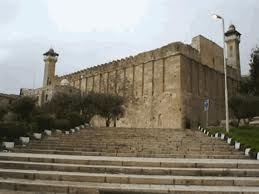
Yet, long before Moses was even born, while the fledgling nation had just settled in Egypt, there stood a silent witness, the Cave of Machpelah, close to the Palestinian town of Hebron. It holds the remains of just six people: Yacob, better known as Israel to us, Isaac, Sarah, Rebekah, Abraham, whom Elohim called from the land of Ur, and Leah. Here I have arranged the names with each initial letter in bold in such a way that each letter spell the name Yisrael. Therefore, within the cave of Machpelah, six people were buried. They were three couples, chosen by God to be the literal biological founders of the people of Israel. And this tells us something important about this nation, which is that God (Elohim) is in the midst of his people, and God is still the God of Israel to this day. Furthermore, just before Jesus was born, a large building was constructed by Herod the Great by 4BC. It served as a synagogue, a church and at present, a mosque. Today, this structure is known as the Tomb of the Patriarchs.

The Tomb of the Patriarchs

This very structure was most likely a familiar feature visited by the Holy Family (Joseph, Mary, young Jesus and his siblings) to pay respects to their ancestors, just as King David did a thousand years earlier, when he chose Hebron as the seat of his reign for the first seven years before he took the Jebusite city of Jerusalem.

When Roman General Titus razed Jerusalem to the ground in AD 70, the majority of the Jews were dispersed around the known world. Others were sold as slaves. The Holy Land became desolate, particularly Jerusalem. Yet as the Jews were scattered across the globe for rejecting their Messiah, the Tomb of the Patriarchs remained intact, having survived the Roman invasion under General Titus. For the next 1,878 years, the Tomb stood as a silent sentinel bearing witness that this land belonged to the Jews. It stood despite the would-be natural tendency for the Jews to intermarry and forever lose their identity.

But throughout the millenia the Jews retained their identity. Some say it might have been due to their traditions. But surely, can traditions alone be the sole binding force? The ancient Babylonians, Persians, Medes and other ancient societies all had their own traditions, but that was not enough to prevent eventual intermarriages and the resulting amalgamation into what are modern Arabs to this day. And America today is the melting pot for English, Irish, Polish, Spanish, Italian and other European nationalities who first settled there just a few generations ago. Yet the Jews remain uniquely a distinct people.

And Biblical prophecies regarding the future of Israel as a nation ruled by its Messiah-King remain standing. Even throughout the dispersion, the Jews knew from their own Scriptures that there will come a day when the whole nation will be back in its own homeland, and the Son of David will reign over them. It is something many Jews still aspire to this day.

The building of the Dome of the Rock mosque on the exact site of the Jewish Temple in Jerusalem during the 6th Century AD, was not done because Mohammad decided that Jerusalem was a holy city to Muslims. Rather it was done to stop the Jews returning to their homeland and rebuild their Temple - something which the Bible prophets insist that one day this would happen. As simple as this: as long as the Jewish Temple remains un-built, the Messiah cannot return, for, according to the Prophet Ezekiel, the Messiah will have his throne there. And so the area remains "safe" as long as the Jews remain dispersed around the world.

But in 1914 the Great War broke out. It was during this war when one Jew, Chaim Weizmann, invented a bomb which would turn events in favour of British victory against the Germans. For a reward from the British Government, Weizmann rejected personal riches in favour of the Jews returning to their original homeland of Palestine as their Zionist aspirations. On November 2nd, 1917, Foreign Secretary Arthur James Balfour drew up his Declaration to the leader of the British Jewish Community, Baron Walter Rothchild, to allow the Jews to settle in their own land. By 1937, there were 430,000 Jews in Palestine.

While the population in Palestine was growing, Adolf Hitler and his German Nazi Party brought on the Second World War in 1939 and with it, the Holocaust, as mentioned in my last blog. The desperate attempts to annihilate the Jews to solve what he called, "The Jewish problem" was astonishing! As mentioned in my last blog, it was an act of Social Darwinism which violently defiled every concept of mankind reaching greater civilisation by means of greater education.

Although the British Government, under Prime Minister A. Neville Chamberlain, reneged on the 1917 Balfour Declaration in 1939 in favour of Arab control and rule, most likely in keeping trade with the Arab oil supply running smoothly, this did not stop the formation of Israel as a sovereign nation on May 14th, 1948, three years after the end of the War in 1945. The 1939 White Paper, as it was called, temporarily stopped the flow of Jewish immigrants into Palestine, their homeland given by God to their father Abraham. The majority were refused entry into their ancient homeland by the British, and were sent back on ships to Germany and Poland to be ruthlessly killed in the Holocaust. Personally, I believe that this dreadful breach of the 1917 Declaration not only ended the British Mandate over Palestine, but it was also the cause of the loss of the British Empire. If this is true, and I have no doubt that it is, then every national leader around the world should heed the warning of the danger in tampering with the fate of the Jews, God's Covenant people.

Today, Israel is a thriving nation, despite its threatened destruction by the Arab nations around her. After becoming a nation in 1948, Egypt, Syria, Jordan and the Arab world in general, wanted to push Israel into the sea. Even the U.S.S.R. sided with the Arabs against Israel by supplying arms to the Arab nations. The young Jewish nation had to keep constantly on its guard. Then on the 2nd June 1967, the Six Day War broke out with Egypt, Jordan and Syria launching an all out attack against the Jews, yet the Jews winning an astonishing victory against them on the 8th June, six days later, and for the first time for nearly two millennia, the Jews took possession of the Western Wall, as well as winning the Golan Heights, a strategic vantage point for the Syrian military. With such a tiny nation winning a war against three much bigger nations can be only described as a miracle, a special protection by God's grace based on His promise made to Abraham, Isaac and Jacob (Israel).

For years to come after the Six Day War, Israel continued to suffer under the Palestinian Liberation Organisation, or the PLO, led by the late Yasser Arafat. Although later in his life, Arafat attempted to settle the issue using diplomatic efforts to offer peace to the Israelis for exchange of various Israeli territories such as handing back the Golan heights to Syria, his real intention was always to destroy Israel. Today, after Arafat's death in November 2004, Israel's main source of bother seem to be from the Hamas, in the Gaza Strip.

I titled my last blog The Snake Is Still Talking... It was about Social Darwinism being the concept of the snake of Genesis 3. The existence of Israel as a nation against all odds is not only a miracle from God, but also a major rebuke to Darwin's evolution. Contrary to the analogy of the dark and light coloured mice, tiny Israel withstood the onslaught of a group of much bigger and stronger nations, even against the Soviet Union, considered to be one of the major world powers. According to Darwinism, there is absolutely no hope of Israel surviving as a nation to this day. But the fact it does demonstrates the power and the grace of Almighty God and his keeping of this promises. And such promises should be a source of encouragement for all Christians. If God had not forsaken Israel, he will not forsake you, the true believer in Christ.

The snake is terrified of the Messiah's return. The Second coming of Christ will forever put an end to the snake's power. The snake has shown his anger, and as long as Israel exist, he will continue to be angry. The fact that it took two world wars to bring the Jews back home, together with Hitler's holocaust, the hostility of the Arab nations, along with the blocking of the Temple being constructed for the past 1,400 years - all shows the snake's displeasure in the thought of Jesus Christ reigning over Israel from Jerusalem. It would mean the end of his power.

The Bible predicts the future Battle of Armageddon. This is where the snake will make his final attempt to stop the Jewish Messiah to return to take the throne of his father David. It will be about the ownership of the city of Jerusalem. The intention of the hostile forces is to take the city from the Jews. But because forces from all nations of the world will be involved, before the battle against Israel gets underway, a dispute among their leaders apparently will arise, concerning on who will own the city afterwards. This disagreement will cause the forces to start in-fighting among themselves to their own destruction.

What a terrible, terrible shame! Every one of those soldiers could have instead, be sitting in the Kingdom of God, lavishing in the love their Saviour have for them, for all eternity. Instead they sided with the snake and accepted his offer of maggot-ridden apples of high social status, prestige, wealth and education.

Because of God's promise to Abraham, Isaac and Jacob cannot be broken, your salvation is equally sure, your eternal security.

Sunday, 6 November 2011

Rapture? It had already Occurred - Twice!

This article is a response to one of our fellow Bloggers who recently wrote an article on why he believes there will be no future Rapture of the Church, which if re-worded, would mean no translation from earth to heaven of all believers, both from the Old Testament and the New, all believers who lived and died in the past and all believers who will be alive at the time of the event. Since there is a forum of comments, mostly agreeing with the author, it looks to me that there is wide support.

Therefore I wish to present why I do believe in a future translation, or Rapture, of all Christian believers sometime in the future which only God knows. Unfortunately, there had been attempts by advocates to guess the date of this event, the failure of it happening on such dates bringing disrepute to the doctrine, both from Christians and atheists alike, and the likes of "The Rapture Generation" highlighted by the likes of Hal Lindsey and Tim LaHaye becoming the butt of ridicule.

The idea of the Rapture originated from Plymouth Brethren John Darby who developed the "Dispensation Theory" which is to say, that the Bible divides the whole of human history into seven time periods, each period emphasising a facet in God's dealing with mankind. Although I have already shown what these periods were, it is worth highlighting them here:

1. Innocence - From the Creation of Man to the Fall
2. Conscience - From the Expulsion to the Flood.
3. Human Government - From the Flood to the call of Abraham.
4. Promise - From Abraham to the Exodus.
5. The Law - From Mt Sinai to the Crucifixion.
6. Grace - From the Resurrection to the Second Coming of Christ.
7. Kingdom - From the Second Coming to the Last Judgement and end of history.

Although there are seven divisions of time listed here, each period known as a dispensation personally I believe that there is only one dispensation - the Dispensation of Grace. In other words, from the Fall of Man in the beginning, to the end of history, a person has always had his sins forgiven by the unmerited mercy of God, through faith alone. This was as much true with Abel and Enoch as well as with Moses at Mt Sinai and with all true Christian believers today. The whole of Hebrews chapter 11 emphasise this single dispensation of grace through faith alone.

However, looking at how the doctrine of Dispensationalism originated, its history here is very controversial! It was Jesuit Francisco Ribera who in 1590 defended the Papacy from Protestants accusing the Church as being the Beast of Revelation 17 with the Pope as Antichrist. This form of accusation began with Martin Luther and John Calvin and their followers, who came to the conclusion after reading and studying the Bible for themselves. So Jesuit Riberia, who of course, was a Roman Catholic, used the Bible to formulate that the Antichrist was not the Pope, but a politician who will rise to power near the end of human history - from his standpoint in time, far into the future. Ribera's associate, fellow Roman Catholic Cardinal Bellarmine, backed Ribera's research and conclusions.

It was Plymouth Brethren John Nelson Darby who turned to Ribera's thesis of the future Antichrist as the foundation to build his Dispensationalist theory, which includes a future Rapture of the Church. But this is why this makes the whole issue rather colourful. It occurred in the early 19th Century, a time when there was a heavy anti-Catholic sentiment among Protestants, something which was the result of Luther's and Calvin's conclusions reached in studying the Bible. The church structure in which Darby led and worshipped was against the clergy/laity division, against tradition, against the display of crosses and other works of art, against the liturgy, against the adoration of Mary and certainly against the Roman Catechism of worship and service format, along with the rejection of the Pope and his authority - all of these accepted as the mainstream of Catholic church structure. Therefore Darby's acceptance of Ribera's thesis of a future Antichrist and then using it as a foundation to build his own Dispensationalist structure would have been extremely ironic, being so unlikely if not impossible - unless Darby recognised a high level of Biblical truth within Ribera's works, which would come to the admission that God spoke through the Roman Catholic Jesuit, much maligned by the Protestants of the day.

John Nelson Darby


But although I recognise Darby, Scofield and even Ribera's works as valid, my advocacy of the Rapture is based on a very important issue, and it is this:-

If God has not finished with the nation of Israel, and he has future plans for the Jews, then the Rapture of the Church will occur. But If God had forever finished with Israel, and the Church had replaced Israel, then the Rapture need not occur.

There is an intrinsic relationship between Israel and the Rapture. Does God have plans for the Jews in a national sense, or not? If not, and the Church as replaced Israel (a thesis known as Replacement Theory) then we have no need to be concerned about a future Rapture. But even if the Replacement Theory is proved to be correct, the fact that two "Raptures" or translations, had already taken place in human history. I am, of course, referring to the translations of Enoch and Elijah, the only two men in the whole of history to be taken alive to Heaven. The case of Enoch is endorsed in the 11th chapter of the Letter to the Hebrews (verse 5).

This may give a clue to the identity of the two witnesses narrated in Revelation chapter 11. These two will be killed by the future Antichrist after 42 months of ministry within the city of Jerusalem. One popular theory is that Moses will be one of the witnesses. I don't hold to that idea. The reason being would be that Moses would have to die twice, the first at the foot of Mount Nebo some 3,600 years ago, then again in the future at Jerusalem. No man had ever gone through such an ordeal, not even the Lord Jesus himself. Enoch qualifies as the ideal candidate, alongside Elijah, both have yet to experience physical death. But the point is: The Rapture is not beyond God's capabilities!

So why the Rapture? Well, let's go back to the beginning.

Because God loves mankind despite being sinful, he had chosen to give an area of land to Abraham, which is to be passed to Isaac and then Jacob, who was renamed Israel, the father of a new nation which will always bear his name. When the fledgling nation was in Egypt, they became slaves to Pharaoh, from whom God delivered through Moses. Later King Solomon son of David, built the first Temple on Mount Moriah, just north of the city of Jerusalem. With the completion of the Temple, God has made a conditional promise that there will always be a descendant to reign in the throne of his father David, as long as each King stays close to God and keep his Commandments. (1 Kings 9:1-9, 2 Chronicles 7:11-22).

But the condition was not met by either Solomon himself or by most of his subsequent kings. By 586BC King Nebuchadnezzar of Babylon razed Jerusalem to the ground, destroying both the city and Temple while the exiles were carried off to Babylon. This was the end of Israel as a Kingdom, and it will not be restored until after the second coming of Christ.

Jeremiah the prophet lamented over the destruction of his beloved city, even to the extent of writing a canticle, The Lamentations of Jeremiah. But God gave him some reassurances that if a man can count all the stars in heaven, or disrupt the rotation of the Earth, then will God forever abandon Israel for all what they has done (Jeremiah 31, the whole chapter). In verses 33 and 34, after the nation had been restored and all the exiles and of the Diaspora had returned to the land God had given to Abraham, there is a promise that God will renew the heart of every Israelite across the whole nation. This has not happened yet. In fact, the regeneration of the heart can only come about through faith in the Lord Jesus Christ their Messiah. To this day, the vast majority of the Jews remains in unbelief.

Then there is a large chunk of Scripture that makes up the last twelve chapters of the book of Ezekiel. This section alone occupies 15 pages of my KJV Bible, compared with the whole of the first letter to the Corinthians, which occupies 13 pages, and the whole of Romans, which also occupies 13 pages. In other words, the last twelve chapters of Ezekiel is longer than any of the New Testament epistles. Yet these chapters, as seen by many Christians who advocate the Replacement Theory, are not only ignored, but the truthfulness of these chapters seemingly denied.

What do these chapters tell us? That God has sworn to protect and glorify his own name, and for his own name's sake, he will bring back all the children of Israel to their homeland. This was written soon after the city of Jerusalem was destroyed by Nebuchadnezzar, and it does not fit in with the return of the exiles under Ezra and Nehemiah. This was because the vast majority of Jews remained where they were resettled, and were known as the Diaspora, still very much in force during the time of Pentecost of Acts 2.

Ezekiel chapters 36-39 gives the detail of all the Jews returning to their homeland. In 36:24-27 Ezekiel specifies the cleansing of each person's heart and the sprinkling of clean water, the removal of the heart of stone to be replaced with one of flesh. This is the regeneration, nationwide, of the heart which comes only through faith in Christ, confirming Jeremiah's prophecies. Along with the promise of heart cleansing, the restored nation will once more be a Kingdom, with Jesus himself as the King. (Ezekiel 37:21-25).

From chapter 40 onwards, Ezekiel gives a thorough description of a future Temple. Future from our own standpoint in time, because it does not fit with the Temple built by Ezra, which was embellished by Herod the Great before the birth of Christ. For a start, there will be no curtain separating the Holy of Holies from the rest of the structure, but a pair of beautifully panelled doors. Then in 43:1-7 we have the glory of the Lord enter the Temple from the east gate, his body parts (soles of his feet) described in verse 7, strongly indicating a risen and glorified Lord Jesus. This did not happen at the second Temple built by Ezra. Also, a river flows out of the Temple precinct to nourish the land of Judea and to sweeten the water of the Dead Sea, so that this presently desolate salt lake will become a habitation of fishes.

Then the priests who minister to the Lord will be the sons of Zadok, a descendant of Aaron. Now if this is all future from now, then it must be said that God has, and will preserve the descendants of Zadok, and it is well to say that Zadok's offspring are with us today! This is backed by the allotments given to all eleven tribes of Israel, something which never took place again after the Exile. Therefore it is safe to conclude that all twelve tribes of Israel are with us today, and only God knows which tribe every Jew belongs to.

Now, if we are to believe that there will be a future Temple to be built in Jerusalem, this present some massive problems. First of all, why should a Temple be built anyway? Did not Jesus Christ atone for all sin for all time? If so, then why the need for more sacrifices?

Now I will be honest here. I do not know why this Temple will be required. But this is a case of believing the Word of God, and submitting to what it says. If the Bible teaches that a future Temple will be built, then who am I to argue? This is a case where I must bow the knee, and my soul to yield to the authority of God's revelation. Trying to argue intellectually would be utterly foolish and bring no lasting fruit.

Then there is another big problem - the Islamic Dome of the Rock sitting spot on where the Temple will be. We know that in no way will the Arabs allow any Jews to lay their fingers on that mosque.


The Dome stood on Temple Mount for the last 600 years. As long as it stands, the Jews were not able to build the third Temple and offer sacrifices. I believe that God allowed this arrangement while the Bride of Christ, which is the Church, reaches its fulfilment. Only when the Church as reached the exact predetermined number will God allow the Temple to be built, and then come to rule the restored Kingdom of Israel from the Throne of David, which will be located within the Holy of Holies of the Temple itself.

When I spent a few months in Israel back in 1994, working as a volunteer at a Christian Conference Centre, I took the opportunity to look at a scale model of the Temple the Jewish people had in mind to build. The model was on public display within Jerusalem Old City, in the Jewish Quarter. There were a number of Orthodox Jews who were against the construction of the Temple but general public opinion seem to be highly favoured of the idea, hence the display.

But there were, and are, two obstacles blocking the project. One is the presence of the Church here on earth. It is to this, at present, where God is ministering, building a people for himself who will make up the Bride of Christ. When she is ready, she will be called up to heaven to marry her Groom. We call this calling to the wedding of the Lamb's Bride the "Rapture".

Then secondly, right on the site where the Temple needs to be built, stands the Islamic Dome of the Rock. This must be demolished, or at least relocated before any construction of the Jewish Temple can even begin. There is no way, at present, that the Arabs would even consider such an idea. Also, where at present, there is much disunity among themselves in the Muslim world, the very threat to the Dome of the Rock would quickly unite the entire Arab population to push Israel into the sea. It could even start a world war.

Therefore it must take an event of huge global proportions to get the Arabs to change their minds. This event is so terrifying, that global pandemonium will seize everyone still alive. The sudden disappearance of millions of people across the globe. The consequences of this will be so dreadful that countless multitudes will go insane due to unrestrained panic. The common explanation for this sudden phenomenon most likely to be an abduction of the human population by extraterrestrials to serve as slaves on another planet. Suddenly those who had remained behind are under the mercy of a power they have absolutely no control. Who will be next? Will more be snatched off this planet to populate another as slaves? It is then that a statesman will suddenly arise who will claim to be the intercessor between the remaining mankind and the alien power. The people will understand that they will be safe if they submit to this man. And he will instruct the Jews to demolish the Dome of the Rock to make way for the Temple, and not a single Arab will oppose him. His motive to build the Temple will be purely selfish. As he sees the construction taking place, this statesman anticipates the day he will stand at the imposing entrance and proclaim himself to be God! (See 2 Thessalonians 2:2-4.)

This, of course is just a scenario, but one that could be close to reality. But for Israel to take centre stage again, the Christian Church must be removed, and so it shall, to present herself as the glorious Bride, dressed in white and adorned for the Groom who will accept her as his own.

Maybe who knows, perhaps Ribera, Darby and Scofield did see something in the Bible after all, the restoration of Israel as a Kingdom once more.

Sunday, 30 October 2011

A Letter to Saul (Paul) of Tarsus

Dear brother Saul.
I recall the day you came all the way from Tarsus to visit us at the Sanhedrin in Jerusalem with your father, a fellow Pharisee and one of us, to be taught by us in preparation for your initiation into membership of the Council here in Jerusalem.

Let me say that I was impressed with your zeal for the traditions of the fathers, and you took a great liking to our brother Zerah, whose fiery devotion to our traditions remains unsurpassed to this day, and brother Saul, I was able to see very clearly that he was your role model and even in your youth you have every desire to be just like him.

But it was also brother Zerah's devotional zeal which, I'm very sad to say, made him the ringleader who successfully persuaded the crowd to have one man in particular, crucified, although according to my opinion, he was innocent of any wrongdoing and therefore not deserving to die at all. I have examined him myself by asking him questions during the night, so that we can discuss matters without any disturbance. Not only was his answers so graceful, but he also raised issues concerning the things of our spiritual standing with God, and not on what we do or the traditions we keep.

Then I also watched him do some amazing things, like bringing sight to a man born blind - on the Sabbath. This is when I became convinced that God was with him, for as the man who had received his sight himself testified, no man can give sight to the blind except God be with him. However, this enraged brother Zerah, who insisted that no one who claims to be God's prophet breaks the Sabbath. And he was right, of course.

But it was when this man brought a dead man back to life at a nearby village of Bethany that made such a miracle the last straw for brother Zerah. He actually believed that the whole of Israel will turn against the Sanhedrin to follow this one man, brother Jesus of Nazareth. It was then that brother Zerah stirred up a riot among the crowds to having him sentenced to death under the Roman procurator Pilate.

As brother Jesus of Nazareth hung on that cross, I heard him cry out, "ELOI, ELOI, LAMA SABACHTHANI" which means, "My God, my God, why have you forsaken me?"

As I stood there, I began to mutter where he left off -

"Why are you so far in saving me,
so far from my words of groaning?"

Then I recall that which came to my mind, and I muttered:

"Many bulls surround me,
strong bulls of Bashan encircle me.
Roaring lions tearing their prey
open their mouths wide against me.
I'm poured out like water,
and all my bones are out of joint.
Dogs have surrounded me;
a band of evil men have encircled me,
they have pierced my hands and my feet,
and divide my garments among them
and cast lots for my clothing."

I then also recall muttering under my breath:

"Surely he took up our infirmities
and carried our sorrows,
and yet we consider him stricken by God,
smitten by him and afflicted.
But he was pierced for our transgressions.
He was crushed for our iniquities;
The punishment that brought us peace was upon him
and by his wounds we are healed.
We all, like sheep, have gone astray,
each of us has turned to his own way,
and the Lord has laid on him
the iniquity of us all."

Then I recall the words he himself spoke while we were alone that night:

"For God so loved the world
that he gave his only begotten Son,
that whosoever believes in him
should not perish
but have everlasting life..."

From that moment, brother Saul, I began to cry, publicly and without shame. His innocence shone so brightly, even in his sufferings, touched my heart. I just wept as I stood in front of that cross.


Then not long afterwards, we were in this large upper room in Jerusalem, a gathering of about 120 of us. What's more, there were women among us, including the mother of brother Jesus, some of her friends - and this Canaanite woman with her young daughter. A story goes that Jesus did not hesitate to heal her daughter of some...some infirmity. Now as you know, brother Saul, we Israelites, and particularly us Pharisees, have a rule that there must be no mixed-gender assembly in worship. At the Temple and at every synagogue, men assemble at one place, women at another. Furthermore, our wives were looked on as just our property, here to bear our offspring. This was endorsed in the last of the Ten Words, which says that one shall not covet his neighbours possessions, which includes his wife.

Then to be in the presence of a Gentile was an abomination, and contact with such a one would have defiled us. Let alone a Gentile woman like the one who sat next to me, who would have been the lowest of the low, and practically an abomination to any Pharisee. No Gentile would be allowed to enter a house of an Israelite, likewise, no Jew would enter a Gentile's house. We Jews are by nature very nationalistic. And even among us Jews, we as Pharisees looked upon the shepherds of sheep as pariahs, social underlings, along with the publicans, who had betrayed us by complying with the Romans in exhorting taxes to pay these Romans, and their cohorts, the sinners. We Pharisees stayed well away from these people, lest we become defiled by their presence.

But that day in the upper room, things were very different, and things will never be the same again. We all sat there each and everyone of us under a deep, heart-searching conviction. Conviction of our sin, our iniquities, our weaknesses, our shortcomings and failings. And our strong hold on our traditions, our religion, our nationality, our gender divide, our social classes - had all crumbled to dust and blown away like chaff in the wind. We were all in it together - all of us falling short of God's glory and the sudden realisation that we are all in need of his mercy, regardless of who we are.

That was why, brother Saul, I wept when I stood at the cross. The very innocence of this Jesus of Nazareth caused everything I hold dear to become as nothing, as I already explained.

Then as I sat in that room, the daughter of the Canaanite woman turned and cried out, "Mummy!" Her mother then broke down into tears and wept uncontrollably as I put my arm around her to give some comfort. This Jesus of Nazareth, who had shown her so much love as he healed her daughter, had pierced her soul, washing away what must have been a huge pile of sins, guilt and shame. Her home town was Tyre, way up north of Jerusalem, in the Phoenician province north of Galilee. After her daughter was healed, she decided to leave her home to search for this Jesus, but by the time they arrived here in Judea, this Jesus who she was seeking had already died.

She was homeless here in Judea, as no innkeeper would accommodate a Canaanite woman, so I took her in with her daughter until she was ready to return home to her house in Tyre.

Now, brother Saul, I am convinced that this Jesus of Nazareth is the Messiah we were waiting for. Contrary to popular opinion, he did not come to defeat our Roman oppressors and liberate Israel. That sort of Messiah -King is he who our brother Zerah is waiting for and expecting. No, rather this Jesus of Nazareth had done something much more important. He came to liberate our hearts from sin and its guilt and has given us the capacity to serve and worship God from within our hearts, and not just from the tablets of stone which God formerly used when Israel was set free by Moses from the Egyptians.

Now, brother Saul. You are still young and you have yet much to learn. But you have this fiery zeal and enthusiasm for our traditions of the fathers. Your ambition is to keep the Law of Moses perfectly. Therefore Caiaphas, the High Priest had set you under the tutelage of brother Zerah, whose own zeal will in no doubt rub off on you. But let me warn you. If you mention this Jesus of Nazareth to brother Zerah, he will get cross with you and he will instruct that he was not the Messiah we were waiting for, as he did not set Israel free from our Roman oppressors. But I would also ask you, dear Saul, to consider everything I wrote here. This Jesus of Nazareth is the Messiah. And there is much talk of him rising from his grave three days after he died on the cross. If this is true, and I don't think there are any reasons for doubting, then it will be the same Jesus the Messiah of Nazareth who will one day return to reign as the true King of Israel, on the throne of his father David.

With much fatherly love,
your elder and brother in the Sanhedrin,

Nicodemus.

Friday, 22 April 2011

Good Friday? I'm Confused!

The Easter Weekend. Like everyone else born in the UK and grew up in a Christian environment, we all believe that Jesus Christ was Crucified on a Friday and then rose physically from the dead early Sunday Morning. Thus we say that he was in the tomb for three days.


This has been our tradition for some 1,700 years. It was formalised by the Roman Catholic Church early in its history and it passed unchallenged into the Reformed churches who continued to worship on Good Friday. Even today, I was at Ascot Baptist, my home church, worshipping on Good Friday.
So far so good.
Except that ever since I began to read the Bible from 1973, I felt uneasy about a Friday Crucifixion. Especially when the Lord Jesus was speaking openly and was making predictions about himself. And this appears at just one verse in the whole Bible, Matthew 12:40, which reads:
For as Jonah was three days and three nights in the belly of a huge fish, so the Son of Man will be three days and three nights in the heart of the earth.
With a statement like this, a Friday Crucifixion doesn't seem to make sense. And again, why couldn't have Jesus simply said "Three days" and left it there? Rather, was he deliberately trying to tell us something?
A Friday crucifixion may have found its place if three days and two nights were on his mind - Friday afternoon, all day Saturday and Sunday morning before daybreak. Even on the Hebrew clock, when the new day begins at sundown, the same would still apply. Friday would end at sundown, and Saturday would have ended at sundown the next evening, making all of the second night as part of Sunday itself. It would still be two nights, not three - small hours Saturday and small hours Sunday.
Again, as with the previous two articles, I will try and keep this one as simple as I can.


In the old Testament, soon after the children of Israel were lead out of Egypt and settled near the foot of Mt. Sinai, the Ten Commandments were given. This was followed by many laws and regulations for daily living. Among these laws, the Passover was instituted. In fact the Passover was instituted while the Israelites were still in Egypt. It was to mark the anniversary of the deaths of the firstborn of their Egyptian taskmasters, allowing Israel to escape in haste. What the children of Israel had to do was to kill a lamb, sprinkle its blood on their doorposts, roast it and then eat it with bitter herbs and unleavened bread. That night, when the Angel of Death visited Egypt, he passed over every house which had blood on its doorposts, resulting with all in the house spared from death.
Then the anniversary of this event was to be celebrate every year at the specific day, week and month.
The exact details being this, at the Spring month of Nisan:
10th Nisan - Lamb selected.
14th Nisan - In the afternoon, lamb killed, roasted.
15th Nisan - early at night, Passover lamb eaten, first day of unleavened bread, which is to last a full week.
If this is compared to the Passion of Jesus Christ, the events would unfold like this:
Sunday 10th Nisan - Jesus Christ enters Jerusalem on a donkey and reveals himself as the Jewish Messiah (i.e. Christ) to the crowd waving palm leaves.
Thursday 14th Nisan - after sundown - Last Supper with his disciples, in the Garden of Gethsemane, betrayed by Judas Iscariot, arrested, brought to the Jewish hall of judgement, at daybreak, brought to Pilate. All leaven removed from every Jewish household, hence "the day of Preparation."
Thursday 14th Nisan - Midday, Christ Crucified. At 3.pm, Jesus Christ dies, Passover lambs slaughtered in every Jewish household. The body of Jesus taken down from the cross and buried.
Friday 15th Nisan - First day of Unleavened Bread, or a "high day" after sundown the freshly roasted Passover lamb is eaten.
Saturday 16th Nisan - Normal weekly Sabbath.
Sunday 17th Nisan - before daybreak, Jesus is resurrected, stone covering the tomb's mouth is rolled away, Mary and her companions bring spices to further anoint the body, resurrection revealed and disciples told.
So to make it simpler:
Sunday 10th - Triumphal Entry.
Thursday 14th - Crucifixion, death, burial.
Friday 15th - A "high day".
Saturday 16th - Normal Jewish Sabbath.
Sunday 17th - before daybreak, Resurrection.

Thus the three days were:
Thursday late afternoon, about three hours of daylight left.
All day Friday.
All day Saturday.
The three nights - as we understand them:
Thursday night
Friday night
Saturday night.
As the Jews understood them:
Friday morning
Saturday morning
Sunday morning.


Therefore is the idea of a Thursday crucifixion the correct one?
That's how it looks to me.
The idea of a Friday crucifixion, I think, stemmed from the reading of the Gospels when the writers insist that the death of Jesus took place "on the day of preparation for the Sabbath." But that Sabbath was not the weekly Saturday Sabbath, but "a high day" (John 19:14 AV.) In other words, the first day of Unleavened Bread, or Passover Week, which fell on a Friday.
In John 18:28, the Jewish accusers refused to enter Pilate's hall, for fear of defilement, "because they have yet to eat the Passover". (So the Passover wasn't eaten yet.)
But what about Matthew's account of Jesus eating the Passover with his disciples?
Jesus sent two of his men to be lead to a large room to prepare it for that evening. It was still Wednesday Nisan 13th when the room was located and prepared. The meal they ate that night was the Last Supper, not the Passover, and when they all sat at table, it was after sundown and as such, it was already Thursday the 14th, the same day as the crucifixion and the death of Jesus Christ timed to coincide exactly with the killing of the Passover lambs across Israel.
A Thursday crucifixion? I would guess that most if not all Christians reading this would dismiss it as fantasy from an over-emotional manual worker lacking education.
But I would recommend reading How Close Are We? by Dave Hunt, who gives a thoroughly in-depth investigation of the passion week and presents it in easy to understand yet accurate scholarship.
A Thursday Crucifixion satisfies any doubts I might have had on the most crucial point of the Christian faith. If something does not add up, it would be much more difficult to stay firm in the faith during difficult or testing times. To know how thoroughly accurate the Bible is, and always have been, is the sharp sword that would make old Mr Doubt run away without looking back!