Total Pageviews

Showing posts with label Health. Show all posts

Saturday, 26 February 2022

One Man's Threat to World Health?

A man wearing a suit and tie sitting in his office looks as respectable as any other well-educated member of staff attending to his duties. Except that this guy is quite famous - or rather infamous - as he's in full command of a strong military force, at this moment, in full progress in invading a small sovereign state.

St Michael's Church, Kyiv, Ukraine. 


And so, thoughts are going around whether the invasion into Ukraine by Russian forces is just a start of a westward expansion, and as one Facebook friend contributed in a discussion, President Vladimir Putin's real intention would be to extend his forces as far West as Lisbon, the capital city of Portugal on the Atlantic coast, thus transforming the whole of the Eurasian bloc into one revived Soviet State. 

But that was just one friend's speculation on social media. How near to the truth, or far from it, only time would tell. Also whether the North Atlantic Treaty Organisation or NATO would flex its own muscles to defend its territories, or would it just sit there, powerless to do anything while the enemy's pride and determination are inflated further.

And so the newspapers, especially The Daily Mail lead its readers to believe that we're on the brink of World War Three, a situation comparable to 1939. But then again, such a newspaper has a habit of adding extra colour to specific events, especially on the coming spell of inclement weather. After all, the whole object of the newspaper industry is to sell.

Just to imagine an advert identical to the 1914 poster featuring the image of Lord Kitchener pointing his finger directly at every passerby, with the words, Britons Needs You! appearing at every street corner. If I had read this correctly, I think there was a General who suggested that if a global war were to break out, mandatory conscription may be on the cards. After all, most Ukrainian men aged between 18 and 60, both in the military and civilians, are called to fight the invading Russian forces, and a large percentage seem willing to comply.

If any of this is true (and I can't verify this at the moment) - I'm wondering how the Millenial generation here in the UK would handle such calling. Furthermore, we "Baby Boomers" - at present in 2022, aged between 57-74 years, would be considered the luckiest generation ever to exist, living out full, war-free lives. As most of our generation are either pensioners or soon to retire, perhaps we'll be regarded as the most hated generation by those younger than us, as they would likely be more eligible for conscription.

With up to 76 years since the end of WW2, I'm wondering whether our present Western society is more averse to the possibility of warfare. Does just the thought of running towards the enemy with a powerful gun under your arm send shivers down the spine? Or, to the contrary, keen enough to apply to be sent abroad to fight? News of this came to light during the Gulf War of the early 1990s. Many who were unemployed or from mundane, dead-end, or boring jobs actually applied for posts at the Army Recruitment Centre across the country with the specific aim to be sent to the Gulf. Unfortunately for them, our forces don't send their recruits abroad without months of adequate training here at home, thus dashing their hopes for immediate adventure.

Maybe they had a point. Tales of comradeship and a strong sense of camaraderie among troops are sometimes shared with the public, the level of loyalty towards each other which just doesn't exist in an office environment. It looks to me that such camaraderie is vital for the team's morale when fighting the enemy. This, along with the added sense of adventure and daring in an unfamiliar environment. Not so much for patriotism as for personal excitement.

But other stories of Post Traumatic Stress Disorder, or PTSD, began to percolate into our media, sometimes via the BBC news bulletins. Nothing new here. I recall the late sixties and into the seventies, especially during college days of 1968-1970. As I walked through the streets of London, I came across many "tramps" or the homeless. Most of them were elderly men, war veterans who fought in WW2 and had returned with PTSD, back then the malady unrecognised by health professionals, as they sat, begging for money from passersby and often sloshed with rum, whisky, or even methylated spirits. And one musician, Ralph McTell, wrote his song, Streets of London, in 1969, during my college days, and it was released as a single in 1974. The most striking was the fourth verse which reads:

Have you seen the old man outside the seaman's mission -
Memory fading with the medal ribbons that he wears -
And in the winter city, The rain cries a little pity -
For one forgotten hero, and a World that doesn't care -

It's the kind of song that jars my thoughts into their proper place, to see that I am so fortunate to be born not long after the War, and never had to suffer from warfare experiences. Yet, I can't help feeling for those who chose to fight in the 1914-1918 Great War. There, in the trenches in Northern France and Belgium, during the bitter winter cold and snow, men crouched as they fired their guns across to the enemy, while the hostile bullets whizzes past their heads, and never knowing who was next to take his last breath. Death remained imminent, especially for those on the firing line. Little wonder their adrenal glands were working harder than normal, constantly pumping out adrenaline into the bloodstream, inviting illnesses of all kinds, including PTSD.

The original 1914 Kitchener's Poster.


To some of these men, it got too much:
 
Stress >> Emotional turmoil >> Adrenalene >> PTSD >> Panic.*

But PTSD wasn't recognised by any doctors of the day and therefore the malady was branded as cowardice, and thus treated accordingly. Many were shot by their own superiors, and they were buried without their names appearing on any cenotaphs or other memorials for the next century.

Therefore, I can say thank goodness that the medical world has come a long way in recognising this malady! I have watched how veterans are now treated with greater sympathy than their predecessors were.

Perhaps I need to ask myself, what is the Christian point of view? I should I perceive this whole shenanigan? Maybe, I could think back to the exile of the Jews to Babylon in 586 BC under King Nebuchadnezzar. According to the Biblical prophets, the main reason why the Jews had to go into exile was due to their ongoing rebellion against God and his laws. Maybe it could also be the reason why the Russian president was allowed to rise to power and then fulfil his heart's desire without or with little resistance. Thus the realisation of forthcoming world war could shock some to turn to God.

Many around the world are turning to prayer. And that includes a video of a group of Ukrainian men assembling at a metro station to worship God. To the atheist and the unbeliever, prayer looks to be utterly useless against a man of such a high calibre as Vladimir Putin. But one has only to look back at WW2. As Adolf Hitler and his German forces were about to invade Britain, the whole nation fell on its knees, praying to God for deliverance. Soon after, Hitler decided to delay the UK invasion for some reason. For this decision, the Fuhrer eventually suffered defeat by the Allies.

Just as I need to remind myself that power-crazy dictators often suffer despicable deaths. I can name three straight off the board - Adolf Hitler who committed suicide, Iraqi leader Saddam Hussein and Lybian president Muammar Gaddafi were both lynched by their own people. Whether Putin will be dethroned by his own people, will stand trial or even executed, is something we can only wait and see, as there are rumours that not the whole of the Russian population is behind Putin's move to invade Ukraine. Let alone most of the world's leaders. However, one issue is certain: God is much bigger than President Putin.

This morning, with the possible threat of war troubling my mind, I had my usual coffee at Starbucks with a newspaper in front. The bar was far busier than usual, with long queues and occupied seating. Mind you, the sky was cloudless (for once) the sun was out, and the feeling of Spring was in the air. I tend to believe that this morning's weather had more likely brought out the people to enjoy a stint at Starbucks, rather than the ongoing gloomy news bulletins. How everyone around thought or believed, only each one knows. Did any have faith in God? Or in the European Union? Or in NATO? Or even in the courage of the Ukrainians themselves to fight against the Russians? Or simply shut the bad news out of their minds, forgetting it all? Whatever it might have been, or a combination of factors, just about everyone around me was happy, chatty, and sociable.

No doubt, far better for national health than if everyone shivered in their shoes with fear, worry, and tension. Had national fear had gripped us all, think of  all the adrenaline constantly being pumped into so many bloodstreams, eventually causing illness of some kind, whether it'll be mental or emotional distress, bringing loss of appetite, a lowering of the immune system, vulnerability to all infections, even overeating and weight gain - or more serious illnesses such as headaches, cancer, heart failure, colitis, organ inflammation, arthritis, high blood pressure, kidney disease, back pain, rheumatism, insanity, dementia, and many other diseases.**

Thus, it could be said that such fears and anxieties could eventually overwhelm the National Health Service here in Britain. All by just one man in Moscow! 

To many, prayer is a complete waste of energy made by a few who are addle-headed and living in a fairytale world of Young-Earth Creationism and pseudoscience fantasies. But here, I just would like to mention a prophecy found in the Old Testament of the Bible, the book so highly ridiculed by atheists.***

St Basil's Cathedral, Moscow.


It concerns Gog, or Rosh, the prince of Meshech and Tubal, in the land of Magog. That, during the latter days, after all the Jews have returned to their homeland after suffering a worldwide scattering, a greedy thought will enter the mind of its "king" to lead his troops to plunder the land of Israel of all its wealth. The location of Magog is also given, which is directly far north of Israel. Bible scholars and historians have identified the names of Rosh, Meshech and Tubal as Russia, Moscow and Tobolsk respectively. As they make their invasion, still in the future from our timeframe, God will intervene to protect Israel, which is the apple of his eye. In those days, anyone who turns his face against Israel will end up in serious trouble.

Isn't this prophecy so strikingly similar to our present set of circumstances? Is the Bible true after all?

Turning to God in prayer and for deliverance is the best move any nation, church, family, and individual can make. Not only history has shown that it had worked before, but such prayer will prove beneficial to one's health.
----------------------------------------------------------------------------------------------------------
*For more on this, see one of my previous blogs by clicking here.
**Dr S.I. McMillen, MD, None of These Diseases, 1963, 1980, Lakeland Publishers.
***Ezekiel, chapters 38-39.

Saturday, 18 April 2020

Illness - Christians Not Immune.

Within the last few days, I was pouring through Paul's letter to the church at Philippi when I came across a little-known character by the name of Epaphroditus. He was sent by Paul and Timothy from Rome to the coastal city located on the eastern tip of Macedonia. It was while still in Rome itself that he fell ill, "almost to the point of death" according to Paul's own testimony (Phillipians 2:25-30.)

There was a good chance that Luke, the physician, might have been there with them, according to 2 Timothy 4:11, and with prayers and supplications, Luke might have helped the sick believer back into recovery sometime before the apostle sent him on his way to visit the Philippian church. Unfortunately, we are not told of the nature of Epaphroditus' illness, but going by Scripture, it looked to have been a bacterial or viral infection rather than an external injury.

What was the treatment of illnesses like so long before the advancement of modern medicine and the rise of the National Health Service? And with the supposed non-existence of antibiotics? It was on our 12th anniversary trip to the Greek island of Kos, of the Dodecanese, that some light was shed during a trip to the Asklepieion ruins, where around 400 BC, Hippocrates practised his medicine, and it was also the birthplace of the Hippocratic Oath, still taken today by medical students. When we visited, I was surprised at the Roman walls on one side of the site. Apparently, they were the remains of hospital wards where patients were kept in during their course of treatment, which included the taking various herbs reputed to having medicinal properties to hasten recovery.

Bust of Hippocrates.


But the main feature of this ancient hospital were the temples of worship, one on each level of the three-tier edifice. The upper level held the temple where patients with a terminal illness can go to and pray to his specific deity for a heavenly afterlife or even for miraculous healing. The sites on the other two levels were also for patients to pray and offer sacrifices for their healing. What I find remarkable is the parallel between this ancient establishment and the multi-faith chapel featured in all major NHS hospitals of our day. Medicine and religion were bedfellows back then as they still are, to some extent, at present. The head photo of this Blogger page features partially-restored pillars of a Roman temple at the Asklepieion, with my wife standing between them.

Therefore, it comes as no real surprise that Epaphroditus received medical care, most likely, in the form of medicinal herbs prescribed by Luke. And this, coupled by prayer, making his path to recovery with hardly any difference to that of Hippocrates and his form of healing at Kos some four centuries earlier.

Except for whom to pray to.

I am wondering whether Luke, who is the author of both his Gospel and Acts, had received his medical training from the students and followers of Hippocrates. Since he was a Greek, I am even pondering on whether this great man of God had even trained at the Asklepieion. Too bad that I had never attended a theological college or seminary to have learned more about Luke's background. As such, I can only speculate. But on one issue I can be more certain. For Luke to qualify as a physician during his pre-conversion days, he too most likely had to take the Hippocratic Oath, just as today's graduates do. The only difference lies that throughout ancestry, the names of various pagan deities were included in the Oath. Since then, this has been omitted from the rest of the Oath. Those were some of the details we learnt during our visit to the Asklepieion archaeological site.

I can understand why some Old Testament saints fell ill from time to time. The ancient tent-dweller Job was one good example. King Hezekiah was another. He was a godly king of Judah who fell ill, seriously enough to cry out to God when he was told of his imminent death. Back then, the Crucifixion with its atonement for sin had not yet taken place. But even after the Crucifixion and the Resurrection of Jesus Christ, if Epaphroditus' experience had anything to go by, then having the righteousness of Christ imputed does not make the believer immune to illness, an issue which may be more difficult to understand.

In support of this, I can cite more believers as examples. Timothy is one. According to 1 Timothy 5:23, this lover of God had frequent stomach problems throughout his life, and apparently had never experienced real healing, not as far as I know, anyway. Here I'm beginning to see a similarity between Timothy and my wife Alex, whose sufferings remain ongoing to this day. With the drinking of wine to replace water, Paul was not a medical student, but Luke, who most likely was with them, probably advised them on this matter, who in turn might have learned from the writings of Hippocrates.

Trophimus was another disciple who had suffered some illness, as mentioned in 2 Timothy 4:20. He was one of several believers who accompanied Paul on his missions (Acts 20:4) but the apostle left him behind at Miletus because he fell ill. Apparently, no prayers were offered, at least none were recorded, but Paul instructed Timothy to send greetings nevertheless.

Then there is the Apostle Paul himself, who was thankful to the churches in Galatia for giving him moral support for an illness he was suffering from, as recorded in Galatians 4:12-15. Apparently, it was at his eyes which followed his dramatic conversion in Damascus. Paul saw that his illness was "a trial" to the Galatians. In other words, it was offputting. If these believers were put off by the Apostle's eyes, this may indicate a mucus discharge, suggesting conjunctivitis. If this ailment has impaired his eyesight, then his need to write in large letters of Galatians 6:11 was necessary to see properly what he was writing. With his other letters, they were written by others directly under Paul's dictating.

An example of conjunctivitis.


This "thorn in the flesh" of 2 Corinthians 12:7-10 could be his referral to the same ailment of his eyes. I have a good longstanding friend who once disagreed with me over this during a discussion we had back in the 90s. He believed that "the thorn in Paul's flesh" was a mischievous person who was constantly following the Apostle, persistent in his harassing of him where ever he went. The disadvantage with this argument was that this tormenter would have boarded every ship Paul had sailed, as well as being present at every preach he delivered. All Paul had to do was to ask one of the ship's crew members to order the person to disembark at the first chance. The case of an ailment in his eyes, possibly conjunctivitis caused by either bacteria or virus, is far more plausible.

Experience with my wife's illness over the years, along with this present Coronavirus pandemic, has shown me not to be so independently minded which is part of my natural character, but to rely on God's goodness and mercy, thanking Him for all our provisions and not to worry about the future. Where worry is concerned, that is one of my obvious weakness, and it's tied to my quest for independence. But to be given the responsibility as my wife's carer is what I see is a privilege rather than a burden. Even then, I still panic whenever she suffers intense pain.

I can understand the opinions of some Christians who are into the healing ministry. First of all, let me say that they are my brothers in Christ, and therefore I love them and accept them as they are, sons of God and fellow believers. However, they will quote a command Jesus gave to his disciples when he sent them out during his own ministry, recorded in Matthew 10:8, that we were given authority to heal the sick and to drive out demons, that is to tell them to leave the person in the Name of Jesus, and to be healed in the Name of Jesus. The trouble with that is in the past when Alex was prayed for in this manner, it made things worse. As I see it, this kind of ministry looks to be very dangerous, and as such, I much prefer not to take part in it.

Therefore how can all the healings Jesus had performed, and by his disciples after his Ascension? Here is where those in healing had missed the point. According to the Bible, particularly in the New Testament, whenever a miracle is performed, whether it's to heal the sick and infirm, to drive out demons, even to raise the dead, or to supernaturally feed a large crowd - it's always done to bring glory to God. That is, to persuade people to believe that this Jesus of Nazareth is the Christ, their Messiah, who will atone for their sin and rise again from the dead. A conversion of a person from sinner to saint always glorifies God.

And so the miraculous healing of a crippled beggar by Peter, recorded in Acts 3. The rest of the chapter and into chapter four records the explanation for the miracle and disputes over it by the Pharisees. The point of the miracle? To prove that this Jesus of Nazareth crucified is the risen Christ.

Then there a case between Peter and a female believer named Tabitha or Dorcas, depending on the language, Aramaic or Greek (Acts 9:36-42.) A devoted disciple of Christ, she still fell ill and died. Those in the healing ministry would point out that this is a classic example of compassionate healing. And indeed, it was. But the real purpose of the entire episode is found in verse 42, where it says:

This became known in all of Joppa, and many people believed in the Lord.

Even Paul's raising of Eutychus, a young man who fell asleep during Paul's long sermon and fell from a ledge and died, was raised to life to glorify God (Acts 20:7-12.) With very long sermons, it's quite tempting to feel bored after a while and being late at night too, to doze off. It just shows how human they really were, and not spiritual super-giants! I know full well that if I was in that situation, I would have dropped off to sleep too. There is no record of new conversions recorded after this incident, but the interruption has kept his audience awake until daybreak and they were able to take Eutychus back home. It looks as though God allowed such an incident to occur for his audience to hear the word he has for them.

During these troubled times, when news of other 800-plus deaths with Coronavirus here in the UK within the last 24 hours, everything looks so hopeless as the NHS seems to be fighting a losing battle against the virus. Where is God in all this?

When adding everything together, I have come to this conclusion. And that is, to the unbeliever, illness and pandemics like our present one is meant for people to call upon God and fall at his mercy and to receive the eternal life for all who believe. How I long to see many, many people saved through the redemption Jesus Christ has already provided.


For believers in Christ, God allows sickness, infirmities and illnesses to infect their lives. But as Paul had already explained, it's to keep us from becoming conceited. It's not necessarily a punishment for sin, as sin has already been dealt with on the Cross, and the imputed righteousness of Christ into our accounts makes us seen by God the Father as one with his Son. Rather, illness ravaging believers are part of the discipline God needs to bring us into maturity in Christ. And the Apostle Paul had quite a lot of suffering, not only from illness but also from persecution, flogging and imprisonment too. Conceit can be pretty difficult to quell!

Saturday, 28 December 2019

Two Decades, Looking Back...

As I get older, time seems to fly. Especially after retirement from 47 years at a full-paid job, the last 35 years being self-employed. But since this is the final blog of not only the year 2019 but the whole of the 2010s, here I would like to look back at the enormous changes over the last twenty years which enabled us to strengthen our marriage bond and to feel the privilege to take on a new responsibility as a carer, something I had never anticipated during my earlier years of both bachelorhood or married life alike.

2010 began not long after our 10th anniversary. During those days making up the first three years of the 2010s decade, Alex began to suffer from periodic back trouble every day. This I believe, was a psychosomatic throwback of both mental and emotional stresses we both suffered towards the latter end of 2004 and much of 2005, the sort of traumas which could have ended our marriage, but for remembering the wedding vows made before both God and the congregation in 1999, with God's help, I was determined to make our marriage not only stable but strong and robust. And Alex had no intention of separating, either, even though she was advised to do so by Social Services!

But it was also the time of fulfilled dreams. So highly valued were our wedding anniversaries that we made something of them. These included trips abroad as well as within the UK. Overseas destinations within this decade included Kos, Malta, and Paris (twice). This reflects the restrictions our health has recently imposed on us, as within the previous decade, the 2000s, our anniversary trips together included Israel, Rhodes, and Sicily, together with non-anniversary trips such as to Lanzarote during midwinter of 2006. 

And not to rule out our overnight train trip to Inverness from London Euston during the Summer of 2005, a trip deemed very necessarily after what we've been through, and which included hiring two bicycles, one for each of us, to ride the 18-mile 29 km of the northwest coast of Loch Ness to Urquhart Castle, located midway along the Loch. After spending a couple of hours at the lakeside ruin, we then cycled back to Inverness, making a total trip of 36 miles done in a day. Although to my standard, this is quite a moderate distance (I was able to cover up to a hundred miles 162 km in a day on a lightweight bicycle.) For Alex, this was quite an achievement, even surprising the cycle shop owners from where we hired the bikes, who believed that such a trip couldn't be covered in just a day. 

Urquhart Castle, Scotland.


This is a reflection of my beloved's health during those early years of our marriage. Also, she was able to out-run me easily, her lithe physique enabled her to perform fast sprints whenever necessary. 

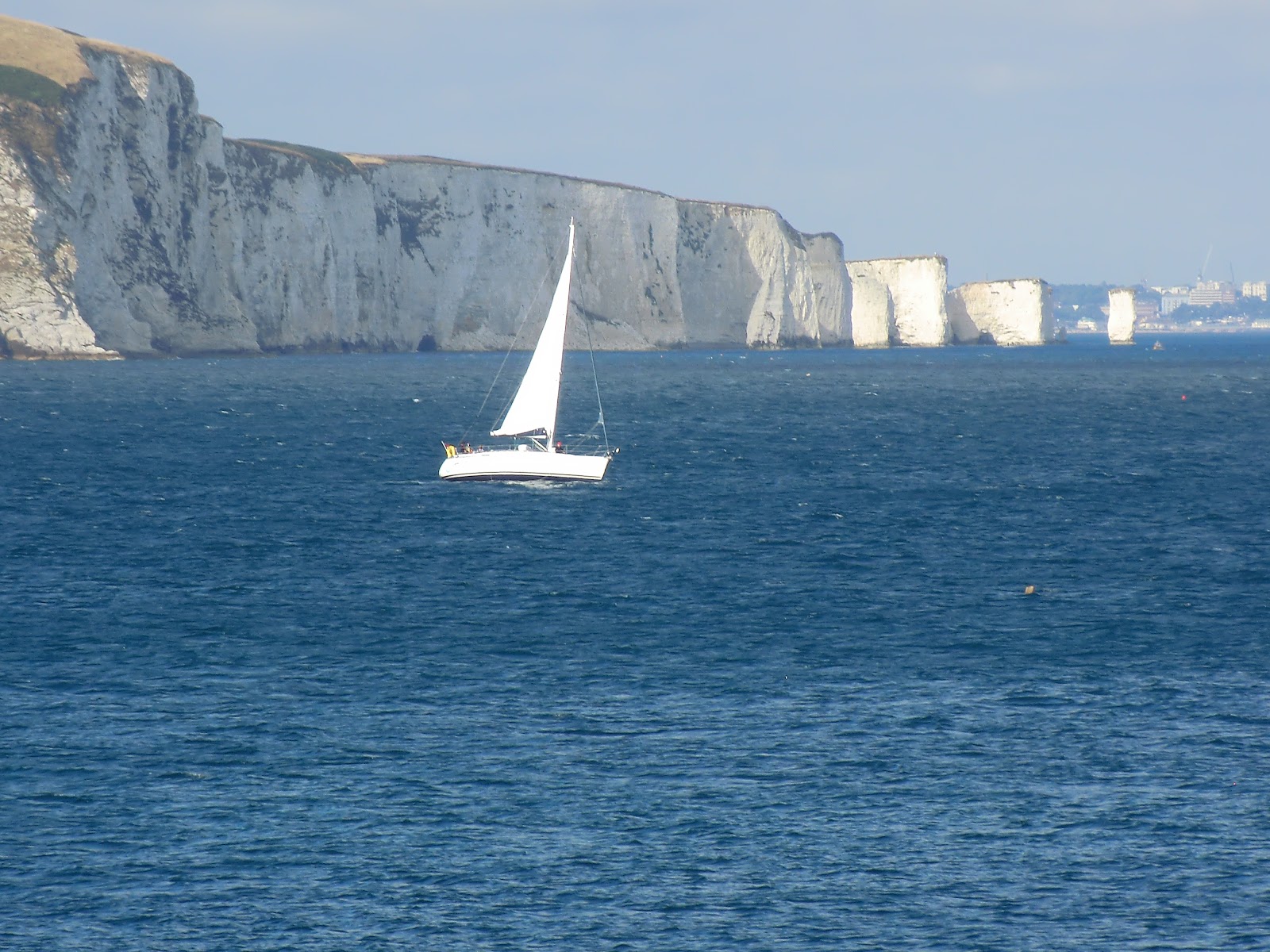
It goes to show that the 2010s was a decade of massive change and a time for my faith in God to pass through the fire of testing. During the Summer of 2013, we packed our rucksacks for a camping trip to the Dorset resort of Swanage, the gateway town for the Jurassic Coastline with its coastal hiking trail. Alex loved camping and the Great Outdoors. I preferred hosteling, however, the very thought of sleeping in a shared dormitory with other females was anathema to her! So we camped at a site just outside the resort, after a sailing trip from Bournemouth Pier, where the view of Old Harry Rocks, the Foreland and the chalk cliffs of Ballard Down, all viewed from the sea, resulting in an unforgettable experience.

After several nights spent under canvas, the day we were to return home, the weather deteriorated, with gales and rainfall compelling us not to sail back to Bournemouth but instead to take the bus. It was a bad decision. The shaking of the vehicle over rough ground had destabilised her spine, causing a severe pain which immobilised her. She literally struggled to board the train at Bournemouth, and once back home, it took just two more days for her to lay on the floor completely immobilised, a paralysis which rendered both her legs immovable, although not her arms. We called our GP to come on a home visit. At first, he refused. So I had to persuade him over the phone to come and see for himself. Eventually, he agreed to come over. He took just one look at her lying there on the lounge floor and immediately called for the ambulance. With a GP's consultancy, she was admitted to Royal Berks Hospital in Reading, a twenty-minute train journey away from home. There she would stay as an inpatient for up to four months leading to December 2013.

I visited her every single day, including the two weeks she was at John Radcliffe Hospital in Oxford. It was here, by her bedside, where we spent our 14th Wedding Anniversary while she lay semi-conscious. It was devastating. We were meant to have celebrated our 14th in Crete, where several months earlier I had booked and paid the full price - airfare and hotel - to spend a week there. To cancel, then to imagine some other couple taking our place on a cheap, last-minute deal was very unsettling.

She made a recovery to a certain extent but never enough to regain her full mobility. After discharge, it was the wheelchair whenever she was out of doors. The wheelchair was not supplied by the NHS, rather, I bought it myself for her. Later, for her to enjoy greater independence, I bought her a mobility scooter and a shed to house it in. Paul, a good friend of mine in the church, and I took a full day to erect it.

Ballard Down chalk cliff and Old Harry, taken 2017.


However, just a following year, in the Summer of 2014, I began to find breathing at night difficult along with a sense of fluid in my lungs. Alex persuaded me to visit our GP, who immediately sent for my chest to be X-rayed. It came back with a result. My heart was enlarged and not pumping properly. Therefore followed trips to a couple of hospitals until I was diagnosed with a regurgitating aortic valve, and therefore in need of a major heart operation. And so in February 2015, I was admitted to Harefield Hospital in Uxbridge for open-heart surgery. After this and following further tests, I was put on Warfarin for life along with other drugs. Visits for post-surgery hospital check-ups every few months has become a regular schedule right up to the present.

Unfortunately, the 2010s did not bring full harmony with my relationship with Ascot Life Church, my spiritual home. Among the congregation, there is just one man in particular who has a thorough dislike for me, simply for my love of hugging other people in the church, mostly men. Shortly after discharge from Harefield Hospital, a dispute with an Elder, in connection with this man, during Spring of 2015 opened the door for a sabbatical, that is, to take three months off from church commitment to visit twelve other churches, a different one for each Sunday.

But after my return to Ascot, I couldn't help feel the poison in the air whenever this man is present with us. This has been ongoing until very recently when he suddenly stopped attending. At least for now. But every week, right up to the present, I always expect him to turn up unannounced, and I look around with dreadful anticipation.

This man's perception of God is of a truculent Deity who is usually dissatisfied with how some Christians relate to such a fickle-minded divinity. Not surprising at all, come to think of it, that this fellow sees the truth of imputed righteousness of Christ credited to the believer's soul, which leads to eternal security - to be heretical, a dangerous heresy. He also has very low self-esteem and carries an unhealthy preference for graduates, especially those who are married and hold down a professional career. Therefore I wasn't at all surprised for him to turn up to hear a preach delivered by one married graduate at an evening service during the early Summer of 2018.

His discourse was about the first chapter of Genesis which he believes to be on the same authoritative level as the Enuma Elish, an ancient Babylonian document about how the Creation of the heavens and the earth, with all its life, was from a dispute among warring gods. This reminded me of another ancient document, the Gilgamesh Epic, which most secularists place as the true source of the tale of Noah's Flood, above the authority of Genesis. Afterwards, I asked him directly whether he believes the Genesis record is history. He denied it, insisting that Science holds the reins of truth instead, hence questioning the reliability of the Bible to a congregation of listeners.

Yet despite these setbacks, I always had a passionate love for Ascot Life Church, my spiritual home. But to seek relief from the presence of this aforementioned man, God has allowed a beautiful friendship to develop between Dr Andrew Milnthorpe and myself. It actually took off in the Autumn of 2016, when I invited him to attend a conference in Central London which was held by Creation Ministries International. This two-day conference, which involved a night stayed at the Premier Inn Hotel near Waterloo Station, has opened the door for a relationship with someone with an IQ much higher than the foe at Ascot, despite the latter's adoration for the well-educated.

Within the last two years, Andrew has invited me to Encounter, a midweek lunchtime meeting held at the Kerith Centre, with, of course, a self-serve buffet included. Held only during the school term, I only went to it whenever Andrew was allowed the day off, or even the afternoon off, from work, which tends to be sporadic, hence, an invitation to come along can come at very short notice. A development from there is the swim and sauna immediately after the closing of the meeting, as well as day trips to London to visit a museum.

Another reason why 2019 was remarkable. This year was the diagnosis of Alex having breast cancer. Discovered by a Consultant at Frimley Park Hospital back in April 2019, it didn't take long for her to have her affected breast removed, followed by a course of chemotherapy, which was the cause of her hair loss. With this, I'm very, very grateful for the NHS! This after realising what my friend Paul had said to me, that had we lived a century earlier, there would have been nothing the physicians could do. Instead, I would have watched my beloved suffer in pain as her cancer worsened and to die a premature death. I went home that day almost in tears, and grateful to God for allowing us to live in the present when scientific expertise had literally saved my wife's life.

2019 consisted of trips, back and forth, back and forth, to Frimley Park Hospital. This includes the three days she stayed in after her operation. But this also includes the eleven days she had to remain, a few weeks later, after an ambulance pick up from our home to the A&E department. This was due to the discovery of her low white cell count due to her chemotherapy, and the development of feverishness, which if left untreated, could have led to sepsis.

Oh, the days of loneliness as I spent the nights and mornings in an otherwise empty house, save for the goldfish. But the level of comfort gotten from the aquatic organism was practically zero. I wanted my beloved wife to be with me. Back and forth to Frimley Park Hospital by several means. One was by taxi, another by train, other times I actually cycled the 8.5 miles 13.8 km from my house to the hospital and back. But at other times, I can only thank those at our church who was willing to give us a lift, as well as the regular three-week journeys in my father-in-law's car.

Dr Andrew Milnthorpe, a good friend from 2016 - present.


The 2010s decade has changed my life in many ways, from the carefree, travel-loving husband of the late 2000s decade to the responsible carer of the present. This has given Alex tons of loving assurance, especially after the loss of her hair, and my trust in God's faithfulness has grown and matured. And also learning never to take anything for granted but to realise that each day we spend together is a strong, robust marriage is in itself a wonderful gift from God.

Saturday, 5 October 2019

Bored at Bournemouth?

There is always a risk when it comes to planning holidays, and especially when the oncology consultant comes to us with his answer to my question: Is it okay to take a break overseas?

Then comes his answer: No, we don't recommend any overseas travel at this stage.

Then the blood test result comes in. Bad news. Her white blood cell count is below the lower limit for chemotherapy. Therefore we must postpone the treatment until the following week. That is, she'll be here on the ninth of October instead of on the second. This will allow an extra week for the cell-count to reach an acceptable level in the meantime. 

Damn it! That means, instead of a trip to Brussels on the Eurostar on the 9th as originally planned, on that day it will be a much shorter and far less exciting trip to Frimley Park Hospital. Both my wife and I were downhearted but nevertheless, we both realise the wisdom of his advice. Furthermore, the fare we had already paid when booking the Eurostar will be lost, for the tickets are non-refundable. Also, according to the small print in the insurance policy, this too will invalidate any claim, simply because my beloved has been on chemo already before the booking was made.

As we both felt crushed and disappointed, my father-in-law drove us back home. Having arrived home, rather than sit around and mope, I decided to go swimming at our local leisure centre. Alex was at least pleased about this, as she knows that any physical exertion will do me much good, especially when feeling down.

It did. Whilst swimming in a designated lane, I toyed with the realisation that the second day of October will now be free. And it was less than 48 hours away. My hopes were lifted at the idea of a four-day break in Bournemouth which would include October 2nd - our 20th wedding anniversary. All I need to do was to book a room at an accessible hotel for that period and leave the very next day.

View from our hotel room balcony.


The booking at the town centre Premier Inn on the internet was successful, and with breakfast included, I didn't consider this as too expensive. Suddenly things have changed - for the better. Although I grieve over the loss of the Eurostar fare, this was offset by the fact that our actual wedding anniversary will be spent on the beach rather than in a hospital.

This is a good time to explain my love for this part of the world. I got to know this Dorset holiday resort as a teenager. I could add that I "discovered" Bournemouth on my own rather than taken there by my parents, who always took us boys - that is, my brother and me - to Brighton nearly every Summer Sunday, and later to Portsmouth. By contrast, Bournemouth is close to Swanage, itself at the start of the 96-mile 154 km Jurassic Coast, a world heritage site. It was Swanage where I was taken to by my primary school around 1960, and from childhood, I was always fascinated with the geological features surrounding this coastal town. On the north side, the chalk hill of Ballard Down slopes towards the coast to end as spectacular chalk cliffs, tapering at the Foreland alongside different chalk stacks, including the Old Harry Rocks, which can be seen from Bournemouth seafront. The continuous squawking of seagulls echoing around the stacks creates an atmosphere unique to the area. 

Since Bournemouth Station is the nearest coastal stop to Swanage, onward from my late teen years, I alighted at Bournemouth and looked around for a suitable hotel. Then I walked along the beach until I reached Sandbanks, a rich man's estate built literally on a naturally-formed sand spit. Then the chain ferry across the mouth of Poole harbour, to Studland Bay, then on foot into Swanage after crossing the spine of Ballard Down which, on a clear day, offers magnificent views of Poole Harbour, the second largest natural inlet after Sydney, along with Bournemouth and its apparently thin coastline. And I then just turned to face the opposite way towards a panoramic view of Swanage, with Peveril Point and Durlston Head forming the backdrop for the eastern coastline of Purbeck.

It was such walks I did during my late teenage years and early twenties which set the precedent for world travel and backpacking. Although I have in the past received criticism by other Christians for being a loner, I have never regarded myself as unsociable, it was after I became a Christian, when I began to enjoy solitude to a greater extent as I began to link such astonishing phenomena with God's creative handiwork.

Alex and I arrived at Bournemouth on the eve of our anniversary. Being off-season, it was quite different from when we were there in July 2014 - in the thick of Summer, with the sun beating down. Back then, the tourist crowds and foreign students kept the tills constantly ringing. Food stalls such as ice-cream parlours, hot-dog stands, pasty bakeries, soft drink kiosks, all drawing in the crowds. Music drifted from the bandstand overlooking the central gardens, which itself was bustling with the crowds - cramming the wide footways, dotting the lawns with picnic sheets, the beach was packed with little space in between, a large crowd swam out into the gently lapping waves, the pier was alive with jostling crowds despite the entrance toll. Indeed, the whole town was thriving in a cheerful holiday mood, with every retail merchant glowing with joy as he checks his swelling bank account. And in the evenings, the bustling noise of nightlife was thriving, with crowds lasting into midnight, and on the sandy beach, foreign students cooked over lit bonfires.

Chalk cliffs and stacks of Ballard Down, Swanage.


What a contrast we felt this time, off-season. The sky was overcast, the winds blew. As we stood on the pier (free entry during the evenings) - I watched a club-group of surfers ride the waves. We were rather hungry, but not an open stall to be seen. Just as the beach was deserted, save for the surfers, so the promenade and all the stalls were closed, all of them boarded up. The Square, which before in 2014, was packed out, including a queue for the spinner, now lies deserted, with just a small group of youngsters sitting on one of the benches, chattering. Indeed, the whole town looked a dismal sight, yet the waves of the sea kept rolling in, the sight of Ballard Down in the distance remains unmoved, the seagulls continue to squawk, and so the world turns, as the warmth of Summer gradually drops away during this Autumnal intermediatory period before Jack Frost arrives to carpet the streets, the rooftops and the beach above the splash zone with Winter snow.

Alex and I enjoy just being together, even if the resort looks bleak and lifeless. That is the most important thing - the two of us together and furthermore, not confined to a hospital building. Fortunately, a Tesco Express store was open for trading with the locals, and we bought some snacks to take back to our hotel.

I stood at our room balcony, looking out across the night, with countless light bulbs illuminating the resort with a vast array of spotlights, yet all coming to an abrupt end at the beach, which beyond, the darkness hanging over the sea also enveloping the faraway Ballard Down with invisibility, save for an array of far-distant streetlights of neighbouring Swanage.

It was then I had to face reality. This was still England. It was still very different from where we went to for our honeymoon and for our tenth anniversary. Those dates were at the Greek island of Rhodes. As I said to my beloved exactly ten years earlier, whenever our anniversary hits a zero, we would return to Rhodes. But ten years ago we were both reasonably healthy. Little did we know, as God certainly knew, that Alex would be confined to a wheelchair, and furthermore, we'll be celebrating our 20th halfway through chemotherapy treatment.

I recall how on both occasions we strolled along the Greek beach, especially after nightfall, and listening as the Mediterranean waves lapped gently upon the stone beach. A shooting star streaked across the sky as we stood in each other's arms. In addition to this, there was this unique herbal aroma in the warm, still air. And the sky remained cloudless during each day, every night the stars shone brightly. It almost felt that the Garden of Eden was already restored. And I expressed my desire to return to Rhodes every ten years.

These thoughts went through my mind as I stood on the balcony. No matter how much I may love the Dorset coast, it's not the Mediterranean with its own atmosphere. But throughout the last twenty years, our marriage, no doubt like any other, has had its ups and downs. The ups including watching her give birth, and to hold our newborn daughter in my arms as her tiny figure slept soundly. Yet I have wept aloud during a church service here at Ascot, of shattered dreams and of blasted hope. I have watched my beloved's health deteriorate, I have watched as she was near to paralysis. For four whole months, she was an inpatient with a neurotic disorder with which the medical team wasn't able to treat save a lifelong prescription. Each day I did not fail to board a train to spend a couple of hours together.

Then the news of her cancer and the appropriate treatment which followed, which at present, includes chemotherapy. Yet it's my constant prayer that God will always give me the power and strength to love her to the full, unconditionally.

And so as I stood on the balcony, I overcome such thoughts by thanking God for this holiday in Bournemouth. Thanking God that here we are, in a hotel and not in a hospital, despite that there is an NHS hospital nearby in case of an emergency. In fact, directly below where I was standing, an ambulance was parked. I thanked God that it wasn't for either of us.

The goodness of God was demonstrated by waking up on our anniversary to a clear sky and the sun shining. After breakfast, I strolled, pushing my wife's wheelchair, along the level esplanade towards the neighbouring resort of Boscombe, a pleasant 35-40-minute walk of 1.5 miles. Amazingly, it was warm enough for a good swim in the sea. At first, I was totally alone in the water, but apparently, I must have set an example for a few other men to follow. I must have bathed for a better part of an hour, but it was enough to reminiscence on Rhodes. Boscombe was almost as good, it is a much smaller and more sedate resort than Bournemouth, therefore I had a preference for this spot. 

The next day brought overcast skies, wind and a driving drizzle. But still, no time for boredom, as we visited the Oceanarium, located on the esplanade just west of the pier. True enough, it doesn't hold a candle to Sea World of 1995 San Diego splendour, but it was good enough to stay out of the weather. And at least we both stayed dry. Back in 1995, I got thoroughly soaked through and through as I sat in the audience, watching an orca perform. But it wasn't the soaking which bothered me. It was the thought of a killer whale held in captivity, along with the seals and the dolphins. They shouldn't be there. They should be out in the open ocean, enjoying the boundless freedom for which God had created them. The thorough soaking, whilst fully clothed, might have been the message the orca was trying to tell us all! I have to admit, that evening I left Sea World with mixed feelings.

Over here, all aquatic life seems to be happy in their confined environment. Perhaps born in captivity or brought in while very young (the black-tip sharks were rather small) at least they are used to being where they are.


 Bournemouth Oceanarium, taken October 2019


Outside the waves were high on the sandy beach, creating a continuous, non-stop roar. But there is one other spot I would have liked to have been at that moment. That is at Anvil Point right next to Tilly Whim Caves, on the other side of Swanage. These caves are not natural, but they are what's left of a long-disused quarry for Purbeck Stone, a very hard and resistant rock, very different to the soft clay and sandstone rocks which makes up the cliffs of Bournemouth.

When the wind is blowing and the tide is in, massive waves from the open Channel crashes hard against a natural ledge which juts out from the cliff face. The tremendous power and force as the rock remain uneroded, sending the swell sky-high with a thunderous noise. I have stood there in the past and watched with excitement at the demonstration of God's power over the seas, which is a fulfilment of what the Scripture says:

Or who shut up the seas with doors, when it brake forth as if it had issued out of the womb?
When I made the cloud its garment thereof, and thick darkness a swaddling-band for it,
And brake up for it my decreed place, and set bars and doors,
And said, Hitherto shalt thou come, but no further: and here shall thy proud waves be stayed?
Job 38:8-11 AV.

It's so true! Powerful waves crash against the rocks, and I might even get splashed, yet the sea cannot reach out its arms to drag me into it and drown. Why? Because I'm just out of its reach. I'm was standing just on the safe side of the "bars and doors" God had already decreed. Instead, this spot is one of many places where I can worship the Creator with reverence and fear at his workmanship.

Saturday, 10 August 2019

Illnesses - The Real Cause...

What a pathetic sight we must have been! Here we were, at Frimley Park Hospital, in the leafy county of Surrey, which is renowned for its wealthy, well-to-do population, perhaps the English version of Beverly Hills in California, but far less eventful and with a gentler climate.

My wife was an excellent sprinter, who would have left me behind at the start line while dashing to the finish. In turn, my memory was filled with swimming, fast cycling, and running, the three-in-one endurance race known as the Triathlon, with myself being a member of Thames Valley Triathletes between 1985 and 1992 inclusive, with one year as a member of the club's committee, and also the editor of the club's semi-annual magazine, Triangle.

Half Marathon, 1986.


It was during those years of peak physical fitness when, of these three disciplines, cycling was the dominant one. This included the 300-mile 483 km Newcastle-to-Reading sponsored cycle in less than three days, with some from our club alongside members of the Reading Lions. This was the inspiration for the End-to-End cycling accomplished a year later in 1990. The real difference between the two separate trips was while the Newcastle-Reading ride was fast, the End-to-End, which was completed in eleven days, was tedious, due to carrying our own luggage on our bikes instead of having a service van as was the case of the other.

What more can I say when it comes to a hilly hike along the West Coast Path, also along the Hadrian's Wall trail from Carlisle to Newcastle, or those lovely trecks across the Lake District, including looking down from "the Throne of England" (Scafell Pike) - not to forget the Manhatten City Hike or the Grand Canyon trails from rim to river.

Memories, memories - are they a source of joy or a source of torment? And so I was thinking as I sat in a wheelchair whilst wheeled by a porter from one department to another. Feeling melancholic as I endured intense pain at the knee joint. After an X-ray, the doctor came back to me to say that I have arthritis.

This was quite a shock! I have always interpreted this ailment as "an old man's disease." Arthritis is when the cartilage at the joint between two bones has worn thin until the gap - in my case, between the femur and the tibia - becomes narrower until the two bones threaten to touch. So the doctor tells me.

I was very concerned! Is normal living over? Will I be confined to a wheelchair for the rest of my life? Will I suffer sharp knee pains until I can have surgery? And being an elective, non-life-threatening procedure, most likely having to wait months, only for the op to be cancelled on the day.

How did this happen? Well, it occurred while I was preparing to exercise in the gym. I was approaching the rowers when all of a sudden there was this unexpected sharp and intense pain. I leaned on a nearby elliptical, trying to steady myself. I found that I was unable to stand up, let alone walk. Eventually, one of the gym's instructors saw me in such a state and along with her colleague, I was examined and an ambulance was called. In front of all the other patents using gym equipment, I was wheelchaired out of the gym to board an ambulance waiting for me outside.

Was it a coincidence that my knee gave way on the same day when Alex my beloved happen to have an appointment at the same hospital to have a cyst treated? After my knee was X-rayed and diagnosed, I was free to go when my wife arrived at the outpatient's department, having been given a lift by the same gym instructor who dealt with me that morning. After her ailment was examined by a consultant, it was decided for treatment straight away. That is, after a two-hour wait for her to digest the lunch she just had as well as being at the back of the queue of patients, all in need of day surgery.

It was during this two-hour wait when I allowed thoughts to pass through my mind. I dreaded life in a wheelchair or of constant use of crutches. Especially as a carer myself, I cannot afford to be incapacitated. Here we were, husband and wife, each in a wheelchair, next to each other. One has already received a diagnosis with no treatment on the horizon, the other also diagnosed and actually waiting for treatment.

Where have we come since our wedding day very nearly two decades earlier? Life in a wheelchair or on crutches? No more swimming? No more gym? No more walking and no more cycling? No more this or no more of that? The very thought brought shivers. It was a moment of blasted hope, a dread, the loss of independence. For example, for the church, I would have to rely on the generosity of others to give me a lift every week instead of trusting in my own two-wheeled steed. I kept on thinking. It could have been a lot worse. 

I remember hearing or reading stories of auto-crashes. If the driver or passenger survives, then he's likely to suffer paralysis from the neck downwards. Whether it's from a car accident, or from an act of daring stupidity, for the spine to break at the neck is the worst possible injury one could ever suffer. Permanent paralysis of the whole body from the chin down. Only today I read in a newspaper about this noted golfer, in his mid-twenties, who was away on holiday. He was visiting a water theme park which featured fast and daring flumes. So he stood at the top of one and decided to slide headfirst. Apparently, at the splash pool, he hit the bottom with such force that he broke his neck. After he was rescued and hospitalised, he is now permanently paralysed.


I try to put myself in his shoes. Just moments earlier I was in good health, fully mobile, independent, happy and living a normal life. Then this happens. All of a sudden, in one fell swoop, I lose everything except my life. The agony, the terrifying prospect of life in a wheelchair, completely immobile, and in need of constant full-time care, including being spoon-fed like a baby. What dread this would be! Realising that never again would I enjoy the freedom of mobility and independence I took so much for granted. If only I could turn back the clock, even by just a few minutes! I would have altered my fate by sliding feet-first, or even descend the steps if those behind me would let me through.

It was by realising the reality of such injuries, whether it's the patient's fault or the result of somebody else's error or an act of stupidity, that has brought me to my senses. What I had was a knee injury due to a life of wear and tear. I was not at all paralysed. Compared to total paralysis, what I have is a minor ailment, one I might cope with on a better level. Yet, as I sat and waited for Alex to be called in, I couldn't help but think about how I have taken all my blessings for granted. The ability to see, to hear, to speak, to walk, to run, cycle, swim. The ability to use my arms for all manner of tasks, including eating. The ability to kick a ball. Also, I was always endowed with the ability to read and write as well as to work out mathematical problems. All these things I took for granted and hardly ever gave these things a second thought. I also looked back to my days of travel, when it was quite easy to arrive at the airport to take off for a far-away destination. If left immobile, I would cry out for a revival of those glorious days. Indeed, to put me in the place of the former golfer would have brought terror! 

Aloud enough for Alex to hear, I began to recite this:
The Lord is my shield and my strength, my rock, and a strong tower, into it the righteous run and they are saved.

I began to feel my spirit rise as I began to thank God for everything I have taken for granted. And then I began to edify Alex, not to allow her faith in her God to fail. After this, I rose and fully supported by a pair of crutches, I tried walking. Despite the feeling of discomfort, I was able to manage some steps - a big improvement from the gym that morning and a source of greater hope - that life will return to normal. Today, while this blog is written, I took breaks and found that I can walk a few steps entirely without the need for crutches and without discomfort.

This leads me to believe that life will return to normal, but knowing that I have arthritis, I am now aware that my knee can suffer again in the future. The pain is imminent, it can come suddenly, at any moment. Whether walking, cycling, in the gym or even in the swimming pool, or during a church service, or while sitting in a train, or as a passenger in a friend's car, my leg can convulse in sudden, sharp pain. If such pain can literally immobilise me, like it did in the gym, then the situation can be catastrophic!

Really, by comparison to others, I'm not an old man. I have a friend in church who is two years my senior, yet his health is enviable. Therefore, at this point, I would like to ask: What has led me to such a state, and for that matter, Alex's illnesses?

Here I'm talking about illnesses which have developed on a gradual basis rather than by an accident. According to one Christian doctor with a lifetime of experience, nearly all illnesses are caused by an upset mind.* This GP has named nearly a hundred illnesses which are linked by an upset mind harbouring negative emotions. Emotions such as fear, persistent worry, excess stress, prolonged anger and bitterness, along with unforgiveness, constantly bearing a grudge against the wrongdoer.

Diseases such as cancer, heart attacks, strokes, alimentary canal disorders, circulatory disorders, disorders of the genito-uninary system, and nervous disorders are just a few types of illness which can be caused by harbouring unhealthy emotions towards someone, a group of people or an unfavourable circumstance. This doctor points out that the two adrenal glands, each one sitting on each the two kidneys, are responsible for many illnesses, as these glands produce the hormone adrenaline. Normally, adrenaline is a life preserver when coping with alarm. For example, when under threat of danger, adrenaline triggers a sudden fight-or-flight response. One true story is that of an adolescent who was with his father under his car as he was maintaining it. Suddenly the jack gave way, and as the car threatened to crush the father underneath it, the lad, in fright, was able to lift the car so his dad can crawl out from under it.

When the lad tried to lift the car again under peaceful circumstances, he wasn't able to budge it whatsoever. Here, adrenaline had its proper purpose. It was to enable the lad to act in an emergency.

But negative emotions cause the two glands to constantly secrete adrenaline. Emotions such as fear, anxiety and anger are the chief negative emotions along with hatred and bitterness. This cause higher-than-normal amounts of the hormone to be constantly pumped into the bloodstream, which will eventually upset the delicately balanced systems which maintain the body's health.


But we don't have to rely on a book to see for ourselves. We have the experience. Take me for instance. For several years the Big Three was the main cause for fear and anxiety. The Big Three are Brexit, Alex's health, and Future Financial issues. By allowing myself to worry over these issues has allowed adrenaline to constantly infiltrate my bloodstream. This has accelerated the wearing down of the cartilage lining the knee joint, bringing arthritis at a comparatively early age. That was why only this morning, while I was hobbling to Starbucks on a pair of crutches, I was overtaken by a man walking without any aid and who looks to be in his seventies.

This was confirmed by a recent newspaper report that those with a pessimistic temperament are more likely to fall ill at an earlier age than the natural optimistic, and probably die earlier too. But really, I have to admit my lack of faith in God. As I see it, Brexit is more likely a judgement from God rather than redemption or blessing. This is due to the nationwide rejection of God and the dismissal of the historical truth of the Bible, to embrace a lie. Personally, a nation which rejects God is not likely to be blessed.

Hence my anxiety, leading to arthritis. And here, I'm not blameless. Rather, I need to nourish and strengthen my faith in God's goodness, which would give me peace during such turbulent times. Faith in God is the only hope which will hold out in these last days.

-------------------------------------------------------------------------------------------------------
*S. I. McMillen M.D. None of these Diseases, 1966, 1980, Lakeland Paperbacks.

Saturday, 1 June 2019

An Empty House is Never Burgled.

The old saying, absence makes the heart grow fonder, seems to be more realistic than I have always thought. So as I felt as I lay on a bed inside a hospital ward just two nights before this blog is written. But how did I end up there in the first place?

It is all to do with my aortic valve replacement operation just over four years previously, as a treatment for a regurgitating aortic valve I had, so I was told, since I was young, perhaps even from birth. Although the procedure was a complete success in itself, life-long repercussions remain. This includes taking anticoagulants, in my case Warfarin, for life, along with beta-blockers and diuretics. However, it was a decision taken by one Cardiologist at Heatherwood Hospital in Ascot, that I can come off the diuretics. I thought a first that was wonderful. Then the problems began. I began to get short of breath every time I exerted myself from a state of rest to exercise. And that could be as simple as climbing a flight of steps.


It was when I came to the stage of even finding walking difficult without gasping for breath when Alex my wife begged me to see a GP. Yes, begged. The same as five years previously when I kept on waking up in the small hours of the morning wheezing and having a sensation of drowning, as liquid rattled in my chest at every breath taken. Back then, as this time around, I paid a visit to my GP after much persuasion - er - nagging - by my wife. Yes, I am aware. We as men have a sense of embarrassment about seeing the Doctor. Being male myself, I tend to believe in this universal sense of awkwardness, which I think arises from the belief that our symptoms are not serious enough to waste the Doctor's time and be fobbed off -  "On yer bike, pal".

But an out-of-hours Doctor I did see, and this female, who looks to be fresh out of college, saw straightaway, that I was panting and looking unwell. And that was just after walking a few metres after sitting for half-an-hour at the waiting room. After a talk which consisted mainly of answering a pile of questions, she made a successful diagnosis of my condition and was able to see that I was suffering from water retention, which was responsible for the shortness of breath. At that, she decided for me to visit Royal Berks A&E in Reading, and to arrange for an ambulance to take me straight there. I protested, asking her to put me back on diuretics and continue as before. Instead, she insisted on a visit to a Consultant as a more appropriate need. 

I phoned my wife, who immediately summoned a taxi. She waiting for my arrival at A&E for quite a while before I finally arrived. She was my comfort while reclining on the gurney, watching nurses and doctors walk past in both directions, along with patients being wheeled away by a porter, the never-ending hustle-and-bustle of a typical A&E department. It was several hours later when one of the doctors entered my cubicle to announce that I will be kept in overnight. My wife panicked. 

This is because whenever she feels distressed or experience a rise of negative emotion, various things happen. One is a severe backache caused by the tightening of her muscles, immobilising her. Normally, I can quickly get her out of her condition, having learnt from experience, along with an administration of a strong painkiller such as Co-Codamol or Oramorph. Another state her emotions can lead her to is a seizure, remaining conscious but a tightening of her throat or neck muscles threatening asphyxiation. I have learned to get her out of that condition too, by applying CPR which I had previously learned as a poolside lifeguard back in 1972/3. On another occasion, she can get into a kind of body lock, when although still remaining conscious, she goes into a deep unwakeable sleep-like state which takes a while for her to recover. Such is her threefold neurotic disorder arisen from a series of long-past psychosomatic circumstances.

In a state of sudden panic, she tried to phone through to a couple who have been friends for a long time, and who also took her in while I was recovering from my heart op at Harefield Hospital in Uxbridge. But the ringing went unanswered. Then realising that this was a week when schools were shut for half-term and many were away on holiday, we knew then we were on our own. 

And so she booked a taxi for home while I was wheeled to one of the wards. It was a while later when I knew that by then she should have settled in, was when a nurse lent me a hospital mobile phone and tried to contact her several times and the phone remained unanswered, that a deep feeling of helplessness and hopelessness filled my soul. All night through.

Being in a hospital ward, there were constant interruptions as nurses walk in to take blood pressure measurements, including from me. The welcoming darkness dispelled every time a patient turn on his bedside light or the much-needed silence disturbed by conversation, whether between patients or to staff, the situation was never ideal for a good night's sleep.

And visions from an overactive imagination.

My imagination was indeed running wild. I kept seeing visions of my beloved lying on the floor, paralysed. Unable to move, her throat muscles tightening as if strangled by an unseen force. With nobody to help her, she finally gives up the ghost by asphyxiation. Or lying on the floor with her back muscles curved in tightness while suffering from extreme pain. And with both front and back doors locked, no one can enter the house to assist her. Furthermore, she has my house keys. That means even if I were to leave the hospital ward to get home quickly, she could be lying unconscious and there is nothing I can do short of a literal break in.

Main Entrance Royal Berks Hospital, Reading.


It was as if I was teased, a target for fun-poking, ridicule. I tried to imagine what would a life of widowhood be like. Worldwide travel again? A return to being single? None of these brought any comfort, but rather a source of torment. I could circumnavigate the globe many times over. But none of that would make up for the love and affection we have always exchanged. The only person in the world who sincerely thinks I'm good-looking, gorgeous, a rock of security, someone who she adores, a representation of Jesus Christ. If she goes, then the empty void left behind will be impossible to fill -  the wretched feeling of loneliness would be too much to bear - unless I experience a miracle.

Perhaps we are both in need of one. If only Jesus Christ materialise in front of us and promises he would grant three of anything we ask for. Immediately, without hesitation, we would ask for a restoration of health, assurance of salvation for us and our three daughters and perhaps financial security as a top up, but not on the expense of trusting in him for our daily needs.

Around breakfast time, I again tried to contact my wife over the phone. And yet again no answer. I kept trying, but this carried on as if stubbornly refusing to acknowledge my call. Eventually, in sheer desperation, I cried to God to bring her back to the hospital ward. I kept on repeating my prayers, regardless of whether they were heard by others in the ward or not. My heart was pleading, pleading...

As we parted during the previous evening, she promised that she would be by my side before nine in the morning. But it was already 10.30 and I was still alone. I tried to shut out any thoughts that she could be unconscious, or even dead, back at home and carried on pleading with the Lord to bring her over safely.

At 10.45 my wife suddenly appeared as she was wheeled in by a porter. The sudden sense of relief as we hugged was almost unimaginable. It was then when I piled thanks upon thanks to God for his goodness. About an hour later the Consultant came in to visit to put me on a permanent prescription of Bumetanide, a diuretic medicine I was taking before it was discontinued. He then said that we were free to go home after the medicine arrives from the hospital pharmacist. Indeed, I was thinking, if that young GP was on the same track of thought as I was on the previous day, we would have been spared of all this, as well as the cost to the NHS. I can only assume that as an apparent junior, she did not carry the authority to put the diuretic back on prescription without a more senior consultation.

It seems that as a married couple, we have a lion's share of tribulation, and that aimed specifically at our health. My wife's neurotic disorder brings just as much anxiety to me as well as my heart condition brings to her. We both worry for each other constantly, life on a knife-edge, a constant emotional turmoil. The most frequent-asked question is, Are you okay? I could ask that several times within a couple of hours.

It wasn't long since I came across a poster on Facebook. It read An Empty House is Never Burgled. This reminds me of a thief, a robber or burglar. Who are thieves and robbers? Apparently, it's the Adversary, according to Jesus' own words recorded in John 10:10. A thief only steals if the intended victim has something worthy to be taken. An empty, unoccupied house is of no interest to the burglar! Apparently, Satan must be constantly hungry, for he seems to go after the fruit, that is, the fruit of the Holy Spirit. As the apostle writes in 2 Timothy 3:12, anyone who wants to live a godly life in Christ Jesus will be persecuted, or simply will have trouble.  

We tend to think that persecution only means being hated by unbelievers - to be chased, thrown into prison, forced to deny the faith, tortured, killed. Hmm! I cannot see any of that aimed at any of our churches here! Maybe Paul the Apostle had got it wrong, or times have changed since his day. Or maybe the word applies to a far more universal term of suffering - to have trouble, to suffer some kind of tribulation.

This makes far more sense. By means of the Holy Spirit living within us, we produce good fruit: Love, Joy, Peace, Patience, Kindness, Goodness, Faithfulness, Gentleness, Self-control (Galatians 5:22-23). Indeed, Satan is constantly hungry and he will steal. Especially the fruits of love, joy and peace, but he'll go after others, particularly patience when driving in traffic or stuck in a superstore checkout queue. Often God does not stop the spiritual crime, although he allows it to go only so far.

Our love will be forever...


I look at our own marriage relationship. I'm happy to say that it 's strong, stable, robust. And believe it or not, I think that the tribulations aimed at our health and wellbeing have played a role. And I think absence makes the heart grow fonder. During that night at the hospital ward, all I was concerned was that she was okay on her own at home. Not that I never go out on my own, of course, I do, just about every day I'm out on my own, whether it'll be for a few minutes or for several hours, or even for much of the day. But there is a world of a difference, for example, between a gym and sauna session and being confined at a hospital ward bed.

The Adversary may attempt to steal as much as he can from us, even our lives, but our love for each other will remain forever.