Total Pageviews

Showing posts with label Human Government. Show all posts

Saturday, 30 May 2020

Let Him Who Is Without Sin...

Jesus was sitting at the Temple grounds, teaching the crowds surrounding him. Presently there was a disturbance as a group of Pharisees were dragging a desperate woman towards him, kicking and shouting as she struggled to break free.

Jesus probably glanced upwards with the thought, Oh dear, here we go again - and began to write on the dust. What he was writing, nobody knows, and we still don't know to this day, as the Holy Spirit did not feel it was necessary to tell us. The group then stood before Jesus as he sat there with his finger continuing to write. Then one of the Pharisees, sensing the Lord's apparent apathy or disinterest, began to present his case with urgency, accusing her on how she was caught in the very act of adultery, and asking whether she should be put to death, as the Scripture says. The rest of the crowd who was listening to Jesus turned with anticipated excitement combined with a sense of shock of certain execution taking place right in their midst.

Instead, Jesus kept on disregarding the woman's accusers as he kept on writing (or maybe, doodling.) As the leading Pharisee kept up with his accusations, Jesus could have asked about the whereabouts of the male lover, if she was caught in the act, and why he wasn't with them, being dragged alongside with her. After all, it takes two to tango. And I wished he had asked that! It would have been interesting if the accuser had to answer. Thus, the story was lacking much for it to make proper sense. 


The accusing Pharisee still had a valid point. He was referring to Leviticus 20:10, where it says that if a man lies with another man's wife, then both must be stoned to death. Therefore, where was he?

And after a period of provocation by the accusers, Jesus finally looks up and answers:

Let him who is without sin cast the first stone.

This story is recorded in the first eleven verses of John, chapter eight. In the KJV, it's included in the normal flow of the script without any gaps or comments. In the NIV, a note is inserted in the interruption preceding the text, explaining that the earliest and most reliable manuscripts do not contain this portion, followed by a lined space preceding verse 12. The RSV goes even further, omitting the story altogether and inserting it as a page footer with a suggestion that it might have been a fragment taken from Luke's Gospel. 

But whatever its origin, the inspiration behind the story is obvious enough. It's history, on the same level of truthfulness as the Crucifixion itself. And within the last few weeks, more than once have I seen the answer Jesus gave to justify the deeds done by our political leaders.

It can be controversial, this idea of letting anyone who is without sin to throw the first stone, that is, to execute judgement. Really, how far can this be taken? Yet I have had those words thrown at me on Facebook whenever an issue was raised. Yet, if I was to take the Lord's words literally on all levels, then would our Law Courts cease to exist? Would all inmates be freed and all prisons closed? One night a burglar breaks into a house and makes off with jewellery which has sentimental connections as well as a high value in price. The victim goes to the Police to report the crime and to get justice. Only to be told that the Law will only act on his behalf if the victim can prove that he's without sin.

Doesn't make sense, does it? At first, this looks totally unjustifiable. The householder whose jewels were precious to him suffers a terrible loss, while some stranger is going to sell the stolen items for personal profit. Indeed, any reader would instantly comment that the two offences are beyond comparison. But are they really that incompatible? 

A woman commits adultery. If the punishment for this offence is taken from Old Testament justice such as Leviticus 20:10, then the woman was already married to someone else, hence the seriousness of the sin. Her husband would have felt cheated, and now has to endure a terrible loss and enforced widowhood. The loss felt by the husband of his beloved would have been just as intense as the loss of precious jewellery, maybe more so, as the wife is of one flesh with the husband and close to his heart. I could even go as far as the possibility of him ready to forgive, as was the case of the Old Testament prophet Hosea, who brought back home his wayward wife, but the original letter of the law forbids this. Instead, she has to die, along with her lover. And in this case, with Jesus, the lover must have either done a runner or was told to escape.

But the chance of the cheated husband feeling enraged could have been equally possible, and his wishing for an act of quick revenge would have remained unfulfilled with the Lord's willingness to forgive. It may not have been the loss of jewellery irritating him, but having been cheated, the loss of justice and the greater likelihood of forbidding her to return home. On the other hand, by recognising who Jesus is, he might have also forgiven her and took her back in.

With such complications surrounding the incident, I have come to conclude that this was a unique, one-off occasion with the dual purpose of getting her accusers, all of them religious, to see sin lurking within their own hearts and that forgiveness is available to them too if they believe that this particular man is their Messiah, the Son of God. Even if the origins of this story has been questioned, no doubt, it teaches a valuable lesson, and that is, to believe that this Jesus - the one sitting at the Temple and writing on the ground - will be their risen Christ, from whom acquittal will be granted to all who believe.


Later, in the Acts of the Apostles, an instance of instant retribution is dished out to a couple, Ananias and Sapphira, for lying to the Holy Spirit, Acts 5:1-11. The church in Jerusalem was in a crisis and a decision was made by its leaders for anyone to contribute financially towards it. We are told that Barnabas sold his field and willingly gave all his proceeds to the church elders. And many others all made similar donations by selling off what they had and laying the money at the apostle's feet. Then came Ananias and his wife Sapphira. They too sold their field but afterwards agreed between themselves to give only a portion of their money and keeping some back. That in itself isn't bad. They were free to keep back all they had. All was purely voluntary.

But instead, they gave only a portion and then declared that this was the full price gotten for the sale of their field. When Peter revealed their sin, they both died instantly, the husband first, then his wife three hours later. It's a far cry from the fate of the adulterous woman brought before Jesus, and for a crime which, at a human point of view, looks far less severe than committing adultery. It does look as if administering justice was not abolished by being aware of universal sin lurking in the heart.

And Romans 13:1-7 endorses this. Here, Paul gives the very reason why governments exist and why we are encouraged to obey all in authority. Governments are there to keep evil in check and to ensure the best administration for the country, province or territory. And the apostle warns that everyone who does evil will need to be in fear of them, as they are the authority appointed by God to bring justice. Likewise, those who do good can receive praise from the same. And that was written long after Jesus dealt with the adulteress.

However, although both Paul and Peter have encouraged all Christians to honour and obey the king, ancient history tells us that the Roman emperors were some of the evilest men who ever walked the earth, guilty of murder, adultery, even incest and paedophilia, so the story goes. Nero, for one, is reputed to have killed his own mother, Agrippina, to secure his own independent power. Yet Christians in his day, under the apostles, Paul and Peter, were exhorted to give honour to the king and to obey the laws of the land.

Therefore I need to ask: Was I wrong to raise the issue about our Prime Minister when his suitability for the job was under scrutiny? And that with his life history tainted by more than one divorce and at present, had just fathered a child from his girlfriend half his age? One friend answered back:

Let he who is without sin cast the first stone. 

And that was posted to me by one of our ex-church leaders.

It's well known that the one who posted that statement was a devout Brexiteer, and our Tory PM Boris Johnson promised: "to get Brexit done" as his last election manifesto. This makes me wonder whether our Facebook friend would have posted the same statement if our PM had been a Labour leader who pushed hard to remain in the EU and had, in the past, walked out of his wife and family to date a female half his age. Indeed, would he had picked up the stones then, or simply walk away like those Pharisees did?

And now, over the past week, this scandal over Dominic Cummings. He is the PM's chief advisor who played a major role in Brexit and he was also behind the Coronavirus lockdown, insisting that we all, as a nation, to stay home, stay safe and respect the NHS. According to the Press, Cummings was attending meetings held behind closed doors alongside our top scientists in putting together the appropriate action for tackling the pandemic.

Then, after the edict was passed and endorsed by our Government, faithful people stayed at home and stopped visiting their family members living elsewhere. This included hospital visits, care home exclusions and minimal funeral attendance. We were also banned to drive miles to national parks and other popular venues. One dog walker was stopped and reprimanded by the Police for walking his dog in a remote area of the Peak District National Park. Other motorists, on their way to the coast, were forced to turn and go back home, on the orders of the Police.

Yet, Cummings drove the 264-mile distance from London to Durham to sort out a family issue. He then drove a further 30 miles to Barnard Castle "to test my eyesight." If he was unsure about his eyesight whilst on that leg of the journey, how did he manage the 264-mile trip in the first place with his wife and son?

Tie-less advisor - Dominic Cummings. 


During the debate which followed, a poll revealed up to 52% wished for him to leave his post as Advisor, whether by resignation or by dismissal by the PM, and the remaining 48% insist he should stay. From the 48% who thinks he should stay in his job, a quote appeared on Facebook, posted by a journalist in full support for him:

Let him who is without sin cast the first stone.

That was aimed towards all those who felt judgemental towards Dominic Cummings. As for me, I have become fed up with the issue. If he goes, then let him go. But if he wants to stay, then let him stay - but with much discredit to his advice. But with opinion split almost right down the middle (the same result, by the way, with the 2016 referendum whether to stay in or leave the EU) - I can't help but believe that the majority of pollsters who voted for Cummings to remain in his post were Brexiteers, and those who want him out were mainly Remainers, although there is an area of grey in between.

Let him who is without sin cast the first stone.

Okay, I have been reprimanded. Let me stand back and just allow matters to take their course.

After all, God is our sovereign Creator, Redeemer and Sustainer, to which we all have to give an account. I'll trust in Him. 

Saturday, 25 June 2016

Melancholy Man

Some years ago, my younger brother took our Mum up to the Scottish Highlands, to visit an insignificant-looking area of open space known as Culloden Moor. It was the site of the last battle ever to take place in Britain, on April 16th, 1746. Lasting about an hour, the contest was between Charles Edward Stuart, better known as Bonnie Prince Charles, who desired to sit on the Throne in London, and was also leader of the Jacobites - against the Government officer William Augustus, Duke of Cumberland. The latter, whose troops were predominantly English and better trained, won a quick victory over the mainly Scottish Jacobite troops, leaving a considerable number of casualties, mostly from the Jacobite side. After his defeat, Bonnie Prince Charles took flight. This eventually led to the Scottish Highlands being integrated into Britain, in the process of the formation of the United Kingdom.

Cottage Hospital, Culloden Moor.

About two years after Mum's visit, I took my wife Alex to the same area while spending a few days at a hotel in Inverness. Hardly an attraction, the moor was an open field covered mainly with heather, with a network of trails allowing visitors to wonder freely, along with a nearby car park (if I remember) a small museum, a cottage used as a hospital, and of course, most important of all, a refreshment cafe and shop. What has changed since our visit in 2005, was the building and opening of a rather swank-looking Visitor's Centre in 2007. No doubt, the facility would have been much appreciated by William Augustus and his men for a respite after the battle!

Hence the beginning of a era for the British Isles known as the United Kingdom, consisting of England, Scotland, Wales, and Northern Ireland, where everyone within its shores lived in relative peace for more than two centuries. So when Scotland held a referendum for independence on September 2014, I was worried. For my heart would have been as much broken as the United Kingdom would have been, if the Scottish National Party had won.

Back in 1990, a friend and I cycled from John O'Groats, on the most northern point of the Scottish coastline, to Land's End on the tip of Cornwall. We remember the border crossing well. A straight road passing two signs, one on each side of the road. One read, "Welcome to Scotland." The other merely read, "England." But there were no white lines across the road, no passport controls, no customs. One just drove along uninterrupted, as anywhere else in the open countryside. The same applied when we crossed into Wales, albeit briefly. All three crossings consisting of an open road passing through without any form of obstructive barriers. That is the meaning of the United Kingdom, where anyone can pass through national boundaries as if they did not exist, itself a tangible expression of a total lack of tribal conflict or seclusion.

It was very different at the world's smallest continent throughout the 20th Century. Made up of a number of independent nations, Europe became the source of two of the world's most atrocious conflicts, both costing lives by the millions, followed by high levels of then-unrecognised Post Traumatic Stress Disorder among the surviving veterans, some homeless and often seen tramping along the streets of London back in the sixties and seventies, intoxicated with alcohol, at times even with methylated spirits. All because by 1939, one national leader believed that his country was populated by a superior race, and had aspirations to conquer and rule over the rest of Europe, including Britain. At the same time he had six million Jewish men and women sent to prison camps to face death. Just for being racially inferior.

After visiting the Yad Vashem Holocaust Memorial and Museum on the western outskirts of Jerusalem in 1993, I grew appreciative of the concept of a European Union acting as a deterrent against international and inter-tribal warfare, along with serving as a barrier against a Communist invasion, even though I gave little thought about such a union at the time. But throughout the last couple of months I grew to understand the benefits of Union membership, and what it could mean if we vote out of the European Union, even prompting a domino-effect of the Union to fall apart completely, meaning that one day in the future, a third world war could break out over another conflict between two or more European nations. Most likely not in my day, as I am already in my sixties. But as I look on young families with their toddlers, my heart sigh, wondering what kind of a future they will grow up in.

As I listened to the News on the radio that Friday morning of June 24th, I fell into shock which turned into depression, which gripped my soul for more than twenty-four hours. Not long after hearing the announcement that Brexit has won the national referendum by a narrow margin of 52 to 48 percent, our Prime Minister David Cameron, who campaigned for Britain to remain in the EU, stood outside the door of number 10 with his wife Samantha standing slightly behind him, both looking very distressed as he announced his resignation. Up to the present I have always disliked our Prime Minister for what he stood for, seasoned with his Etonian background and his past membership of the notorious Bullington Club for aristocratic students at Oxford University. Furthermore, he has always shown a higher regard for the elite above the needs of ordinary people. But on that morning I thought I detected a tear rolling down his face. I felt a pang of pity. Despite his background reputation and performance at his post, I just couldn't gloat over his national public humiliation. Instead I felt sorry for him.

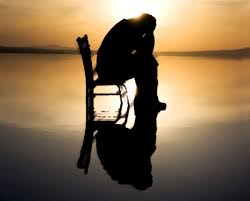
Which heightened my depression. I attended the gym for my normal three-times-a-week two hour workout. Normally I leave the gym with a feeling of well-being after such a workout. But not on that Friday. Instead, I sat alone in the sauna, itself almost deserted, and finding myself at a position which clarifies any depressed man:  


It was also on that day when I recalled some of the weirdest statements made by various church leaders about the European Union before the result was released. One leader of a church in Southampton ordered his congregation to vote leave, insisting that the European Union is the work of the Devil and therefore an abomination before God! Then at a Bible study group I heard about another pastor of a more localised church saying the same things about the Union. On that occasion, on the day of the referendum itself, I stood up and declared that all this was total nonsense, and even rebuked the elderly couple involved for being so gullible. Their reply was that they felt God saying these things in their hearts. The next morning I heard the result. 

Did God really speak to them? Was I in the wrong? Worse still, was I in rebellion against God, as depicted by the nations, including Israel, in the Biblical book of the prophet Amos? This has brought me near to a sweat - until I also remembered that the Archbishop of Canterbury has voted to remain, and quite likely most, if not all, the clergy of the Church of England. If the clergyman second only to the Queen has voted to remain in the EU, then there must be a serious flaw in the theory that the European Union is an abomination before God.

Reading the Biblical book of the prophet Daniel throws some light into this issue. As a captive of Nebuchadnezzar King of Babylon, the young prophet revealed the meaning of a dream the king had one night in bed. The dream was that of a massive statue standing in front, consisting of a head of gold, a chest and arms of silver, a belly and thighs of bronze, lower legs of iron, and feet and toes of iron mixed with clay. Then a large boulder, not cut by human hands, rolled down a nearby mountain and struck the statue at its ten toes. The whole edifice crumbled into powder, and like chaff blown away by the wind, nothing of it remained, but the boulder which demolished the statue grew into a mountain which covered the whole earth.

Then some time later, the elderly prophet had a dream of his own, that of a stormy ocean. From the swelling waves arose four beasts - a lion, a bear, a leopard, and an unknown ferocious beast. His attention was drawn to the fourth beast, and from its head grew ten horns, and another horn grew after the other ten. These two dreams both share the same interpretation - that four empires will rule over the nation of Israel, and particularly Jerusalem, God's own city, from Daniel's day to the end of human history. Of these kingdoms, three are clearly past, while the fourth has been suspended - to allow for the present Church age - only for this kingdom to resume power sometime in the future from this point of time - as we have not reached the end of the Church age, let alone human history. But the importance of these four empires to Israel and its capital Jerusalem cannot be underestimated. It has nothing to do with the Church.
(See Daniel chapters 2 and 7.)


But the one important principle underlined here, and that these kingdoms were decreed by God himself. It was God's plan for the Jews to be ruled by these four non-Jewish empires for their continued disobedience and rebellion against his laws and commandments. The fact that all kingdoms, nations, and empires are firmly in the hands of God himself, who re-affirms through Paul that there is no authority existing that hadn't been established by God (Romans 13:1-7). As such, it is God who causes empires to rise and fall, to enthrone kings and also dethrone them at his own will.

Which leads me to conclude that if people, even Christian believers, had said to me in the past that the British Empire was established by God, then it must follow suit that the European Union was established by God as well, wasn't it? Why do some Christians endorse the British Empire as a work of God, but emotionally denounce the European Union as a work of the Devil, and therefore a divine abomination? Didn't the British set out to conquer the indigenous in their own homelands, make slaves of them, and through bloodshed rule over them with absolute authority - for some four hundred years? And yet these same people who approved of the British Empire are now screaming out, we want our country back! The EU made slaves of no-one, they never ruled with the same kind of absolute authority, and there certainly was no bloodshed. Furthermore, the Union is only forty odd years old, a tenth of the Empire's duration! Yet many see it as evil.

We want our country back! I bet that that was exactly the cry of the conquered indigenous under colonial rule for four hundred long years. And then the English in particular sampling a mild form of their own medicine for just a few decades brings shock and horror. I cannot see the fairness, but perhaps fortunately for us, we as a nation are now free from the cruel, bureaucratic dominion of the EU, even after all this time, never a gun was fired by them in our direction. Now the Minister for Scotland, Nicola Sturgeon, is thinking of another referendum for Scottish independence. Because the Vote Remain was won by the Scots with a wider margin of 62 over 38 percent of the vote, compared with the 52 over 48 percent for the Vote Leave on the national average.

A second Scottish Referendum for Independence looks now to be on the cards, according to the Media. If the voting goes ahead, and they vote out, a very peculiar set up could emerge. They could be accepted back into the European Union. Even before that, the United Kingdom as we know it at present would be broken up and cease to exist. Quite likely, a passport control booth would be set up at the very spot we cycled through unhindered back in 1990. And the same applies to all other roads, along with border checks within intercity trains out of London Kings Cross and Euston Stations. And passport checks for cross-border domestic flights. A dire possibility? I guess that could be the case, but perhaps not. But the weirdest peculiarity would appear on the new map of the European Union, if it does not fall into itself. 

The map would show a uniformed continental block (if the Netherlands, France, Denmark, and Italy remains in the EU) with Scotland, and maybe Northern Ireland too, shaded in with Europe, but between Scotland and the north coast of France, there would be a landmass unshaded, as neither England and Wales would be in the EU. This peculiar resurgence would be the end result of the English (and Welsh) cry that "they wanted their country back."

But however events will turn out in the days, weeks, months and years to come, I have come out of my depression and set my faith in the Lord that neither my countrymen or ourselves would be any of the worse for wear as a result of leaving the European Union.

May God save, keep, and bless everyone who puts his trust in the death, burial and resurrection of Jesus Christ.

Saturday, 9 May 2015

A Lone Figure Knocks on #10.

Gosh, this has been quite a week! A week of shocking unexpectedness as David Cameron, leader of the Conservative Party, walking back into number 10 Downing Street. The surprise came after weeks of speculation on who will win the 2015 General Election, and form the next Government. So the pollsters went out canvassing - in the streets, at the front door, via the phone, on the Internet, and all concluded that there would be no clear winner, and so they - the pollsters - then speculated a coalition: either between the Tories and the Liberal Democrats as was the case of the last Parliament, or that of the Labour Party in coalition with the Scottish National Party. And so, right wing newspapers pleads with the electorate to vote Tory, while newspapers with a left wing leaning exhorted us to vote for Labour.


Boring stuff? Or are you sick enough of British politics to have it spilling out of your ears? Yea, I felt that at times too. But the Tory victory has sent shock waves across the nation, and pollsters running round like headless chickens while pondering on how they missed the target by such a wide margin when it came to predicting the final outcome. According to the Press, the win by the Conservatives was not because they sent a high level of inspiration during the weeks of campaigning, but rather for two reasons: first, the idea of a left wing socialist party allied to a further extreme left wing Scottish party, had no appeal to Middle England. And secondly, there were many "shy Tories" who either weren't truthful when asked by a canvasser, or were genuinely undecided, and plunged for the Tories at the very last moment when standing alone in the privacy of the polling booth. It was the "shy Tory supporter" who probably made a considerable impact, as such a political group are often referred to as the Nasty Party, or the Party for the Rich - was more likely to lie to the pollster just to save himself from embarrassment.

Than the case of Edward Miliband, former leader of the Labour Party. Known as "Red Ed" for his Marxist Socialist standing, he has now resigned from his post. Back in 2010, he "stabbed his brother in the back" so to speak, to win the vote for the job of party leader. David Miliband, Edward's elder brother, had a centre-ground standing in the political arena, and he was against the Trade Union paymaster's demand to go towards the Left. Instead, his younger brother took the helm while David dropped out of politics altogether to take up a post at a charity in the United States. And that has changed political history for a long time, at least. For it is generally agreed, even by right wing newspapers, that David Miliband would have strolled into victory with little challenge, and with greater enthusiasm from the electorate. So as it looks, to me at least, it was not the Englishman's love for the Conservatives that had got them back into power, but a case of having the devil they knew, rather than the devil they did not know, to govern their country.

So all this drama of political infighting would make for a good TV soap opera, would it not? No matter how extensive each political party is committed in making our livelihoods better, or to turn this nation locked in turmoil into something of a Utopia - for many millennia, human governments, with all of them believing that they have the right answers, had failed to achieve their Utopian ideals. Amazing isn't it? Thousands of years of practice and nobody has ever got it right. Realising this, on polling day itself, I posted a message on Facebook saying that a lonely figure was standing at the famous black door of 10 Downing Street, gently knocking, and with what appears to be a wound at his hand. I was rather surprised at the small response such a statement had collected, since most of my Facebook friends are believers. But I'll be honest here, my statement isn't entirely original. A few decades ago, someone had a vision of the United Nations Building in New York City. In his vision, a gigantic figure of Jesus Christ was standing outside the shimmering glass edifice, gently knocking. Such a vision became the talk of the town.

Meanwhile, there had been something of a controversy over a painting hanging inside St. Paul's Cathedral in London. The artwork was created by William Holman Hunt, and the picture depicts the Lord Jesus knocking on a door which looks as if it had never been opened. The controversy was between one group of Bible students versus another group. One group believed that the painting depicted John 8:12, where Jesus calls himself the Light of the World, and is seen here holding a lit lamp in one hand, while with the other he knocks at the door, and he was calling the resident to come out of his house and follow him. The other interpretation is taken from Revelation 3:20, where Jesus is seen knocking at the door of a man's heart, and asking to be let in, and have supper with him in his own home. 


I recall December 1972, on a cold wet Saturday night, walking through the Strand in central London when I was stopped by two young men in the street, and asked my opinion about Jesus Christ. Being wet from the rain, I invited them into a nearby bar, where it was warm and dry, and I bought them each a drink. It was there in that pub that they took out a Bible and had shown me Revelation 3:20, along with a number of other Scriptures, mainly from the Gospel of John, and explained to me about "asking Jesus to come into my heart" - nowadays known as the sinner's prayer. It was the first time ever that I heard of such a concept, but in throughout the 1970's it seems to be the rage, originating, I believe, from America.  But it was later in the same decade that I heard the pastor of one of my former churches debunking Revelation 3:20 as a conversion verse from sinner to saint. So what does that verse actually say?

Behold, I stand at the door, and knock: if any man hear my voice, and open the door, I will come into him, and sup with him, and he with me.

The pastor's argument was that this verse was addressed to a church of believers in Laodicea, a city in what is now Western Turkey, and a renowned centre for medicine. The church there had lost their zeal they once had, and had become lukewarm in their commitment to the Lord. If they didn't mend their ways, then Jesus would "spit them out of his mouth" - a reference of the demise of the church as a local assembly of believers, and not meaning the loss of individual salvation as some have interpreted. Maybe it is this pastor's interpretation of the text that has been the basis of putting off many from responding to my Facebook post. To them, the idea of Jesus knocking on the door for admission does not seem to be Biblical, and even among our present church elders, the "sinner's prayer" as we know it, is not accepted by them as a means of conversion. 

But I have heard and read numerous testimonies on how "asking Jesus into the heart" has changed the lives of those who had said the prayer, and how they grew up spiritually to become mature Christians. This has made me think that the onus is not so much on the words spoken as on the attitude of the heart of the person praying. Personally I believe it is okay for a person to recite such a prayer if it's based on his new found faith. I would not say it is mandatory for conversion, neither would I say that not praying it means a non-conversion. There seems to be many conversions recorded in the New Testament which does not seem to include the prayer - the conversion of the three thousand Jews at Pentecost is one example (Acts 2), and the healing of a lame man at the Beautiful Gate seems to be another (Acts 3). The Ethiopian eunuch, after being shown the Scriptures by evangelist Philip, simply confessed that Jesus is the Son of God. That was enough to merit baptism in a nearby pond, testifying to the genuineness of his conversion (Acts 8:26:40). 

And concerning the above mentioned church leader, here is where I find the rub. Apart from Revelation 3:20, there are other verses in the New Testament which indicates that Jesus dwells in the heart. Obviously not in the physical blood pump located in the chest, but in the human spirit. In Ephesians 3:17, Paul exhorts his readers to allow Christ to dwell in their hearts by faith, as in John 14:23 where Jesus promises the entire Trinity dwelling within him who loves God and keep his commandments. But I believe that it is wise to pray the "sinner's prayer" at conversion, and there is a verse, spoken by Jesus himself, which strongly encourages this. It is found in Luke 11:13, where Jesus makes a solemn promise that the Father will give the Holy Spirit to all who asks of him. And this promise is unconditional, given to men with evil hearts, but with enough faith to believe in the willingness of God to grant their requests.


It is of my opinion that Luke 11:13 is the most demonstrative verse in the entire Bible about God's free grace. And straight out of the mouth of Jesus himself. Because we believe that the Father is Almighty God, the Son is Almighty God, and the Holy Spirit is Almighty God, but that does not make three Almighty Gods but one Almighty God. If one has enough faith to ask for the Holy Spirit to enter into him and the request is granted by the Father, according to the Son's own testimony, such a request is exactly the same as asking Jesus himself to come into the heart. I have even read the testimony of one asking God himself to come into his heart, and the resulting change in his life provided edifying reading. Little wonder that many who testify to the sinner's prayer have enjoyed changed lives. 

The vision of Jesus knocking on the door of a person's heart is not a fluke, according to Revelation 3:20. Neither is the gigantic version of Jesus knocking on the shimmering skyscraper of the United Nations building. Nor is it weird to think of Jesus Christ knocking on the door of 10 Downing Street. The truth is: every man and woman alike is in a desperate need of God to fill their lives, everyone without exception. That is the reason why we are are here. To know God, and to partake in his infinite love already existing between Father, Son, and Holy Spirit. The existence of human government is because of our fallen natures, our evil hearts spoilt by sin, and as a result, governing authorities were a necessary placement by God himself to keep evil under restraint, according to what Paul writes in Romans 13. We can conclude, therefore, that the main principle of our Prime Minister's duties is to keep evil under check, so that men can live in peace with each other, and the Gospel can be spread without hindrance.

Regardless on who wins and loses the Election.