Total Pageviews

Saturday, 30 January 2016

Manhood Defined

Just this evening I was doing the weekly main shopping at the local superstore when I began to notice how empty it was of the usual crowd of shoppers. For me, Friday evenings has always been a great time to shop, as it relieves the weekend of the responsibility. After the last item was placed in the wheeled basket, I made my way to the checkout, where the teller sat idly, waiting for the next customer. A very unusual sight at any supermarket store. Usually on a Friday there is always at least one person in the process of being served, quite often two, with the second still waiting his or her turn. During the weekend itself, queues of two to three, sometimes even four at each checkout waiting to be served is more of the general norm.

But not this time. Instead the tellers sat idly, and I was able to breeze through. Then it dawned: I said to the young female serving me that it must be the live football on TV which was keeping their customers at home. It was an important match for all football fans, as this game was of a series of fixtures which would climax with the F.A. Cup Final later in the year. Then I said to her that I am not a follower of football. When she replied that she wasn't a fan either, I concluded the conversation with the words:-
This does not make me any less of a man, though - as I spoke with a hint of embarrassment.

The question of masculinity. And I write this more than a week after an incident at a curry restaurant which made me feel very hot under the collar with rage after suffering public humiliation while seating myself at table. Under the Facebook link, A Punch Averted, a good friend of mine typed, You are the bigger man not biting. In a situation like this, he was absolutely right. Had I responded by giving way to my anger - rather than prove my manhood, I would have lessened it, with the risk of all of us thrown out by the restaurant staff and bringing shame and disgrace to an Ascot church of adult men.   

Is being glued to a TV watching live football more masculine than missing the programme to go out shopping? Many years ago, back in the mid-1970's, whilst working at a precision engineering company, I cracked a joke at a fellow machinist, an ardent Queens Park Rangers supporter. In a discussion about watching the match, I came up with a suggestion on going out shopping with his wife instead. The fierce look he gave me would have launched a thousand ships! I went away laughing, back to my own machine, having both caught the funny side. But this kind of thinking most likely had arisen from his adolescence, when he accompanied his father to the weekly visit to the football stadium, while his mother went out to the shops and cooked the dinner. Those post-War days when men were men and women were grateful had an effect on my schooldays, when boys evaluated each other according to their physical prowess and their ability and competitiveness at team sports rather than on academic attainments.

Perhaps very much modelled on John Wayne. This six foot four inch tall embodiment of American masculinity left a trail of broken hearts and jaws everywhere, along with millions of fractured male egos, as this rough, tough, two-fisted, ramrod-backed, but always fair, character who conquered the Old West became the celluloid idol of masculinity to whom no other man can measure up to in the real world. John Wayne remains a fictional character, the ideal model of male toughness. But no less masculine is the far less muscular husband and father who doggedly goes to work each day to the job he hates in order to support his wife and children and to keep those nagging fuel bills paid.

John Wayne.
Indeed, devotion to wife and children through self-sacrifice marks out a far more masculine character than the hulking logger who desserts his wife "for that other bit on the side." Going by experience, true masculinity is not based on how physically strong one is, but on how he relates to others, in particular, putting the interests of others before self. This may even include the swallowing of pride in full public view, for something much better. I once read a story about an evangelist who was preaching the Gospel at a public auditorium. In the audience stood one gangster who has a record of street violence, and based his masculinity on his own toughness and prowess, along with his pride in the fights he got himself into. Soon after the main preach, this young man ran up to the evangelist in full view of everyone, and hugged him tight, breaking into tears. He had just learned what a real man is.

Another misconception of masculinity was emphasised by three journalists of the same newspaper, but at different times, two of the three were female. It is the British notion that stoicism in public is the sign of true masculinity. Over the years as a Christian believer, I had the "virtues" of the British stiff upper lip thrown at me by fellow Christians as well as by newspaper journalists and columnists. They write that since the death of Princess Diana in August 1997, our country had lost its "stoic, bulldog spirit" to become publicly emotional, mawkish, sentimental, schmaltzy, and wet - that is, except the emotion of anger. Like the time when the BBC Top Gear presenter Jeremy Clarkson punched the producer Oisin Tymon in March 2015, over a meal served at a hotel - almost exactly eleven years after punching journalist Piers Morgan in another dispute over a boxing contest. Nobody referred to him as emotional or sentimental, but instead received praise from columnist Richard Littlejohn for "being typical British."


This brings out what I find interesting about British masculinity. Littlejohn's article about Clarkson wasn't unique. The same idea was also reflected by fellow columnist Amanda Platell, who equally praised him. When he was ousted by the BBC over his hotel incident, a very large percentage of Top Gear viewers stood behind him, demanding reinstatement. They all loved his saucy humour, his bias towards racism, and his sense of superiority over foreign nationals, as was the case during his stint in India. While Clarkson could be seen as the more genteel British equivalent of his predecessor John Wayne, he too has left a trail of bruised faces and dented male egos, much to the delight of his fans.

Simon Peter could be seen as another who had similar traits to that of Wayne and Clarkson, even if he was Jewish and lived some two thousand years earlier. Muscular in build, this experienced and hardened fisherman was not only the life of the party, but would have been the first to throw a punch at anyone who dared cross him. Before his encounter with Jesus Christ, he most likely filled his talk with strong language, and according to the culture of the day, it would not be surprising if after a heated argument, end up in a fist fight with the local tax collector, seen by him as a traitor of his people while sucking up to the Romans. Little wonder that Simon and Matthew ending up as members of the same team was nothing short of a miracle, the power of God demonstrated. One interesting incident found in the Gospels was when Jesus allowed mothers to bring their children for a personal blessing (Mark 10:13-16). The narrator says that "the disciples rebuked them." I would not be surprised at all if the ringleader was Simon himself, who didn't want to see his Lord wasting his time on "soppy, sentimental drivel"- and ready to throw a punch to any unfortunate dad who had the temerity to insist on a blessing for his offspring. Instead, Jesus quelled any rising tempers with a rebuke before it got out of hand.

The whole life of Jesus really was a demonstration of manhood and the true nature of masculinity. This makes him distinct from the likes of John Wayne, Jeremy Clarkson and Simon Peter. In the world (and not just in the UK either) male anger is seen as a trait of real masculinity, and is often seen as a means of power and a display of masculine strength. And yet the only time when Jesus showed anger was at the Temple precincts in Jerusalem, making a whip and throwing over the trading counters. But his anger was never the result of suffering as a victim of personal injustice. He was angry because he saw that his Father's House of Prayer was suffering under dishonest violation of its true purpose. When the issue was resolved, his anger was totally dissipated, and he was able to plead with the same crowd that he is Eternal Life, and to come to him and receive it.

While on Earth, Jesus shows compassion to the sick, the lowly, and the rejected. As a boy he was subject to his parents, and as an adult he had a kind attitude towards children. In a culture where women were deemed inferior to men, and their word or testimony generally disregarded, and even gender segregation at the synagogue as well as at the Temple, Jesus has shown a high regard for women. Like the elderly lady who suffered twelve years of vaginal bleeding, (Luke 8:43-48) the chat he had with the woman at the well, (John 4:1-42) and his ministry to Martha and Mary (John chapters 11, 12). Here Jesus shows his true masculinity by showing love and compassion towards women while at the same time going against the grain of culture, and risking to suffer reprisals for this.

While the Lord determinedly set course for Jerusalem to be tried and crucified, and knowing with certainty of his fate, he went with the full knowledge that this was the will of his Father in heaven. Yet he also fulfilled Isaiah's prophecy that he did not open his mouth (Isaiah 53:7) in protest, grumbling, or in defence, nor did he shout in retaliation. He never wept for himself or for his coming fate. This has nothing to do with the stiff upper lip. It had everything to do with his love for Israel and the whole world taking precedence over his own affairs. In addition, the Gospels does record him weeping in public on two separate occasions. The first occasion was when he foresaw the fate of Jerusalem. After rejecting him as Messiah, Saviour and King, the city would be razed to the ground by Roman general Titus less than forty years later. He wept over the city (Luke 19:41) without caring what others might think of him.


The second occasion is recorded in John 11:35, the shortest verse in the entire Bible: Jesus wept. He loved that family so much - Lazarus, Mary, and Martha, that the sight of Mary's distress brought out his tears. If this was an occasion to show off his sentimentality, surely this was it. It was nothing of the kind. Instead, he wept out of love for the family.

Jesus Christ demonstrated a level of masculinity which was way above Wayne, Clarkson or even Peter. But it does not end there. We too can have the same level of manhood Jesus had. This is achieved by being controlled by the Holy Spirit in our lives, who is available to anyone who asks for him. It is that simple. Believing that Jesus is the Resurrected Christ and having the Holy Spirit dwelling within makes the man whole, and the Holy Spirit can direct him towards true masculinity, which involves putting the interests of others on the same par as himself at least, if not above himself.

It is the goal to aim for.

Saturday, 23 January 2016

A Punch Averted

It was one evening last week when the staff at a curry restaurant were preparing to receive 27 men for an evening of fellowship over food. Yes, that number of males, many married, some still single, all either regular attendees of a church which meets at Ascot, or having some associations with it. When I walked in with three other people, the first table was fully taken except for just one seat, while the other table was still unoccupied bar just two people.  The occupant next to the vacant seat was one I shall call Trevor. We had been at odds with each other for many months, and I suspect that his feelings towards me slowly metamorphosed from the level of disagreement to downright hatred. I thought that sitting next to him in such an informal social environment may help us both change direction which would ultimately lead to a more positive relationship between us.

While I hesitated slightly, he turned and giving me a fierce look, ordered me not to sit next to him. And this was in front of everyone else at the table, who were all busy in conversation, possibly to blot out what was a potentially explosive situation in the restaurant, which would have had us all thrown out by the staff. Fortunately, I was also standing next to the one of just two occupants at the other table, and I politely asked him if he would kindly occupy the one remaining seat. He obliged, and with the one man between Trevor and myself, the situation was defused, just as more arrived to fill the seats around the table I was occupying.

The situation was defused but not my emotions. I was full of rage, and I wanted to floor him with a single punch, despite that he is taller than I am. There was something which Trevor may not have been aware of. Since I came out of hospital after a major cardiac procedure, I had at first attended a course of rehabilitation exercises at Windsor, twice a week. This included bicep curls using a pair of free weights. After the course was over, I began to attend gym on a weekly basis, and among other cardiac-benefitting exercises, I intensified the bicep curls using heavier weights. Now I have been advised to up my gym attendance from one to twice a week, aiming for three times a week. As a result, I began to grow strong again, enough to believe that I could floor this arrogant Englishman with a single blow.


As I pondered over the issue, I was imagining my enjoyment of the sudden shot to power had he went down. Very self-satisfying, knowing that my opponent was brought down a peg or two and taught a lesson - in front of a shocked audience to boot. My hands were trembling as all sorts of thoughts passing through and emotions felt. But after the hors d'oeuvre was served and I began to tuck in, I was also praying in my spirit, confessing my anger and admitting in my heart that all these things were ungodly. Almost immediately I felt my anger melt away, and I was able to converse as normal as if nothing had happened.

My opponent I knew for many years. I recall the one Sunday in the early 1990's when he showed up in church with his wife and two young, pre-adolescent sons. Trevor and I became friends. I have never forgotten the after-service lunch when he invited me, back then as a bachelor, to his home for dinner. After this, we agreed to a general knowledge board game, in which I came out as the winner. After this, while the parents had to engage in domestic business, the two boys and I contributed to a jigsaw puzzle, after which I was commended by their mother.

There were two occasions when this fellow had helped me out. The first was when I was at house-group with him. I was going through a patch of financial difficulty, and he gave me, as a gift rather than a loan, a sum of money to help tide me over. Then came the evening of March 2004 when my second daughter was about to be born. After spending two days and a night with my wife in hospital, that evening I decided to return home to spend the night in my own bed. By 11 O'clock pm I was just getting into bed when the 'phone rang. It was from the labour ward, announcing that my daughter was minutes away from birth. In panic I phoned Trevor and in next to no time he was at my front door, and together we were on our way to the hospital in his car with his wife at the front passenger seat. Upon arrival, all three of us made a quick prayer, then I dashed alone into the building and ran up several flights of stairs - and entered the ward just minutes before the actual birth. Phew! Thanks, mate.

This was also the era when he would collect me for an evening out to the pub. Week by week we sat across table, drink in hand and into deep discussions. It was during these pub visits when disagreements in theological issues began to emerge. I was, and am, an advocate of Eternal Security of the Believer, or Once Saved Always Saved, while he in turn believed that a believer's salvation can be lost if he becomes unfaithful. Disagreements in other topics also emerged, but this was the main one.

Then how could it go so wrong? Surely not over a theological disagreement?

When I contributed to them on construction of the jigsaw puzzle, I tended to show affection towards the two boys on what I thought was on equal measure. I now admit that there were times that I went over the top, but neither complained - not to me at least. This keeping of the British stiff upper lip by these two young men allowed me to go blindly along in the ignorance of what was really happening. It was years later, after they had both graduated at university, that I had a glimpse of a video that one of them had made and posted online, which has caused me to ask questions. The occultic flavour of the video was so sickening that I had to click it off about a third of the way through. Did one of Trevor's sons depart from the faith, and if so, am I blamed for this?

For a father who believes that salvation can be lost through unfaithfulness, this must be devastating! Furthermore, according to him, it would be me who would receive this edict from Jesus Christ himself:

But if anyone who causes one of these little ones who believe in me to sin, it would be better for him to have a large millstone hung around his neck and to be drowned in the depths of the sea.
Matthew 18:6. Also Mark 9:42, Luke 17:12.

That the same statement is repeated in three of the four Gospels shows its significance. All this father had to do was link these verses with 2 John:9-11:

Anyone who runs ahead and does not continue in the teaching of Christ does not have God; whoever continues in the teaching has both the Father and the Son. If anyone comes to you and does not bring this teaching, do not take him into your house or welcome him. Anyone who welcomes him shares in his wicked work.

This is only my own theory about Trevor and his hostility at the restaurant, but it is based on my own experiences with him in the past. On the other hand, both of his sons may be well within the faith and attend their churches regularly. If that is the case, and I hope this turns out to be true, then his present hatred for me remains a mystery. Yet, to look back at 2 John:9-11, the apostle tells us who these false teachers were. They were not the ones who hug other men a little too much. Rather, they were the ones who deny with intent that Jesus came in the flesh. In other words, to them, Jesus was not the Christ. Yes, he was crucified, but as an imposter. He did not atone for our sins, neither did he rise physically from the dead. This leaves salvation only to be attained by the perfect keeping of the Law of Moses. These deniers, John writes, are the antichrists already in the world, as the word antichrist means instead of Christ.

That a fight could have easily broke out at a restaurant among churchgoers shows that we all fall short on what a believer should be like, and that we still have a long way to go in our spiritual lives. But this is nothing new. The New Testament is pretty straightforward in its honesty in regarding churches. Paul writes the the church in Corinth that they were actually bickering among themselves over which leader to follow - and threatening to split four ways, while at the same time bringing lawsuits to unbelieving magistrates, while practicing fornication with prostitutes! But the apostle also opens his letter with greetings to them as saints, sanctified in Christ and called to be holy - not by their own deeds, but by the presence of Christ through the Holy Spirit dwelling in them.


Then there is his letter to the churches in Galatia, who were turning from the grace of Jesus Christ to attaining life through obedience to Moses, particularly in male circumcision. Yet like with the Corinthians, his letter opens with a greeting along with acknowledgement that they are all saints, true believers in Jesus Christ, according to the will of the Father. God is sovereign, and no man - believer or unbeliever - can undo his works.

James also opens his letter with greetings "to the twelve tribes scattered across the nations" acknowledging that they are his brothers, and therefore referring to all Jewish believers in Jesus Christ. Yet he rebukes them of social class favouritism - a sin common among present English churches, faith without deeds, an unruly tongue, and then he asks the question:

What cause fights and quarrels among you? Don't they come from desires that battle within you? You want something but don't get it. You kill and covet, but you cannot have what you want. You quarrel and fight. You do not have because you don't ask God. When you ask, you do not receive, because you ask with wrong motives, that you may spend what you get on your pleasures.
James 4:1-3.

The apostle were not addressing unbelievers but Jewish believers. They were accused of fighting with one another, right to the point of murder itself. Yet they were saints, called through the foreknowledge of God the Father and destined to be holy. Their lurid behaviour did not bring glory to God among unbelievers, which is the whole point of his letter. Yet they remained in the firm hand of God to salvation, just as Jesus promised to the Jews as recorded in John 10:29. In the Father's hand and in the hand of Christ you are a son of God forever!

With such a background there is hope for us. I thank the Lord that he has put a restraint on me at that restaurant. But as for my opponent, I have never disliked him, for even if he is enslaved to false doctrine, he is still a believer and a brother of mine in Christ. Just over a week earlier I spoke to his wife in church at her husband's absence, that I have never forgotten their kindness when driving me up late at night over twelve miles to the hospital. And on top of this I still care for the whole family. Did his son fall away from his faith? Perhaps he did, perhaps he didn't. I hope he hasn't fallen away. Unless otherwise told, I'll will never know for sure.

However, having known both sons since childhood, I firmly believe they are in Christ, whether they make occultic videos or not. For salvation is from the faith of Christ to the believer, whose body remains the home of the Holy Spirit, and not dependant on performance. Yes, I am aware that the Lord is very particular in the way we live as Christians, but if James' letter has anything to go by, it is always to manifest the Glory of God to the lost, that they too may believe and be saved.  

False doctrine - the idea that man must help God to save him by staying faithful or is in danger of losing his salvation - is a denial of the full Saviour-hood of Jesus Christ, practically making sinful man his own saviour, as well as a denial of God's Omniscience and Sovereignty. When I have a glance back at history - for example, the Dark Ages, the Spanish Inquisition, the brutality of bygone Popes, the high rate of adultery, fornication and prostitution among the clergy over the centuries, even accusations of paedophilia to this day, as well as pirate life and slavery in the 18th Century Caribbean romanticised by Disneyland, I could see the devastating result of both Catholicism and the teaching of probational salvation, which was already at work among the churches of Galatia during Paul's lifetime. It is a doctrine which I believe places a blockage from God's love manifested to a lost world.

Now that does carry a powerful punch. 

Saturday, 16 January 2016

Major Tom - Lost Forever?

I was always fond of David Bowie. That is despite only a few songs of his I would endeavour to buy. This would include Space Oddity, Life on Mars, Heroes, Ashes to Ashes, along with any other that made it into the charts. Ziggy Stardust failed to appeal, but to me, no way would that have degraded his superb musical talents. On one occasion he also performed as a duet with Bing Crosby, and sang the main lyrics of Little Drummer Boy, while Crosby added his backing vocals. This looks to confirm Bowie's familiarity with the Christian faith, much of that gotten from his schooldays. Not surprising then, that the announcement of his sudden death at 69 years of age from liver cancer took the entertainment world by storm. So much so, that the death of actor Alan Rickman, of pancreatic cancer, also aged 69 and just a few days after Bowie's demise, passed almost unnoticed.


So I couldn't help feeling shocked, while his body was still warm, that a group of American Christians had already recorded a video, Is David Bowie in Hell? available for anyone to view, while his family mourns over him before cremation. What I found shocking about all this was the crass insensitivity in recording so quickly, even while his family were standing around in mourning. By then the video had already collected several thousand views. The truth is, none of us have any right to decide the singer's fate in the afterlife. Throughout the entire Bible, the clues of only three saints were given about their certainty of Heaven, and they were actually seen or witnessed by those around them - Enoch, Elijah and Stephen. Recorded Bible narrations of everyone else, saint and sinner alike, ends with physical death. The silence about the afterlife remains so loud that as a result, the eternal fate of Ananias and Sapphira, recorded in Acts 5:1-11, remains prime examples of debate to this day.

Details of Bowie's infancy remains very patchy, after reading Wikipedia's biography, along with other official websites. There was a hint in a national newspaper, unproven, that from birth, his mother might have been emotionally distant from her son, something which, if true, would stick with him for life. With a 1950's-style schooling including the morning Christian assembly based on the Church of England liturgy, I wouldn't be at all surprised that the schoolboy's perception of God was that of a strict disciplinarian, constantly eyeing for every misdeed yet at the same time aloof, virtually impossible to please, and any good deed done as seen as a means to get something by means of earning. And that is going by my experience of school days throughout the 1960's, which rather than convert to faith in Jesus, (no record of this) instead had alienated quite a number of schoolboys into atheism, with myself included. Indeed, to say that God is love sounds like an alien language.

With a feeling of sexual attraction towards his own gender as well as for the opposite, Bowie could well have developed a guilt towards a stern God he perceived as grossly unfair when considering that his libido responding to same-sex attraction was beyond his control. This he had to keep secret, for fear of reprisals and schoolboy bullying, rejection from society, admonishment from the Church, possibly even disowned by his parents. Little wonder that David Bowie nee Jones embraced the Philosophy of Thelema, which was the brainchild of the 19th/20th Century English occultist and magician Aleister Crowley. Simplified, Thelema is about, "Do as you will" shall be the whole Law. Love is the Law. Love (subjected) under will.

I found Aleister Crowley to be an interesting character. His parents were Plymouth Brethren, which was renowned in those days for its strictness and emphasis in discipline. In many of its churches, Holy Communion was forbidden for visitors, and a dress code was also in place. Each member was evaluated on how much he was devoted to Christ and how committed he was to abstain from sin. In short, his parents taught their young son Lordship Salvation, the idea that - "If Jesus Christ is not Lord of all, he is not Lord at all." Proof of salvation is 100% commitment. If the mark is not adequately met, it proves that the member is not truly saved. Little wonder that young Crowley, after experiencing a childhood of discordance between church teachings and his own experience, totally rejected any form of Christian faith from his life.

Crowley was very intelligent, brilliant if I may say. His interests included mountaineering, an endeavour which I'll admit was never brave enough to give a try. But his rejection of a Christian God also included a rejection of Satan as an entity, being associated with the Christian faith and belief. This may come as a surprise to some Christians who has a smidgen of knowledge about Crowley, whom they have associated with Satanism. Rather he was an occultist, tarot card reader, and a worshipper of the Egyptian entity Horus. He was also a member of the Masonic Lodge, and it was he who fathered the philosophy of Thelema, based on love of self and love being the fulfillment of the will being the final goal to aim for.

Aleister Crowley.
Both Crowley and Bowie had the same in common. Both shook off "the horrible shackles of religious inhibitions" and engaged in "free love" - in Bowie's case with men as well as with many women. Therefore, I can't help but see a parallel between Bowie, and who the English publication John Bull referred to as "The most wicked man on Earth." Incredibly enough, just as Crowley boasted that his spirit guide was the Egyptian deity, so Bowie too, while going through the stage of Ziggy Stardust, had the jagged stripes painted across his face in relation to the gods of ancient Egypt. So according to the Youtube Christian video already mentioned.

There are three distinct similarities shared between Crowley and Bowie. First, both rejected the Christian faith whilst young. Secondly, both achieved fame through their talents. And thirdly, both suffered ill health towards the end of life. Remarkably enough, both were addicted to drugs sometime during their lives - Crowley to heroin and Bowie to cocaine. And both were fornicators, with Bowie having a greater number of females in his harem. And with his admittance to his bisexuality, Bowie looked to be more of a rebel against the Judeo-Christian society than even Crowley. And thirdly, both embraced the philosophy that the Law is the self-will being fulfilled by love - which led to free fornication on both cases. It is these parallels that I believe that Bowie was a disciple of Crowley and embraced Thelema. This seems to be endorsed by one of Bowie's pop songs, Quicksand, containing the name Crowley in its lyrics, while another one of his songs, After All, contains a reference to Crowley's philosophy.

Both suffered ill health in their latter years. Crowley from drug addiction and Bowie from liver cancer. I am aware of the conclusion made by many Christians that you reap what you sow. If you sow sin, you will reap death. So biblical and sound. And that was why I felt distressed - not only about the news of Bowie's death, but even more so by the video so quickly recorded. At first I refused to watch it, not being emotionally prepared enough to what I would have had to listen to. So I waited until the following morning when both my wife and I watched it. Surprisingly enough, the video was not as judgemental and decided as was first anticipated. The presenter was open to the possibility that his deathbed repentance might have saved him "like a brand out of the fire."

Which had led me to his Twitter account in referral to God just before his passing. Did he have a change of mind about Jesus, finally believing in his heart that he is the Christ? He might have done, he might not have done. That is why none of us mortal humans are allowed to decide on the matter. If he had made such a positive decision shortly before his death, then right now he would be in Heaven with Jesus. This is the pure unadulterated grace of God, totally dependent on his mercy, and incredibly enough, an indictment to all the self-righteous religious people who has spent their whole lives with the hope of pleasing God continually!

Such deathbed repentance is possible, as aptly demonstrated by the thief on the cross (Luke 23). It is interesting to read Luke's narrative carefully. There was nothing else the thief could do. But as he looked upon Jesus crucified beside him, it became apparent to him that he was innocent of any wrongdoing. With that heart conviction, he had the temerity to rebuke the other thief who was also crucified, and then plead with Jesus to "Remember me when you go to your kingdom" - an indication that this Jesus crucified is the Christ and King. It was this heartfelt conviction and faith which allowed God to save him.


The same could have happened with David Bowie. This is why, I believe, he suffered his last eighteen months of his life with cancer. To give him the opportunity to reflect on his life and his need for God to save him through faith in Jesus Christ. That is all it takes. Once Saved Always Saved. If such a deathbed repentance had taken place shortly before his death, this too would be a rebuke to all Arminian Christians who believe that salvation can be lost if the believer loses faith or sins excessively. As a saint, Bowie could be seen as taking a massive shortcut to Heaven, avoiding all the threats and potential pitfalls in life that would have put his salvation into jeopardy.

I hope to see you in Heaven, David - and receive your autograph.

Saturday, 9 January 2016

The Guy With A Tablet.

This week I had to take my partially disabled wife Alex to Wandsworth in London for an assessment, pre-arranged by appointment. Getting there was no real issue. Outside rush hour, the train was sparsely occupied while she remained in her wheelchair throughout the whole journey. The interview itself lasted about eighty-ninety minutes. Afterwards, we had a look around at the huge gleaming indoor shopping mall, beautifully constructed, which rejuvenated this formerly ugly working-class district once blackened with soot from nearby heavy industry, where I remember walking through with my former girlfriend way back in 1971. Without having any wonderful memories of the area, to re-visit after more than forty years was indeed a culture shock.

Bygone Wandsworth

But it was the return journey which had inspired me to write. Being the start of the evening rush hour, far more seats in the train were taken, except one which was right by the doors, allowing me to sit while holding my wife's hand as she remained sitting in her wheelchair. Directly in front of me were two male passengers. Both looking to be in their late twenties or early thirties. The one by the window had longish hair, sported a moustache, and was dressed casually with a shirt open at the neck. The other, next to the central aisle and sitting right next to the first, was a businessman dressed in suit and tie, and concentrating hard on his tablet. I was able to have occasional glances at his screen, which looked as though he was flicking through one image after another. Despite myself cracking jokes which brought bursts of laughter from Alex, (to lift her morale) this fellow remained stern-looking as he kept on gazing at his tablet.

About halfway through the journey, Alex's wheelchair rolled as the train braked. I rose up to reorient it to its former position. It was then that the casually-dressed fellow offered to help my wife out of the train as it approached the station. I explained with thanks that we still had a considerable length of travel left. Finally, at our stop, the guy with the long hair took my hint, and immediately arose to help lift the chair out of the train, onto the platform. Much to our surprise, the businessman rose up too, and contributed his effort in lifting of the wheelchair. Then they both returned to their seats.
"How helpful these two were." Alex commented afterwards. "I wish God's blessing for both of them."

As I saw it, it was the casual-dressed chap who had the genuine concern for Alex's welfare, as he had initially made the offer entirely out of his own free will. He was also the first to arise, despite sitting further away from the central aisle. It wouldn't have surprised me at all if the smart fellow contributed out of a pricked conscience rather than out of genuine kindness.

Train journeys. I have read a number of stories of what goes on within a train when on the move. Furthermore, I can compare such journeys with the equivalent made in Italy, or even crossing France on my way to Italy - a favourite way to travel back in the early 1970's with the use of the good old-fashioned boat-trains. One such story appeared in the national newspaper. It had taken place sometime in the eighties or early nineties, when the newly-invented cell phone was as cumbersome as a brick, and looked rather like a brick, too. But it was a gadget that carried a very high status symbol. It was used almost exclusively by the yuppie, an acronymic word for Young Urban Professional, an oft-used term prevalent in the Thatcher years of the 1980's before slowly sinking into semantic oblivion by the mid-nineties. Whenever self-esteem was analysed in those days, the yuppie with his bulky mobile phone, was the yardstick with which one's social status was measured by anyone who thought was worth his salt.


So on that particular evening rush hour, this young, smartly dressed passenger sounded very impressive as he kept his business conversation going while the train he was sitting in kept rolling out of London. As he was talking about trading of stocks and how various companies and businesses were affected by what took place in the Stock Exchange, suddenly someone burst into the coach he was in from the adjoining carriage with a desperate plea for anyone with a cellphone to come and attend a passenger who has fallen ill. Everyone in the packed carriage pointed to the young businessman, who blushed with embarrassment when forced to confess that his phone was, all throughout that time, switched off, due to its flat battery in need of recharging.

Then there was another occasion, at another time and place, and also reported in the Media, of a "yuppie" constantly talking business in his cellphone for a prolonged period of time. So much so, that the fellow sitting opposite angrily opened the window, quickly grabbed the phone out of the young man's grasp, then threw it out of the window just as the train passed over a bridge spanning a river. Everyone within view cheered.

Other related instances have been reported, not necessarily on the train. One occasion involved a staff member of a cruise liner being interviewed by a reporter. This sailor related about how his passengers, all of upper-middle to upper class, changed behaviour after boarding, "going all nautical", and even calling down Bon Voyage to the people waving up to them from the pier below.

"And I always thought it was the other way round." the crew member protested. "Then there is the contest on who would sit at the Captain's Table during supper. Everybody wants to sit at the Captain's Table, and each vie hard for the opportunity." The sailor continued, "They are not sitting at the table for the conversation, you understand. They are there to be seen." *

I suppose that sums it all up. They are there to be seen. Very much like another story, this time about the owner of a posh restaurant. "There was a time when nobody wanted to dine under the alcove," the owner explained. "Their table was rather concealed, it was difficult to spot. But we came up with the idea of raising the floor level under the alcove by installing a platform. Now everybody is fighting for the table under the alcove!" *

Real life stories, all of them true, which brings me back to the smartly dressed businessman sitting in front on the train home. As he concentrated hard on his tablet, he looked to all within the train to be seriously engrossed in some business transaction. But more than likely he wanted to be seen as an aspiring executive rather than actually grappling through a difficult deal. Which has brought to mind the case of one City gent commuting into London with a highbrow newspaper The Financial Times (a broadsheet) held completely to obscure him from all the other train passengers - until a copy of The Sun (a tabloid aimed more for the commoner) fell onto his lap in full view of all those whom such an incident must have delighted. Too bad it wasn't the children's comic The Beano!

And I bet there are many other identical or similar incidents of this kind happening all the time. What is it about us all who are crying out for public respect, to be held to a high vocational esteem, and to be considered intelligent and well-educated? Is office life so demanding that having a laptop open while sitting in the train a life-or-death necessity? In addition, does he then sit in front of the computer at home, burning the candle at both ends, until finally retiring to bed in the twilight hours of the following morning? Or is he just putting on a public show to be seen? And furthermore, what is it about our English culture that obliges us to sit in a train in stony silence? Such as not daring to greet the stranger sitting next to you, or directly opposite? Like at one occasion when a friend and I found ourselves in a packed evening rush hour train pulling out of London Blackfriars, and while I carried on talking, my friend said, rather loudly,
Quiet, Frank. You'll wake up the dead!

Not the kind of words to say back in 1973, while sitting in an international express from Paris Gare de Lyon to Roma Termini. After a fast sprint to Dijon, the next stop was Chambery, not that far from the Italian frontier. It was here that a group of Italian young men boarded the train, and took their seats in the same compartment I was occupying, served by a corridor which ran alongside all the compartments.


The fact that the stop at Chambery was during the small hours of the night, with daybreak guaranteed by the time we stopped at Italy's first station Bardonecchia, failed to quieten the continuous torrent of friendly conversation which filled the compartment with such a cheerful (if not annoying) atmosphere. Something totally unknown to British Rail in its day! But it was during the following year, in 1974, where I found myself on a very similar backpacking journey, on a train from Foggia, near the east coast of Italy. Here I sat next to a young man of about my age, and it wasn't long before a conversation got going, which turned two strangers into firm friends. At Naples, where the train terminated, he made sure I was settled in my hotel before agreeing to meet up two days later, where he took me, along with a couple of other friends of his, to a beauty spot up on one of the mountains surrounding Naples. As far as I'm aware, for all the miles traveled on British trains throughout my lifetime, I have never found myself conversing with a stranger, let alone making friends. Threatened by a group of youths sitting across the aisle - yes, on one occasion at Ascot. But never the opportunity to make friends.

I can't help wondering: If the Lord Jesus Christ was ministering among us now, and he had to take a morning commute into London, how would he behave? Interesting point, really, coming to think of it. Would he be just like all Englishmen, sitting stoically like a zombie? Or make an effort to interact, resulting in people responding and receiving his love God has for them all?

Hmm, interesting question.
------------------------------------------------------------------------------------------------------
* Brian Moynahan, Fool's Paradise, Pan Books, 1983.

Friday, 1 January 2016

If God was an Englishman..

Welcome to the start of 2016. I hope you all had a merry Christmas, and that all of you will have a prosperous New Year ahead. The year 2015 was a remarkable year in itself. Back in January, I was still in full time employment, although knowing full well that things were about to change. That was because during early Summer of 2014, I was diagnosed with heart failure. Symptoms preceding the assessments, and leading to the necessity for submitting to these tests, were signals that my heart had swollen at the left ventricle caused by a regurgitation of the aortic valve, most likely a lifelong phenomenon, and my heart was telling me that it has had enough. Hence the need for open-heart surgery on February 5th, which took place in one of the country's top cardiac hospitals - Harefield.

Three months of convalescence followed, which I won't hesitate to say that I thoroughly enjoyed. So when I returned to work at the start of June, I went with a heavy heart (pun intended). It was during the Summer, while sitting in a pub with some friends, that I was informed of a benefit known as Pension Credit, with the qualifying age of 63 years. Within a week, I was enjoying a drink (non-alcoholic) at another pub with one of our church elders when he endorsed my proposal for retirement from full time work, as my 63rd birthday was not that far away. So 2015 started, like all previous years, as a self-employed domestic window cleaner, by then already looking forward to settling into a three-month convalescence following a major procedure. I then attempted to resume my business for a further three months, then finally retired on my 63rd birthday. A wonderful turn of events, after working as a non-skilled labourer for 47 years, with the last 35 years running my own business, which afterwards was sold to a good friend of mine I met at the sauna, with fifteen years of window cleaning experience on both commercial and domestic clientele under his belt.

And so, in this opening blog of 2016, I would like to share my overall thoughts. For someone who left Secondary Modern school (as it was then, the forerunner of the Comprehensive) in 1968, at the tender age of fifteen years without any qualifications to show - what looked to the world to have been four wasted years of life - self-employment was indeed proved to be the major character-shaper. From posting advert cards through domestic letterboxes to knocking on doors touting for business, success came from perseverance, having faith in God, and perhaps a sympathetic outlook from potential clientele. Further growth came by observation of neighbours who approached me with a request to call at their homes as well. It took up to thirteen years of hard work before I began to reap the rewards, which was doing what I love best - Travel - as a lone backpacker.

Beginning what was believed to be a divine call to visit Israel in 1993 (not my first visit, that was in 1976), long-haul also included Singapore, Australia, and the United States. Just this week we watched David Attenborough's magnificent documentary on the Great Barrier Reef, and how privileged I felt when I snorkeled at three different locations in 1997, a threefold experience which converted me into a fan of this tropical marine environment. This, coupled with the hike into the Grand Canyon of the Colorado, to the river itself, approximately 1,600 metres below the Colorado Plateau through which the river flows. But it was in Israel that I had the greater experience of spiritual reality, and one attraction which springs to mind is the Yad Vashem Memorial, located on the western outskirts of the city of Jerusalem. Here, I spent the whole day reverently respecting the six million Jews slaughtered needlessly in the Holocaust. Next to the main memorial stands the Children's Memorial, a separate building filled with countless reflections of a single candle as a result of meticulous placing of mirrors. Then nearby stands the Holocaust Museum, from where most of my knowledge of this mid twentieth century atrocity came to light.

Interior of Yad Vashem Memorial - visited August 1993.

All this came back to mind while doing some online research of one BBC News reporter, Mark Lowen, a public-school educated Englishman with a Jewish decent from his maternal side (the factor which drew my attention). Although the source of information from where I have looked into is very patchy, there was enough to learn that this fellow has fond memories of his Jewish grandmother, Natalia Karp, whose musical talent on the piano had literally spared her from certain death at the concentration camp to survive the Holocaust, and managed to live into her nineties.

Educated at King's College Public School for Boys in Wimbledon, then reading history at Balliol College in Oxford, I would say that Lowen is an archetypal Englishman with a very middle class background and closely connected to the Christian faith. According to Wikipedia, King's College is tied to the Church of England, while Balliol College is next to the site on Broad Street, where Bishops Ridley and Latimer were burnt alive at the stake in October 1555. As a student, Lowen must have been reminded daily of his country's Christian heritage. This together with my assumption that along with his academic achievements, Lowen was also good at sports, both as a team player and as an individual. Rugby was the main Winter sports curriculum at King's College, along with cricket in the Summer. The school has its own swimming pool as well as a rowing club. Also, one cannot get any further into traditional Englishness than the school's emphasis on the tie, a prominent item of the school uniform. Different colours are worn for every academic target successfully met. Nowadays, Lowen even has his own Facebook profile, available for anyone to visit, with 1,073 friends about the time of writing.

King's College, Wimbledon.

But I know for a fact that he would never include me as a friend on his social website. First of all, he does not know me personally. Secondly, I could be perceived as a stalker, even if we are both of the same gender and we live more than a thousand miles apart (the BBC has assigned him a residence at Istanbul). And thirdly, and probably the most important reason, is the fact that he is way, way above me on the social scale. Here in England, social class mix is definitely a No-No! It's thanks to his background and high education that he has achieved media fame - what on Earth would he have in common with a retired unskilled labourer, even old enough to be his father?

Imagine if Jesus Christ had exactly the same attitude! No doubt about it, the Bible's most famous verse, John 3:16 would read something like this:
For God so loved the Englishman, that he gave his only begotten Son, that whosoever is born with a silver spoon in his mouth, achieve well at school, and vote Tory, he should not perish but have everlasting life.

If you feel very uneasy about how I have tampered with God's Word, truthfully, this is not far from reality. During my younger days, in my subconscious, I did perceive the Lord Jesus as aloof, unreachable, dissatisfied with the way I lived, and unloving. Certainly Heaven, if it exists, would be unattainable. And even to this day, after more than forty years as a believer, there are times that I feel a little that way about him. It is rather like the adage that the Englishman's home is his castle. I am simply not welcome unless I have scored a hit in performance, especially in the threefold area of nationality, noble birth, and high academic level.

It was during Spring of 2015 that I made a decision to take a three-month sabbatical from attending my own church, to explore other churches within a twenty mile radius of my home. It was quite an eye-opening experience. Twelve different churches were visited, including one further away than the twenty-mile radius, the Westminster Chapel in London. I have discovered that the formal dress of bygone days were virtually non-existent, remaining among a few elderly folk. Casual dress was the norm, along with all the services attended freed from the traditional Anglican liturgy, in favour of freewill praise and worship, together with a preach to face up to modern day living. For me this was a time of refreshment, to worship God without reserve and from anyone peering from the corner of their eye.

But with them all, especially among the Anglicans, the underlying culture of the Englishman's home being his castle remain intact, fully instilled in every one of them. Among all of them, very few greeted me or were interested in who I was, or where I came from, or of my spiritual state, let alone inviting me to their homes, unlike in America where my one visit to a church in Portland Oregon, ended up dining in someone's home, and at another church, in Albuquerque New Mexico, a student bought me a full lunch at the post-service church dinner, and sat with them at table. Or the time I boarded a train at Foggia Italy, and not only had I made a good friend at the very next seat, but he ensured that I was settled in a hotel after arrival at Naples (he himself was staying at a relative's home while on holiday from Turin) - and took me out to a beauty spot two days later. By contrast, even if any of the middle-class English were truly excited about God and his salvation, such were concealed under a heavy cloak of self reservation, leaving me pondering on what the heck am I doing here.

And there is also a culture of "remaining in my place" on the social ladder, the standard way of English thinking going back to the Victorian era and beyond. Over recent years, if I don't live up to the model - well educated, formal dress, a plum Southern English accent, holding a degree, and excelling in a profession - then I would never be held high in regard by anyone whether inside or outside the church. It is a humiliating experience to be ignored, or even talked over while trying to speak, or to have someone bust in while talking to a friend, but would consider me rude if I had done the same. The same in disregarding any knowledge or experience I might have to share, as had happened several times before, while recently our Elders allowed a graduate to deliver the morning preach despite his lacking of proper Bible research and knowledge - just because he happens to hold a degree.

A typical Anglican Church, Berkshire.

Which leads to one more matter. I have sensed a strong dislike of me from other church-goers because of my want of Bible knowledge, along with general knowledge with the ability to write well. It looks to me that by acquiring some learning poses a threat to their egos. Why a window cleaner should remain in a state of ignorance is because, for someone holding such a humble occupation to better himself is simply not of English ethics. Happily, those who dislike me are few, not many. Furthermore, they are more likely the ones who have trouble with the idea of a God of pure grace, instead, they insist that performance by the believer is necessary to secure his salvation, or else he will be eternally lost. Little wonder such a devastating viewpoint of God inevitably involves disdain towards the likes of me who holds that once saved always saved is through the perfect work of Christ alone on the Cross, without the need for any of us to help him.


Saturday, 19 December 2015

Back To The Manger!

After a visit to the Church of the Nativity in Bethlehem, where I knelt before a fourteen-prong star marking the traditional site of the birth of Jesus Christ, I found myself sitting in a smart bus from Jerusalem to Tel Aviv. As I watched the scenery roll by, I felt nonplussed over the site I had visited a little earlier. The stainless steel star surrounding a hole in the marble floor seemed so far removed from the reality of the virgin birth that was supposed to have taken place there. Was this the real spot or not? So arguments rage for and against, but none of these arguments impressed me. Instead, I had a longing wish to have been present during such an historic event.


I arrive at Tel Aviv for an arranged visit to a car-hire dealer. It was here that I was shown a Delorean, quite a fast, impressive-looking make of car. The dealer showed me a special dashboard, where I would type in the present date, the date I would want to be transported, and the date to return to. He also showed me the Flux Capacitor, a three-pronged gadget enclosed in a glass and metal casing located just behind the driver's seat, and a caseful of carefully bottled Plutonium as fuel for the Capacitor. 

Presently I was cruising along the highway towards Jerusalem, from where I took the highway south towards Bethlehem. My lifelong dream - would it be fulfilled so soon? I drove to where Rachel's Tomb is located, just outside Bethlehem, and momentarily parked the car. I got out, fuelled the Flux Capacitor with one of the bottles of Plutonium, and then climbed back inside, making sure that I had the rest of the fuel sitting beside me. I then typed the present date and time, then my destination date and time underneath the present setting:

December 25, 04 BC, 04.00.00.

Then underneath, I typed the present date with the time set to a few seconds after present departure.

I was fortunate that the highway was free of traffic, as by this time it was getting dark, being a Friday evening, and the Jewish Sabbath was about to begin. I took a look back to see if the Flux Capacitor was - er - fluxing. The flashing lighting of the triple prongs assured me.

I put my foot down on the accelerator and the car roared into life. The road was clear. The speedometer reached 88 mph. All of the sudden there was a sudden bang, and I found the car speeding along a dirt track on a dark starry night, the rough ground surface rapidly slowing down the car. Nearby there was a cave, one of many in this part of the world. It was a good place to hide the car until I came for it later that morning.


I walked towards the village, now looking very different from the town I was familiar with. I was gasping with a combined emotion of excitement, shock, and bewilderment. I kept on turning around, surveying the scenery. All the stars above shone brightly. As I walked through the village, I saw what looked like shepherds heading the other way, rejoicing and all looking extraordinary happy. I could not understand what they were saying but one of them pointed at the direction I was heading for, and gasped, Messiah! Then he spewed out a torrent of excited words I could not understand, and then made off to the fields some distance out of town.

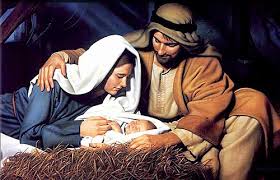
I recognised the area as the approximate location where the Church of the Nativity will one day be built. There were some houses, next to one of them was a cave which served as a stable. Various animals were resting near what looks like a feeding trough. Two people, a man and his wife, sat above the cot, looking into it. I hesitated. But the wife, having looked me over, beckoned me in. I approached the crib, and there l saw the newborn, lying awake in the manger.

I felt tears roll down my cheeks as I fell to my knees looking into the crib, and worshiped, remaining silent for the better part of thirty minutes. Now I knew why the shepherds were so joyful. They saw the child, and believed that he was the true Messiah. They were instantly washed from their sins, and acquitted, and knew that they have eternal life. They also knew that their salvation is theirs and they will never be lost again for ever. Oh, the power of God's mercy!

To the child, I began to spill out what was in my heart. It was the ideal environment to do this, because as one speaking English, nobody around me would understand, certainly not the child's parents at least. It was a conversation reserved for the baby only. The child cooed as I began:

                                                                   ***

"You may not realise it now, my child, but you are the Messiah, the Christ, the future King of Israel, the Saviour of all who believe who you are, like the shepherds did. You also have a name, Immanuel, which to my language means God with us. And you are indeed God incarnate, the Second Person of the Trinity, as we call the Godhead back home.

"You will grow up in a harsh world, where your people is ruled by the Romans, a Gentile empire where I have my ancestry. Heh! Somewhere in this domain, quite likely in Rome itself, lives my father's direct ancestor. But it is you, Lord Jesus, I came from far off to see, and not any of my forefathers. You will grow up in a world of gross inequality. Slavery is normal here, so is the world of the gladiator, where two men fight to the death, literally. Your people is under oppression here, but part of your mission is to free all from oppression, as well as from their sins, and to reconcile all mankind to God, since it was you, my child, who created us in the first place - to enjoy eternal love, joy, and fellowship with you, the only true God.

"I was born in a land called England, far into the future. Yes, I'm from the future. It is because of you, Lord Jesus, your immaculate conception, virgin birth, your future ministry, trial, crucifixion, burial, and resurrection, that has changed the world. So at least, where we call a 'Christian Country', we no longer have slavery, nor the games where gladiators battle it out. We have healing centres such as hospitals, where the sick and infirm can have the right kind of medicine. Coming to think of it, Lord Jesus, such a principle already exists in your time, over at Kos, and founded by that great Greek doctor Hippocrates. Funny enough, we even have, right up to my day, the Hippocratic Oath, still recited by every junior doctor at graduation. 

"England is a fair, pleasant, and easy country to live in, Lord, but there is as much inequality in my sphere of life as it will be in yours. We English are obsessed with social class, levels of education and wealth. For example, for centuries the English gentry had live-in servants, a posher word for slavery, the only thing that made the difference was that English servants weren't under the threat of the whip, instead under the threat of potential unemployment and the possibility of starvation. Oh yes, Lord, come to think of it, a time will come that you will receive 39 lashes. That's how much you love us. As your prophet wrote, by his stripes we are made whole. However, we have come a long way with the introduction of the benefit system. However, employers in my sphere will now only give plum jobs to those graduates who had the privilege of a private education. If you fail at State school, life is a lot harsher and may have to depend on benefits. It is very humiliating, come to think of it. And now our Government is fighting to have those benefits reduced, if not eliminated, so those who are poorer will be worse off, while he has mates, nearly a hundred in all, Special Advisers, or 'spads' who are paid enormous incomes directly by the taxpayer.

"Oh Lord, my sweet child, you yourself wrote in Proverbs 31:
Speak up for those who cannot speak for themselves, for the rights of those who are destitute.
Speak up and judge fairly; defend the rights of the poor and needy.

"And you will come to know, Lord, that this was the advice a queen gave to her son, the heir of the throne, King Lemuel. He was instructed that the poor and the destitute lived with security in his kingdom. But our Government is going the opposite direction, to deprave the poor who are mostly hard working, even further in order to line the pockets of his own chums. Yet the irony of all this is that a very large percentage of the English population not only fully adore and support our Government's priorities, but share in its disdain for the working poor, for celebrity worship.

"And we even have that eccentricity within Englishness, where a football manager is sacked, given greater priority in news bulletins, well above the news that many of the elderly are facing untimely deaths due to neglect. Even sons and daughters have abandoned their elderly parents to care-workers in order to pursue high-flying careers, in their bid to survive and prosper in a competitive world.


"That because, dear Lord Jesus, is that near to my timesphere there were three men we call great. They totally turned our way of thinking from honouring you as our Creator to worshiping and competing among ourselves, individually, as families, and as a nation. Yes, three men - three of all numbers. The first was Frenchman Jean Baptiste Lamarck, a fiercely-opinionated atheist who first published the idea that the alternative of seeing ourselves as your creation, instead saw us as a product of evolution by gradual mutation. The second was Scotsman Charles Lyell, who wrote, Principles of Geology, and ushered in the theory of Uniformitarian Geology. And the third was Englishman Charles Darwin, who wrote, Of the Origin of Species. Of the three, Darwin remains well known globally. I bet that if I were to visit France and ask, Who do you think was the father of Evolution? they would give me a look of surprise and answer, Well, Darwin of course. Indeed. Their own founder, Lamarck, remains confined within highest academia. Thank goodness, my dear child, this will not happen to you.

"Therefore it took an Englishman to reshape our way of thinking, leaving us with an ungodly philosophy that we are chance-products of evolution, eventually evolving to godhood. This leaving us to strive against each other, creating a social class system which not only disfavours the poor, the weak, and the ugly, but has enslaved the minds of the English population, which then spread out to enslave the rest of the world. Yet it had its origins in England, Kent to be more precise. And that includes the taking away of our three young daughters in the middle of the night, simply because some atheistic bitch representing the State thought that we were too stupid to parent our own children. Now they are adopted by another family whose surname and whereabouts remain unknown to us."

                                                                 ***

Suddenly I break down in tears. The cooing baby reached out his tiny hand and the whole of it wrapped around my thumb. I thought I detected him smiling, as if reassuring me that in his hands, all will be well. His mother came up to me and placing her hand on my shoulder, reassuring me, even if I did not understand her language. I looked again at the child as his fingers clutched at my thumb. As he eventually let go, I rose up and looked up at the brightening sky. An unusually bright star shone overhead, amidst a clear blue dawn sky, still free from the blazing sun. 

"I better go." I said, with words that fell on non-understanding ears. "Mary, Joseph, Lord, soon the wise men will be here. They will bring gifts of joy. Receive them when they arrive." I instructed, but without avail.

Somehow, despite the language barrier, they understood. They both nodded as I made my way out, but not without bowing to the Holy Family in reverence. I made my way to the cave where my car awaits. I poured fresh Plutonium into the Flux Capacitor and started the engine, ensuring of the correct return date and time was displayed on the dashboard. Then I managed to spot an area of flat hard ground, large enough to accelerate to 88 mph.

BANG!

Back at a library in Jerusalem I heard of an ancient manuscript telling of an early first century legend about a twin set of fiery tracks spotted just outside Bethlehem...
-----------------------------------------------------------------------------------------------------------

I wish all you readers and followers a happy Christmas and a prosperous New Year. God bless you all.


Saturday, 12 December 2015

A Source of Unneeded Terror

Simon, who has a level of Autism Spectrum Disorder, or ASD, has been a Christian believer for quite a number of years. But having being brought up in the Catholic faith, and becoming deluded with it by the time he reached his late teens. Then one day while killing time in the library, he was suddenly converted after finding a Bible on one of the shelves. Having placed it on a nearby reading desk, it fell open towards the end of the book, on one of the pages with the sub-heading, St John. This is what he read:

For God so loved the world, that he gave his only begotten Son, that whosoever believeth in him should not perish, but have everlasting life. For God sent not his Son into the world to condemn the world; that the world through him might be saved. 
John 3:16-17.

Simon had a more positive feeling about God than he did before he read that passage. He believed that this Jesus, the son of Mary, played a significant role in his salvation, and began to put his trust in him. It was quite a contrast to the Jesus Christ of Catholicism. As he once perceived this long-haired, bearded, Italian-looking fellow to be continuously angry, and constantly critical of the behaviour of those he met and communicated, it was impossible for this lad to see any love within the heart of the man who called himself the Son Of God. If it wasn't for his virgin mother persistently interceding on behalf of sinful mankind, nobody would get into Heaven. To add to this, even the favourites of this Jesus languished in Purgatory, a temporary but a very real Hell where even the smallest of sins committed when alive had to be purged out before being let into Heaven. This purging involved physical suffering to an intensity never experienced by anyone on earth. With threats such as this, little wonder he became disillusioned with his former faith.

Purgatory of Catholic Catechism

Although he was encouraged by the Scripture, his new-found faith raised questions. Mainly this: Why weren't many more believed, if that is all it takes to be saved? And how can he be so sure that he was saved? Has God really acquit him from his sins? Was his faith strong enough, or pointing in the right direction for it to have taken effect? Then a few years later, Simon was browsing on the Internet at home, and came across the most terrifying video that could ever be made. It had its origins from the works of Jack Chick, an American who was famed for his miniature evangelistic cartoon strips and his emphasis on a physical Hell. The video struck terror into Simon's heart, and as he lay in bed that night, he was silently praying while his wife lay asleep beside him.

If this is to be our eternal destiny after death, then why, oh why, did you create us in the first place? Then he turned to see his wife sleeping soundly, and he felt as if another, an even larger spear piercing his heart even further. The very thought of his wife suffering such an eternal fate not only intensify his fear of her welfare, but also a sense of pleading sorrow. How he loved his wife and felt so devoted to her. And even if there were times she might have been cold or disagreeable to him, he could never, never confine her to such eternal suffering! All these emotions, strong as they were, were from the fact that he was never fully freed from Roman Catholicism, and remained locked in the image of an angry God whose wrath was manifest in a critical Jesus Christ as he ministered here on earth some two thousand years previously.

As he walked through the city streets, Simon observed the daily crowd going on their business. He watched young families, especially mothers escorting their infant offspring. At a cafe, he even watched a mother slowly spooning semi-liquid food into her baby son's mouth. All bound for that dreadful place after death? Then as he walked further along the street, he spotted some Hindus and further on, some Muslims. He began to visualise the huge crowd of Muslims, thousands of them, in and around the Kaaba, the head mosque at the Saudi Arabian city of Mecca. And also the multiple thousands of Hindus assembling at the Ganges River in the far east. And were they all heading for that fiery place under their feet, simply because they are following the wrong religion and showing devotion to it? Then at times when he had to visit his doctor, his dentist, or allowed to be served by the checkout attendant at the supermarket. Then all the men and women he watches daily on television. News anchormen, reporters, chat show hosts and their guests, actors, singers, comedians. Then, worst of all, sitting at table with his agnostic parents and atheist brother. Then his mother wonders why he has no appetite.


But it was the sight of the young mother and her son at the cafe which sent shivers down his spine. All throughout the Hindu world, the Muslim world, as well as the Western world, children are constantly being born to parents who know little or nothing about salvation in Christ. This grieved Simon even more. It was a dreadful anomaly from what meant to be perceived as the God of love who sent his Son to atone for their sins. Simon couldn't help thinking: How effective was the atonement Christ made on the cross? If the apostle wrote that in Christ, God has reconciled the world to himself, not imputing their tresspasses against them (2 Corinthians 5:19), and that he that loves not knoweth not God, for God is love (1 John 4:8) seems to blatantly contradicts this fiery Hell as portrayed in the video, yet it is as if nearly the entire human population are heading towards it, as the video shows, a constant rain of lost souls unceasingly falling into the fires below. Simon reasoned that "not knowing God" is a bit like not knowing Fred Bloggs. How can he love Fred if he doesn't know him? Furthermore, would Fred send him to fry forever, because Simon failed to love him? Such thoughts spun in his head.

If Simon loved his wife so much, he couldn't bear see his wife suffer, not even for a moment, let alone eternally. He then reasoned that the Christian faith, like all religions, is based on fear. Fear of punishment. For Simon grew to believe that the reality of this fiery Hell has prevented him from loving God as his Heavenly Father, because he finds it difficult to love a deity who is capable of condemning billions to relentless torture. Instead, in fear he makes an effort to stay clean. But there is a problem. Although he is happily married and very devoted to his wife, in the church where he attends, there is another female whose presence arouses his sexual desire. He see her there nearly every week, and he goes home and to bed fantasising her with himself, arms entwined. He even uses the fantasy to help him sleep. But he also knows that this is wrong. And it is this aroused desire which makes him doubt his salvation and dreading what could happen if he died right there and then.

Then, as Simon lays on his bed, he ponders: What right has he to be an inheritor of eternal glory when there are so many around him who are not so fortunate? Pretty frightening too, is the thought of being born as a Muslim or Hindu, or from a remote jungle tribe cut off from civilization as we know it, or for that matter, from atheist but well educated parents. So much distress, how can such a mountain of burden be borne solely on one human heart? After all, does this Jesus Christ have any love in his heart, knowing that such a huge percentage of the human population is perishing? Or does he cry out Woe! Woe! Woe! - as he did one day at the Pharisees? But furthermore, how can he prove that this Jesus of Nazareth is the Christ, the Anointed One, the Jewish Messiah, is the Way to eternal life? And not Mohammed or any of the Hindu or Buddhist deities and their scriptures? 

I approach Simon and asked him if watching the video has edified him. He tells me that just the opposite of edify is to terrify, and that has what the video has done for him. He also explained that any love he had for God has been replaced by a deep fear of him, together with an apparently justifiable case that if God has reconciled the world to himself, not imputing their tresspasses against them, how is it that God has prepared such a terrible place for lost souls? I try to explain that the Lake of Fire was never intended for mankind, but was prepared for the Devil and his angels, according to Matthew 25:41. It was never God's intention for any man or woman to go there. Then by testifying that the way to life is through Jesus, I opened the Bible to Isaiah 53, and read out to him these words:

He was despised and rejected by men, a man of sorrows and familiar with suffering. Like one from whom men hide their faces he was despised, and we esteemed him not.
Surely he took up our infirmities and carried our sorrows, yet we considered him stricken by God, smitten by him, and afflicted. 
But he was pierced for our transgressions, he was crushed for our iniquities; the punishment that brought us peace was upon him, and by his wounds we are healed.
We all, like sheep, have gone astray, each of us turned to his own way, and the LORD has laid on him the iniquity of us all.
Isaiah 53:3-6.

I then asked him, "Who have met such credentials?"
Simon replied, "None other than Jesus."

I then advised him never again watch such videos on the Internet, or watch or read anything that does not edify, because unless the material builds up your faith and brings out your love for the Lord, then more than likely, such material is not from God - even if it looks fully orthodox and Biblical. For Jesus died to atone for our sins, to bring us peace, and that we can enjoy life, not tremble in terror. After all, no living person has ever been to Hell, nobody knows what it really looks like. 

"But what about those who do not know the Gospel?" Simon asked.

Well, according to Paul's letter to the church in Rome, he wrote that his voice has gone out to all the earth, his words to the end of the world (Romans 10:18). And that was quoted from Psalm 19:4 which reads:

The heavens declare the glory of God; the skies proclaim the work of his hands.
Day after day they pour forth speech; night after night they display knowledge.
There is no speech or language where their voice is not heard.
Their voice go out to all the earth, their words to the end of the world.
Psalm 19:1-4.

The love of Christ is beyond comprehension...

And the Gospel of John opens with the assurance that the true light which shines into every man was coming into the world (John 1:9). Simon then concluded, 
"If a man in Hell asks, 'Why am I here?' then I could answer by asking, 'Why did you reject such a loving God?'"

Then Simon turned and walked away.